Quick Answer
For babies under 18 months, silicone puzzles are safer and easier to grasp, while wooden puzzles offer durability and classic sensory appeal for toddlers who no longer mouth toys. Choose based on your child's age and chewing habits.
Safety and Age Considerations
Silicone puzzles are soft, flexible, and free of sharp edges, making them ideal for babies who still explore with their mouths. Wooden puzzles, while sturdy and natural, can be harder and may have small parts—so they're better once your child is past the heavy mouthing stage.
Check the manufacturer's age recommendation and inspect pieces for any splinters or loose parts, especially with wooden puzzles.
Sensory and Skill Development
Silicone provides a unique tactile experience—soft, squishy, and satisfying to chew—which supports oral motor development and sensory exploration. Wooden puzzles offer a firmer, more traditional feel and often feature smooth, natural textures that encourage fine motor precision.
Both types help build hand-eye coordination and problem-solving, but the grip and feedback differ: silicone is more forgiving for clumsy little hands, while wood requires more controlled placement.
How to Choose: Silicone vs Wooden
- Silicone puzzles (e.g., Silicone Puzzle on Wooden Plate - Jungle): Best for babies under 18 months who still mouth toys. Soft pieces are safe to chew, easy to grasp, and often come with a wooden base for stability. Trade-off: less durable for rough play and may attract dust. If your baby is a heavy chewer, silicone is the safer choice.
- Wooden puzzles: Best for toddlers 18 months and older who no longer put toys in their mouths. Durable, classic, and often more challenging due to precise fit. Trade-off: harder surfaces and potential small parts require supervision. For older toddlers, wooden puzzles offer long-lasting use and traditional appeal.
- Hybrid options (silicone pieces on wooden board): Combine the best of both: soft, safe pieces with a sturdy, natural base. Ideal for the transition stage (12-24 months) when babies are learning but still mouth occasionally. Trade-off: the wooden base may be too heavy for very young babies. A hybrid puzzle can extend the usable age range and offer varied sensory input.
Product Spotlight
-
Silicone Puzzle on Wooden Plate - Jungle: This puzzle features four vibrant, jungle-themed silicone pieces that fit onto a beautifully crafted wooden plate, including a lemur, sloth, hippo, and pineapple. The combination of silicone pieces and a wooden plate offers both soft, chewable parts and a sturdy base, giving your child a multi-sensory experience that supports fine motor skills and problem-solving.
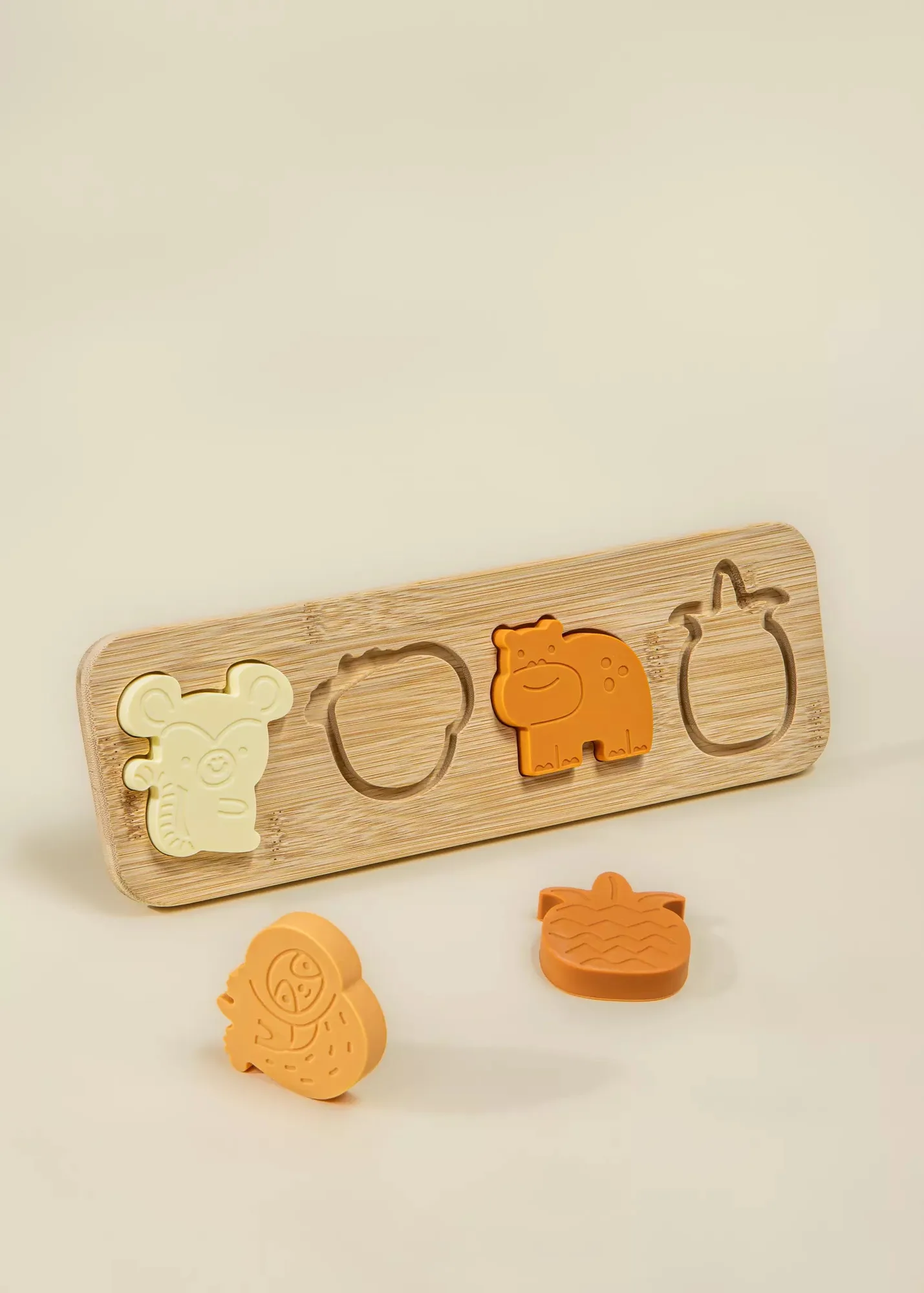
Silicone Puzzle on Wooden Plate - Jungle
Which Puzzle Fits Your Child?
Best for
- Babies under 18 months who need a safe, chewable puzzle for sensory play
- Parents seeking a durable, classic toy for toddlers who no longer mouth objects
Not for
- Babies who still mouth everything—wooden puzzles may pose a choking hazard
- Toddlers who prefer more challenging, multi-piece puzzles—silicone sets are often simpler