Quick Answer
For most babies, silicone teethers are the better everyday choice because they are soft on sensitive gums, easy to clean, and often combine texture with rattle or grasp features. Wooden teethers suit babies who prefer a firmer, cooler surface and parents who want a natural material, but they need more care to avoid moisture damage. Many families end up using both.
When your baby starts gnawing on everything in sight, the teether you choose matters more than you might expect. Silicone and wood are the two most common materials, and each has real strengths and real trade-offs. The right pick depends on your baby's age, how much they drool, and how you plan to clean and store the teether.
This comparison uses specific Nuby products to show how material differences play out in daily use. You will see how silicone and wood handle gum pressure, sensory play, and cleanup, plus which babies tend to prefer each one.
Silicone Teethers: Soft, Flexible, and Easy to Clean
Silicone teethers are made to be chewed. The material has a gentle give that cushions sore gums while still offering enough resistance to satisfy a strong bite. Many silicone designs add textured surfaces, which give babies different mouth feels to explore. The Nuby Mushroom Bobble Head Teether Toy is a clear example: it is made of super soft silicone, has a suction base that sticks to most surfaces, and includes antennae shaped to resemble mom's nipple for soothing comfort.
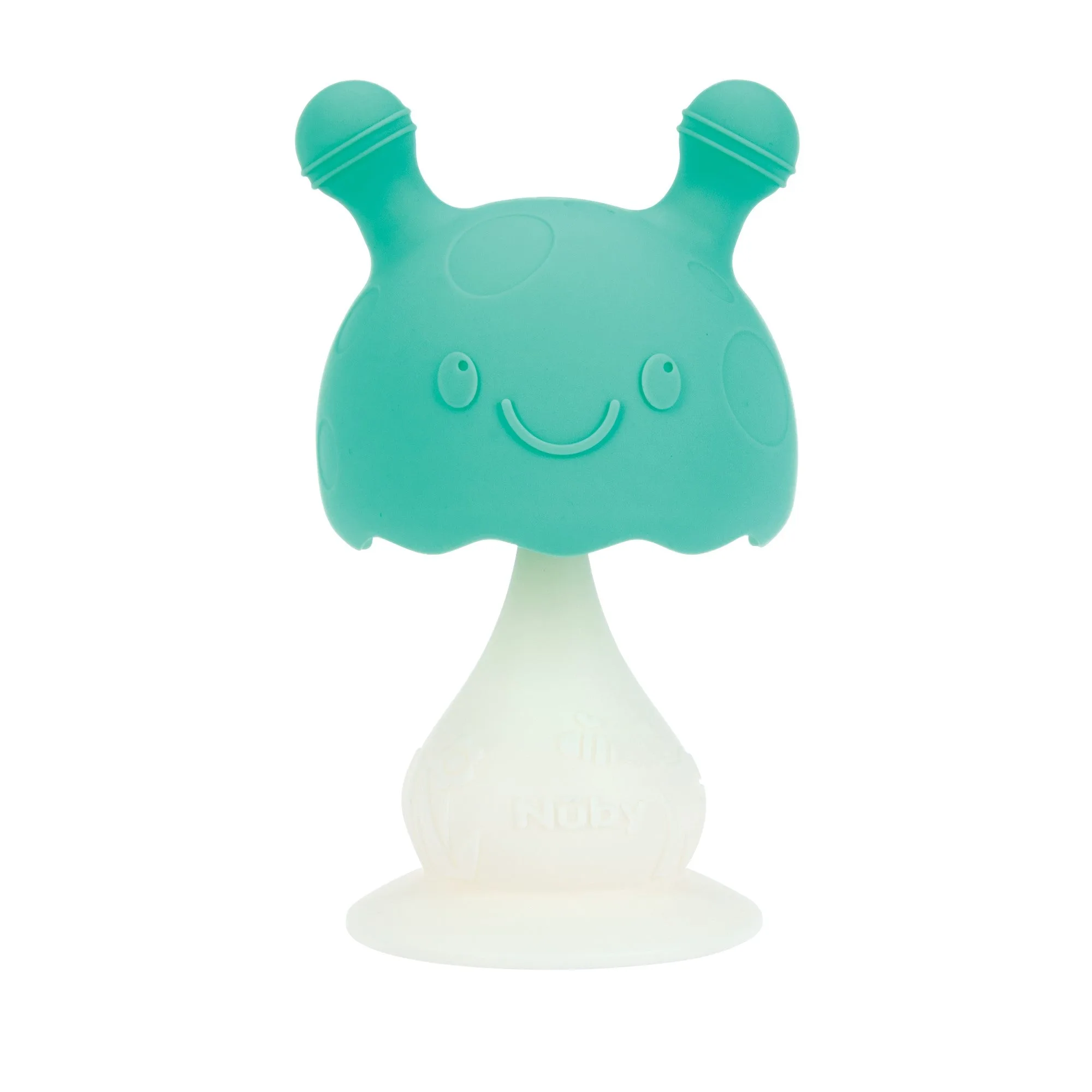
Mushroom Bobble Head Teether Toy
Cleaning is another advantage. Silicone generally wipes down quickly, and many silicone teethers can be rinsed or washed without worrying about water soaking in. That matters during heavy drooling months when a teether may need a wipe several times a day. Silicone also tends to be lighter, so babies can hold and maneuver it with less hand strength.
- Choose silicone if your baby is actively teething and needs soft pressure relief.
- Check for textured surfaces if your baby likes variety in mouth feel.
- A suction base helps keep the teether steady during floor play.
Wooden Teethers: Firm, Natural, and Sensory
Wooden teethers offer a firmer chew than silicone. Some babies prefer that resistance, especially when a tooth is close to breaking through and they want to press hard against their gums. Wood also stays cooler than body temperature, which can feel soothing on swollen gums. The trade-off is that wood does not flex, so it is not as gentle on very sensitive gums as soft silicone.
Care is the bigger difference. Wood should not be soaked or left wet, because moisture can cause it to crack or grow bacteria over time. A damp cloth wipe and air drying is usually enough. If you want a wooden option with play value beyond teething, the Nuby Wooden Play Gym uses a solid wood A-frame and soft hanging toys, including a squeaking koala, rattling parrot, and scrunching lion. It is not a chew toy, but it shows how wood fits into a baby's broader play space.
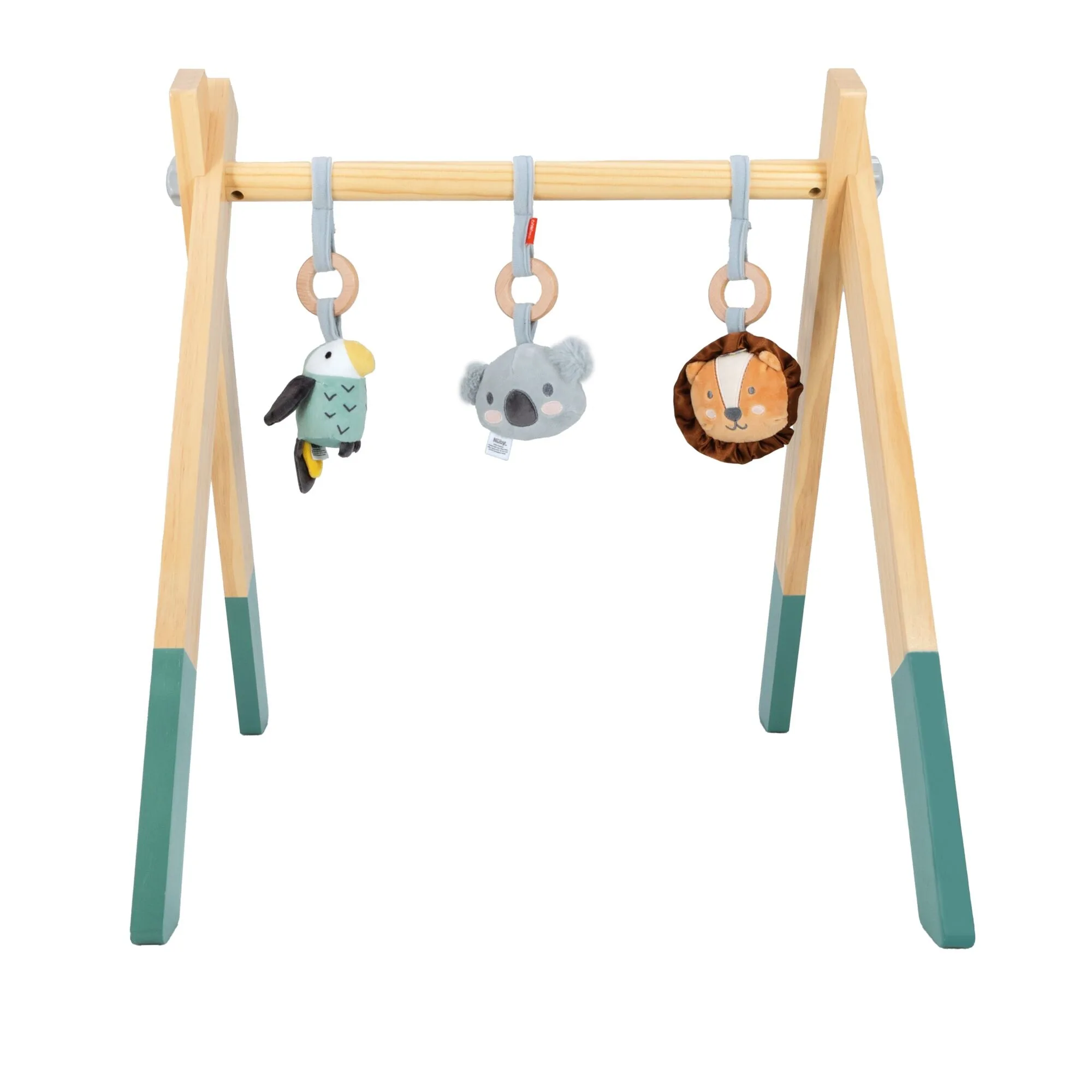
Wooden Play Gym
- Wipe wooden teethers with a damp cloth and dry immediately.
- Avoid leaving wood in a diaper bag or anywhere damp for long periods.
- Inspect wooden teethers regularly for cracks or rough spots.
How to Match the Material to Your Baby's Stage
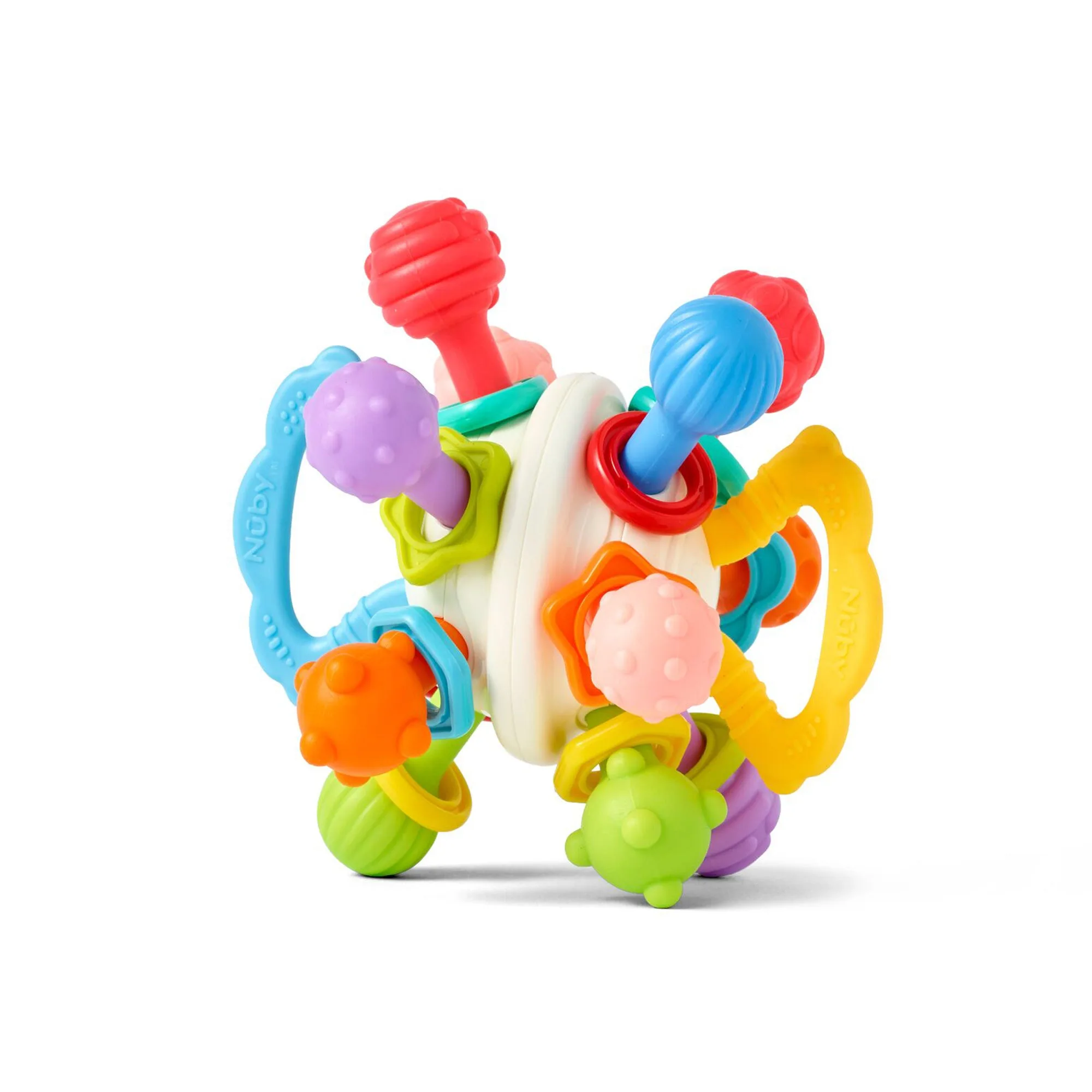
Younger babies who are just starting to teethe often do best with soft silicone. They may not have the hand control to hold a heavier wooden teether, and their gums are usually more sensitive. The Nuby Twist Ball Teether is a good fit here: it has bright colors, fun sounds, and textured surfaces that provide relief while helping develop dexterity and hand-eye coordination. It is also easy for baby to grasp.
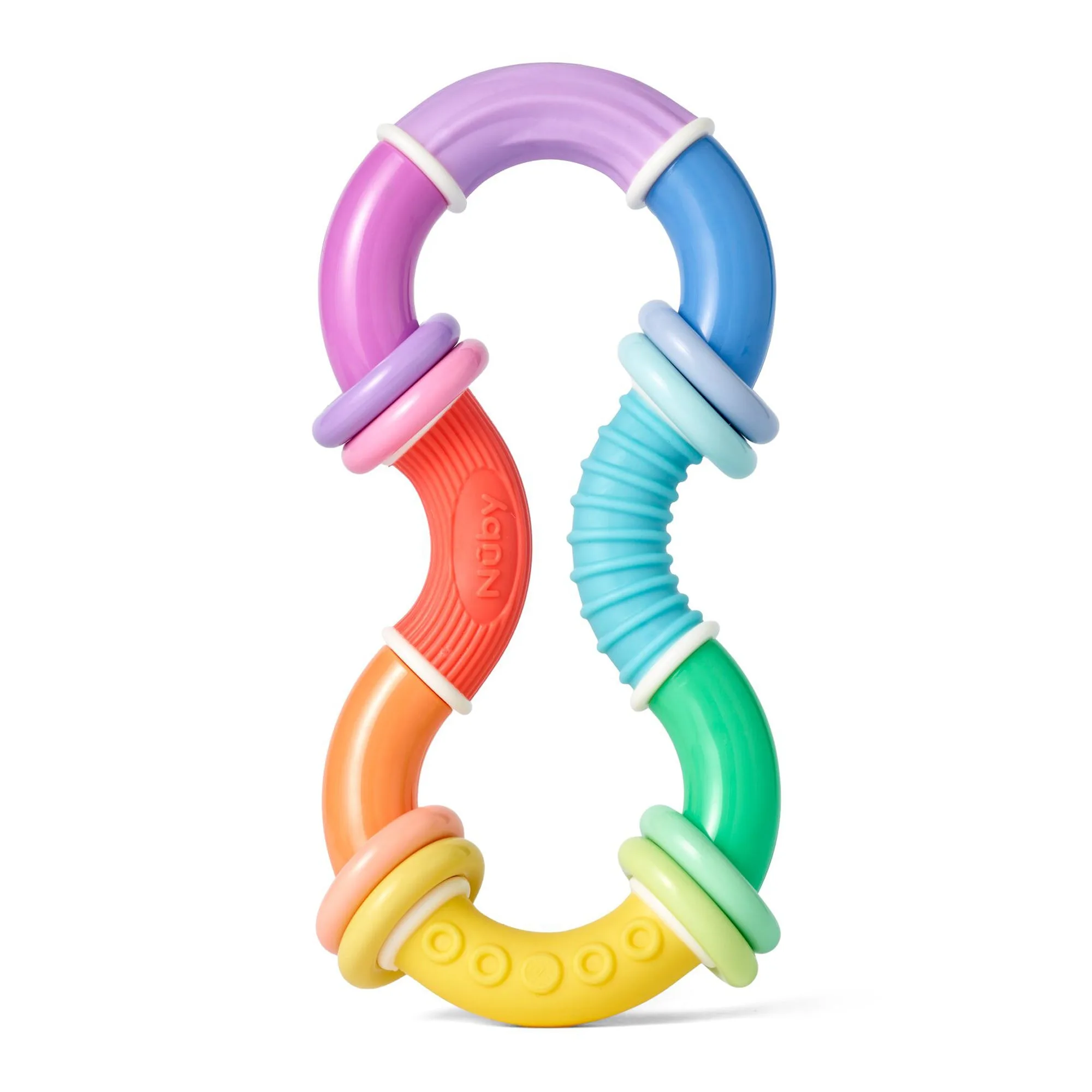
Older babies and toddlers who chew hard may enjoy the firm resistance of wood. But if they are also throwing or dropping the teether, silicone is more forgiving. The Nuby Twista Rattle Teether Toy with colorful rings combines textured surfaces with rattle sounds, so it keeps working as a sensory toy even after the worst teething days pass.
- Start with silicone for early teething and softer gums.
- Try wood later if your baby wants a firmer chew.
- Keep a silicone option on hand for messy or travel days.
Safety and Cleaning Compared
Both materials can be safe when used as intended. Silicone teethers are generally easy to clean with warm water and mild soap, and they dry quickly. Wood requires more attention: it should not be boiled, microwaved, or left soaking. Any teether should be checked regularly for wear, and you should replace it if you see cracks, tears, or loose parts.
One practical advantage of silicone is that it can be cooled in the refrigerator for extra soothing relief. Wood can also be chilled, but the same moisture rules apply, so avoid freezing either material. Always follow the manufacturer's instructions for your specific teether.
- Clean silicone with warm soapy water and rinse well.
- Wipe wood with a damp cloth and dry completely.
- Replace any teether that shows signs of damage.
Trade-Offs at a Glance
- Gum feel: Silicone is soft and flexible; wood is firm and unyielding. Choose silicone for tender gums, wood for strong chewers.
- Cleaning and care: Silicone rinses and dries quickly; wood must stay dry and be wiped only. Silicone is easier for busy days and travel.
- Durability and wear: Silicone can tear over time; wood can crack if exposed to moisture. Inspect both regularly and replace at the first sign of damage.
Product Facts
- Mushroom Bobble Head Teether Toy: Made of super soft silicone, it has a suction base that sticks to most surfaces, and antennae that resemble mom's nipple for soothing comfort. The soft silicone is gentle on sensitive gums, and the suction base keeps it steady for hands-free relief during play.
- Twist Ball Teether: Features bright colors, fun sounds, and textured surfaces that provide relief during teething while engaging fine motor skills. It doubles as a sensory and dexterity toy, so it stays useful as your baby grows.
- Twista Rattle Teether Toy | Colorful Rings: Combines textured surfaces with rattle sounds and colorful rings to stimulate senses and develop hand-eye coordination. The rattle element adds auditory feedback, which can distract a fussy baby during teething.
- Wooden Play Gym: A solid wood A-frame with soft hanging toys, including a squeaking koala, rattling parrot, and scrunching lion, designed to encourage reaching and grabbing. It shows how wood can be used in a baby's play space, though it is not a teether and should not be chewed.
Which Should You Choose?
Best for
- Babies in active teething who need soft, gentle pressure relief
- Parents who want a teether that is easy to clean and can be chilled
- Babies who enjoy rattles, textures, and sensory play alongside teething
Not for
- Babies who prefer a very firm chew and seem unsatisfied by soft silicone
- Parents who want a completely natural material and do not mind extra care
- Families who need a teether that can be soaked or left wet without damage
Silicone and wood both have a place in your baby's teething kit. Start with silicone for everyday relief and easy cleaning, then add a wooden option if your baby wants a firmer chew. Whichever you choose, check it often and replace it when it shows wear.