Quick answer
Choose a silk tulle veil if you want an airy, barely-there layer that lets your dress details shine through. Choose a lace veil if you want a romantic, textured statement that frames your face and echoes lace on your gown. Neither is better—the right pick depends on your dress's fabric, neckline, and the mood you want in photos.
A veil is one of the few accessories you can try on in seconds and still change the entire feel of your bridal look. Silk tulle and lace are the two most common veil fabrics, and they behave very differently in photos, in movement, and against different dress textures. This comparison breaks down how each one works so you can match your veil to your gown instead of guessing.
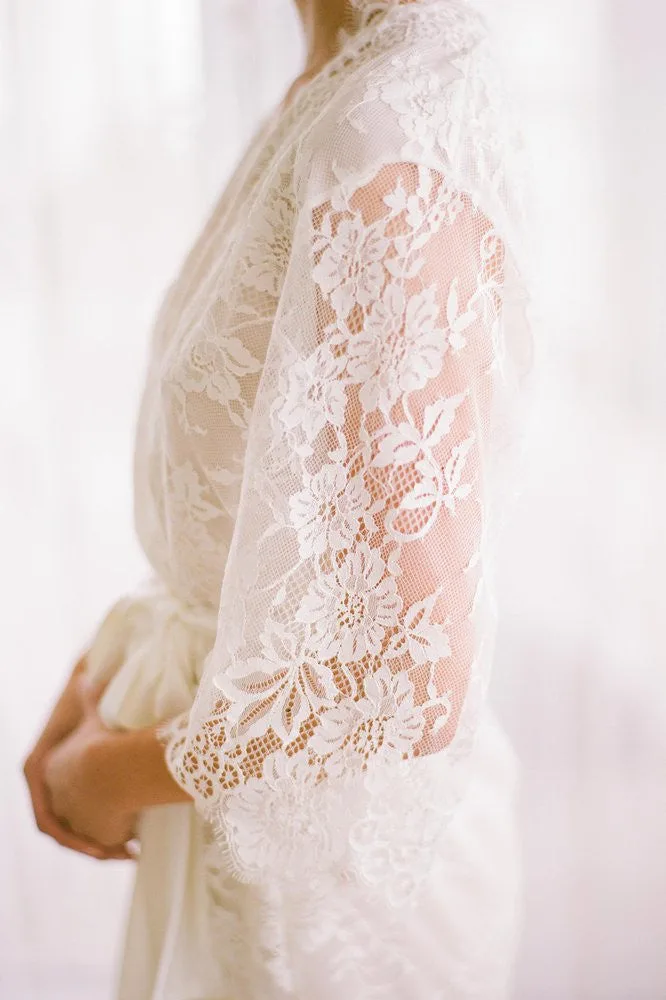
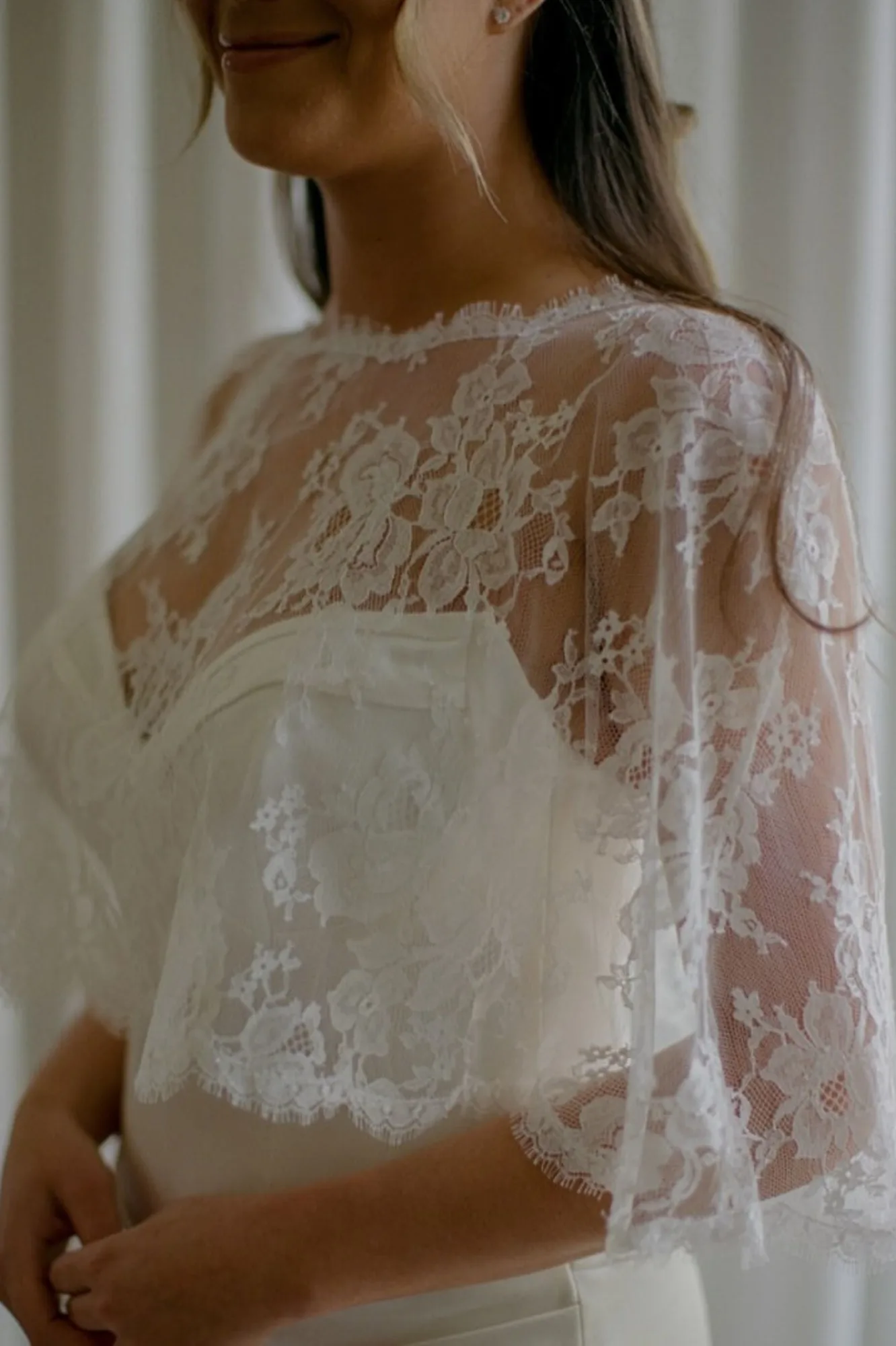
You'll see what each fabric does well, where it falls short, and which dress styles each one flatters most. We'll also look at real pieces from the collection—like the Carly French lace cape and the Swan Queen silk and lace robe kimono—to show how lace behaves when it's the star of the look.
How silk tulle and lace veils differ
Silk tulle is a fine, sheer net made from silk fibers. It drapes softly, feels lightweight, and creates a transparent layer that adds volume without hiding your dress. Because it's so sheer, a silk tulle veil reads as a soft halo rather than a solid accessory—especially in backlit ceremony photos.
Lace veils are built from patterned fabric, often French lace with floral motifs and scalloped edges. The lace itself is opaque where the pattern sits, so it adds texture and visual weight. A lace veil can frame your face, echo lace on your gown, or become the most detailed element of your bridal look.
- Silk tulle: sheer, lightweight, soft drape, subtle volume
- Lace: patterned, textured, opaque in areas, romantic detail
- Neither fabric is inherently dressier—it depends on the pattern and cut
When a silk tulle veil works best
A silk tulle veil is the safer choice when your dress already has a lot going on. Beading, embroidery, dramatic draping, or a bold neckline all compete for attention, and a sheer tulle veil lets those details stay visible. It also works well with clean, minimalist gowns because it adds softness without introducing a competing pattern.
Because silk tulle is so light, it moves beautifully in outdoor ceremonies and photographs well against bright backgrounds. If you want that floating, ethereal look in your wedding photos, silk tulle is usually the fabric that delivers it. It's also easier to store and less likely to snag than a heavily patterned lace veil.
- Best with beaded, embroidered, or heavily textured gowns
- Great for outdoor or backlit ceremonies where movement matters
- Less likely to compete with a statement necklace or earrings
When a lace veil works best
A lace veil shines when you want the veil itself to be a focal point. If your dress is simple—satin, crepe, or a clean slip silhouette—a lace veil adds the romance and detail the gown lacks. It also creates a beautiful frame around your face and shoulders, which is why lace veils are so common in portrait-style wedding photos.
Lace also lets you tie your look together. If your gown has lace appliqué, a lace veil with a similar motif creates a cohesive story. If your gown has no lace at all, a lace veil can be the one place you introduce that texture. The trade-off is weight: lace veils are heavier and can obscure dress details underneath.
- Best with clean, minimalist, or satin gowns that need texture
- Creates a strong frame for face and shoulders in photos
- Can echo lace on your gown for a cohesive look
Matching veil fabric to your dress neckline and silhouette
Your neckline matters as much as your dress fabric. A strapless or sweetheart gown leaves your shoulders and chest bare, so a lace veil can add coverage and detail exactly where the dress doesn't. A high-neck or illusion-neck gown already has detail near your face—a sheer silk tulle veil keeps that area from feeling busy.
For silhouettes, a full A-line or ballgown can carry a longer, fuller veil in either fabric. A sleek column or slip dress usually looks best with a sheer silk tulle veil that follows the body's line rather than a heavy lace veil that adds bulk. If you're wearing a slip gown and want lace, consider a lace cape or cover-up instead of a full lace veil.
- Strapless or sweetheart: lace veil adds detail where the dress doesn't
- High neck or illusion: silk tulle keeps the neckline clean
- Column or slip dress: sheer tulle follows the line; lace cape adds texture without bulk
Trade-offs to weigh before you choose
- Sheer vs. textured: Silk tulle is nearly invisible, so it won't hide your dress but also won't add much visual interest on its own. Lace adds pattern and texture but can cover dress details underneath. If your dress is the star, go sheer. If your veil should be the star, go lace.
- Light vs. heavy: Silk tulle is lightweight and moves easily, which is comfortable for long ceremonies and outdoor photos. Lace veils are heavier and can pull on your hairstyle or feel warm. Consider how long you'll wear the veil and whether you'll be outdoors or dancing.
- Simple vs. complex styling: A silk tulle veil rarely competes with jewelry or a detailed neckline. A lace veil can clash with a lace dress if the patterns don't match, or with bold jewelry if both are ornate. Match lace to lace, or keep one element simple. Don't let two strong patterns fight.
Real pieces that show how lace behaves
- Carly French lace Cape In Ivory: Made of soft French lace cascading around your shoulder, one size, available in Ivory and Black, part of the Couture Collection, handmade in the USA from European textiles. If you love lace but don't want a full lace veil, a lace cape gives you that texture around the shoulders without covering your dress. It's a strong option for slip or strapless gowns.
- Swan Queen silk and lace robe kimono ivory lined - style 104SH: Handmade in French Chantilly lace with a floral design and scalloped edges along the neckline, sleeves, and hem; fully lined bodice in silk chiffon with sheer sleeves and a satin belt. This shows how French Chantilly lace reads: floral, scalloped, and detailed. If you want that same romantic texture in a veil, look for lace with similar scalloped edges and floral motifs.
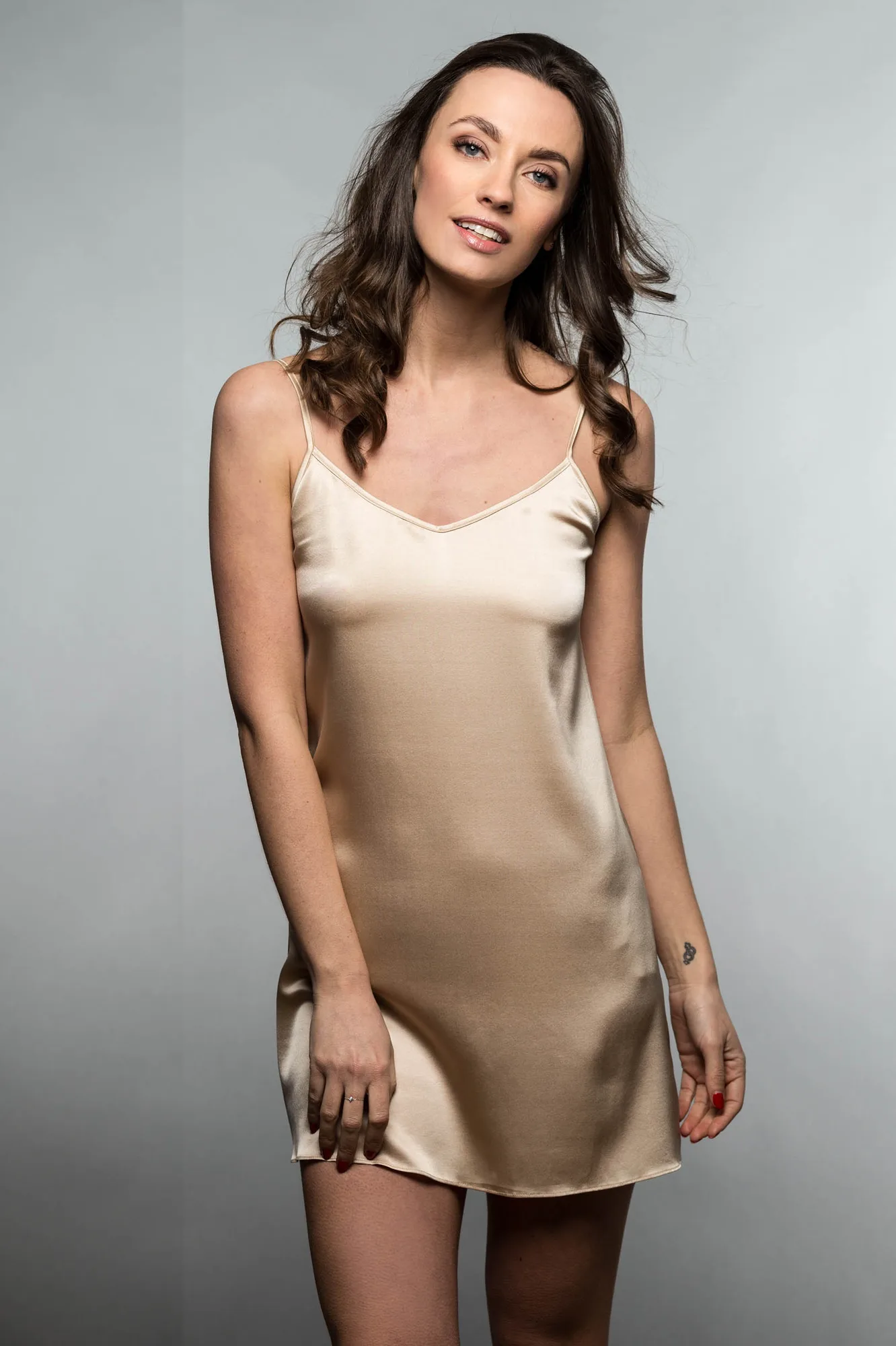
- Parisienne Silk Satin Camisole Slip Dress Chemise in Ivory, Nude or Black: Cut from silk satin with a flattering V neckline and adjustable satin straps; can be worn as a night dress or slip, and pairs with lace robes and gowns. A clean silk satin piece like this is exactly the kind of minimalist base that a lace veil or lace cape complements. It also shows why sheer silk tulle works well over satin—it adds softness without hiding the fabric's sheen.
Which veil should you choose?
Choose a silk tulle veil if
- Your dress has beading, embroidery, or heavy texture you want visible
- You want an airy, ethereal look that moves in outdoor photos
- You're wearing a high neckline or statement jewelry near your face
Choose a lace veil instead if
- Your dress is plain satin or crepe and you want added romance
- You want the veil to frame your face and be a focal point
- You're wearing a strapless or sweetheart gown that needs detail at the shoulders
There's no universal winner between silk tulle and lace—only the one that fits your dress and the photos you want. Start with your gown's fabric and neckline, decide whether the veil should whisper or speak, and let that guide you. If you're still torn, try both in front of a mirror in similar lighting; the right one usually becomes obvious in seconds.