Start with the treat, not a number
Silver carp treats are a single-ingredient fish treat, but that doesn’t automatically tell you how much to feed. The product record for Arch Pet Food Silver Carp treats confirms they are single ingredient and made with wild-caught, mercury-free fish, but it does not include feeding amounts or frequency. That means you won’t find a portion chart on the label—and you shouldn’t guess one from general advice. Instead, use the treat as a small, occasional reward and watch how your dog responds.
For dogs with sensitivities, the safest approach is to introduce any new treat slowly and keep portions modest. The record notes these treats are highly-digestible and intended for dogs with food allergies, but it doesn’t specify a daily limit. Treats should never replace a complete meal, and if your dog has a diagnosed allergy or medical condition, check with your vet before adding something new.
What the product record confirms
-
Wild Caught Invasive Silver Carp Fish - Hypoallergenic Treats for Dogs (Single Ingredient): Single ingredient treats for dogs with food allergies. A short ingredient list can make it easier to spot problem ingredients, but it doesn’t set a portion size.
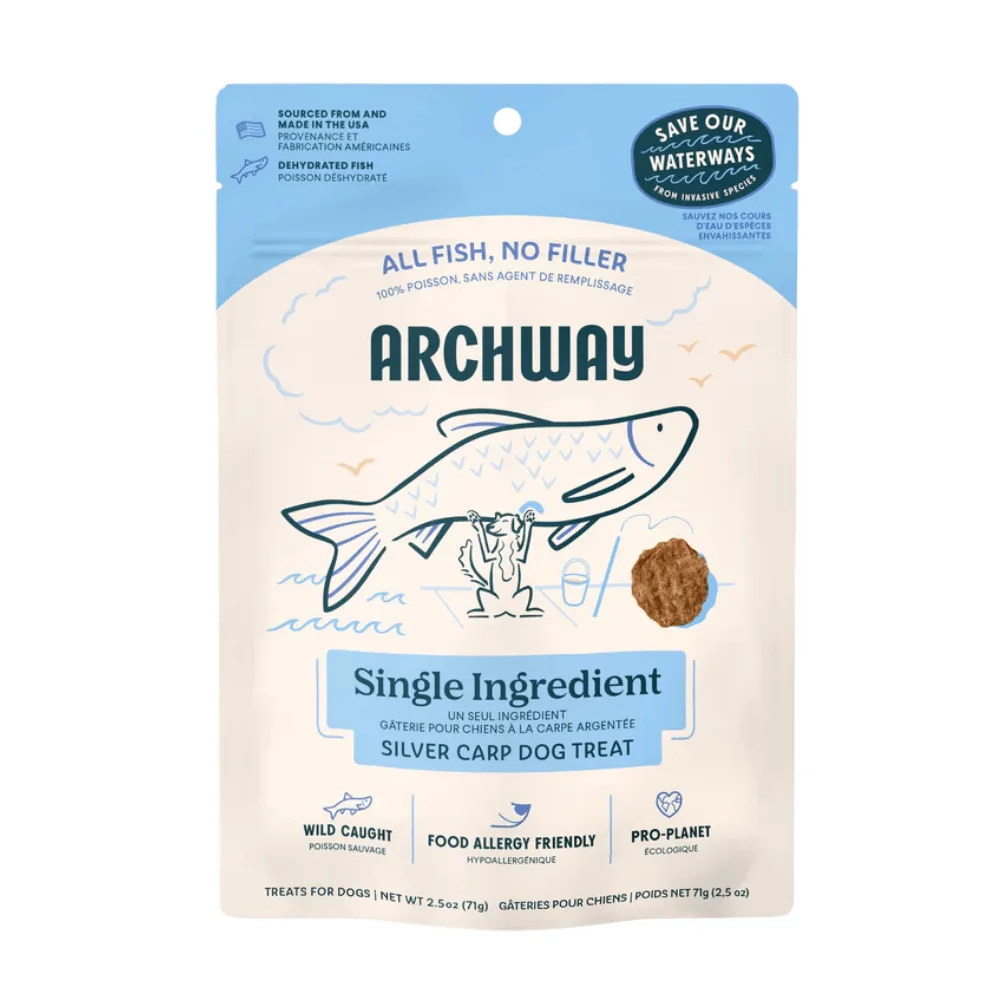
Wild Caught Invasive Silver Carp Fish - Hypoallergenic Treats for Dogs (Single Ingredient)
-
Wild Caught Invasive Silver Carp Fish - Hypoallergenic Treats for Dogs (Single Ingredient): Crafted with sustainable wild caught invasive silver carp fish, pumpkin, and apple. These are the named ingredients; the record doesn’t list additional fillers or preservatives, which may matter for sensitive dogs.
-
Wild Caught Invasive Silver Carp Fish - Hypoallergenic Treats for Dogs (Single Ingredient): Wild-caught, mercury-free fish and packed with Omega-3s for brain health and a luscious coat. These are the stated benefits; they don’t translate into a feeding amount.
How to portion without a label guide
Since the product record doesn’t provide a serving size, use these practical checkpoints to keep treats sensible.
- Treat as a reward, not a meal: Offer small pieces during training or as a snack. The record doesn’t specify a daily maximum, so keep treats a minor part of the day’s food.
- Start with one small piece: For a sensitive dog, begin with a single small piece and observe. The record doesn’t give an introduction schedule, so use your judgment and your vet’s advice.
- Adjust for your dog’s size: A piece that suits a large dog may be too much for a small one. The record doesn’t provide size-based portions, so scale down for smaller dogs.
- Keep the rest of the diet balanced: These treats are not a complete food. The record doesn’t state a maximum treat allowance, so avoid letting treats crowd out regular meals.
Storing single-ingredient fish treats
The product record doesn’t include storage instructions, so we can’t give an official shelf life or method. What we can say is that single-ingredient fish treats are typically best kept sealed and cool to maintain freshness, but always follow the packaging you receive. If the package has specific storage directions, use those over any general advice.
For sensitive dogs, freshness matters. Keep the treats in their original resealable bag or an airtight container, away from moisture and direct sunlight. The record doesn’t confirm whether these treats are freeze-dried or need refrigeration, so don’t assume—check the bag. If you transfer them to another container, label it with the date so you can track how long they’ve been open.
A simple routine for sensitive dogs
Use this sequence to introduce and manage silver carp treats without overcomplicating things.
- Check the package first: Look for any storage or feeding guidance from the manufacturer. The product record doesn’t supply these, so the bag is your best source.
- Offer a tiny piece: Give one small piece as a test. Watch for any reaction; if your dog has known allergies, consult your vet beforehand.
- Keep portions small: Continue with small pieces as rewards. The record doesn’t set a daily limit, so use treats sparingly.
- Store sealed and cool: Reseal the bag or use an airtight container. The record doesn’t specify refrigeration, so follow the packaging.
- Track freshness: Note the date you opened the bag. The record doesn’t give a shelf life, so use your judgment and discard if the treats look or smell off.
Why these treats suit sensitive dogs
The product record describes these as hypoallergenic treats for dogs with food allergies, made with a short ingredient list: silver carp, pumpkin, and apple. It also notes they are highly-digestible and free from the chemicals and metals often found in bottom-dwelling fish. For dogs with sensitivities, a simpler recipe can be easier to evaluate, but it’s not a guarantee for every dog. The record doesn’t list a complete guaranteed analysis or calorie content, so you can’t calculate exact portions from it.
If you’re comparing options, the single-ingredient claim is the main selling point. The record also mentions silver carp cat treats exist, but this article focuses on dogs. Always introduce new proteins slowly, especially if your dog has a history of reactions.
Product details that affect how you use them
- Wild Caught Invasive Silver Carp Fish - Hypoallergenic Treats for Dogs (Single Ingredient): Made in the USA. Origin may matter to you for sourcing reasons, but it doesn’t change portioning.
- Wild Caught Invasive Silver Carp Fish - Hypoallergenic Treats for Dogs (Single Ingredient): Help to tackle fish overpopulation in the Great Lakes. The sustainability angle is a bonus, but it’s not a feeding instruction.
- Wild Caught Invasive Silver Carp Fish - Hypoallergenic Treats for Dogs (Single Ingredient): These fish are free from the yucky chemicals and metals often found in bottom-dwelling fish. This is a stated quality point for sensitive dogs, but it doesn’t replace veterinary advice.
When to check with your vet
Because the product record doesn’t include feeding guidelines or a calorie count, you should ask your vet for a portion recommendation if your dog has specific health needs or is on a restricted diet. The record also doesn’t state whether these treats are suitable for puppies, so consult your vet before giving them to a young dog. And if you notice any digestive upset or allergic reaction, stop and seek advice.