Quick Answer
For most sim racers, an aluminium-alloy core is the best wheel material: it is rigid enough for strong direct drive force feedback, resists flex over years of use, and costs far less than carbon fibre. Steel adds mass and corrosion risk without a real feel advantage. Carbon fibre is the premium pick when you want the lowest possible weight and are prepared to pay for it and treat it carefully.
Wheel rim material decides three things you feel every lap: weight, rigidity, and how the rim survives years of force feedback. Marketing rarely separates those, so here is a straight comparison of aluminium, steel, and carbon fibre in sim racing wheels, plus how a real modular system handles the trade-offs.
GSI's Interlock system is a useful case study because the same wheel can be built from an alloy-core rim or upgraded later, so material choices are not locked in forever. The examples below use supplied catalog facts only; where a specification is not published, treat that as a decision limitation rather than a guess.
Aluminium: The Practical Default
Aluminium alloy is the most common structural material in serious sim racing wheels because it balances stiffness, weight, and cost. A rigid alloy core resists the twisting forces a direct drive base sends through the rim, which is what keeps force feedback feeling direct rather than softened. It also tolerates heat, sweat, and repeated mounting without the brittleness concerns of composite shells.
The GSI Ultra 300 mm Wheel Rim is a concrete example: it is built on a rigid alloy core and described as delivering uncompromising stability and direct force feedback response. Its shape supports natural ergonomics for long stints. If you want one material that covers most budgets and use cases, this is it.
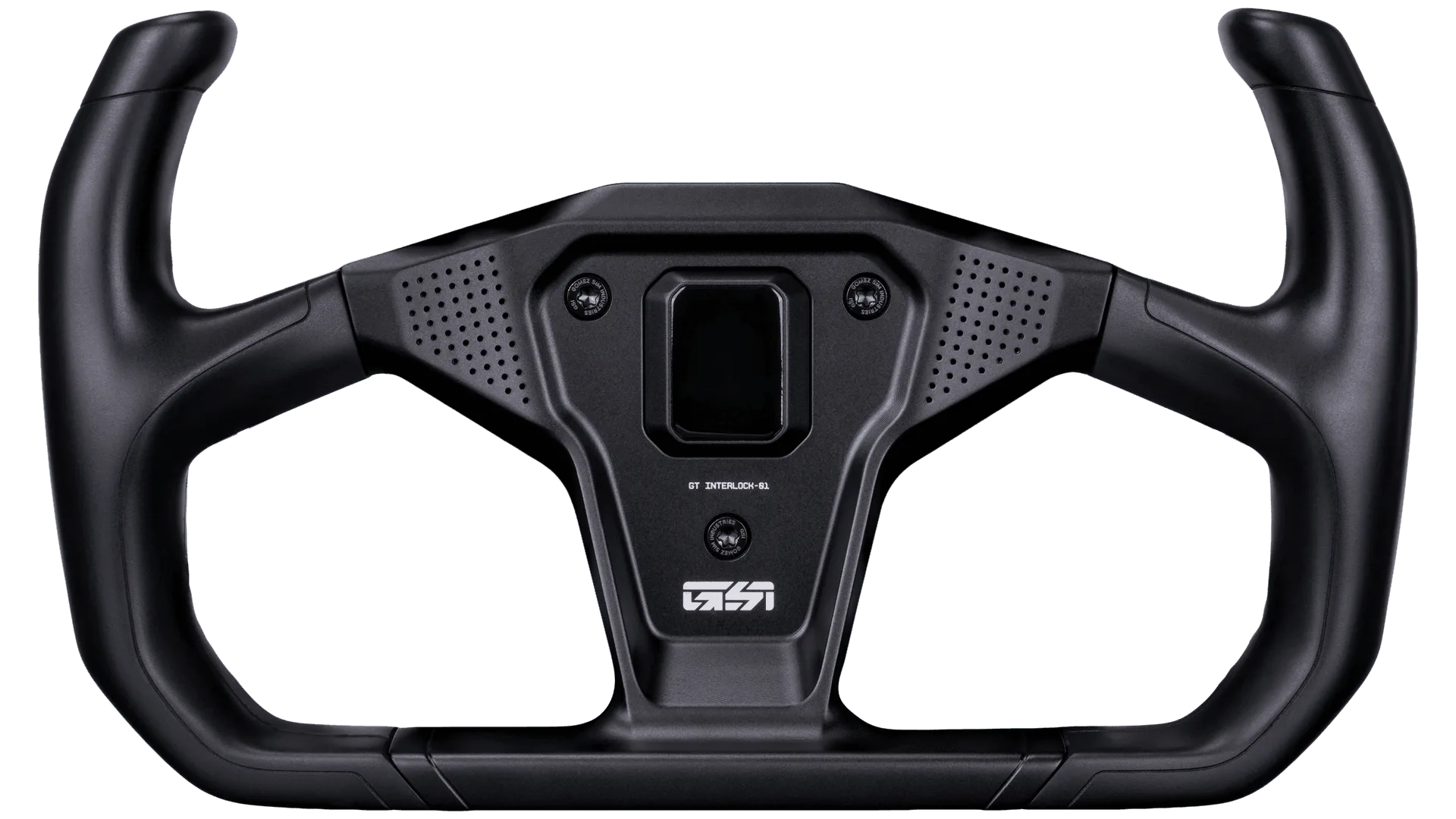
Ultra 300 mm Wheel Rim
- Choose alloy if you run high-torque direct drive and want feedback to arrive without flex.
- Alloy rims handle daily use and cleaning with less caution than carbon shells.
Steel: Weight Without a Feel Payoff
Steel shows up in brackets, quick releases, and budget rims rather than premium wheel faces. It is strong and cheap, but it is also denser than aluminium, so a steel-heavy rim adds rotating mass at the point where you least want it: your hands. Extra mass dulls the small feedback details that tell you what the front tires are doing.
Steel also needs surface protection to resist corrosion over years of sweaty sessions. That does not make steel parts bad; a steel fastener or mount is fine. It just means steel is rarely the right material for the rim itself when aluminium does the same structural job more lightly.
- Accept steel in hardware and mounting points; question it in the rim face.
- If a rim feels heavy in your hands before you mount it, that mass follows you into every corner.
Carbon Fibre: Light, Stiff, and Demanding
Carbon fibre offers the best stiffness-to-weight ratio of the three, which is why it appears on high-end wheels. Less mass at the rim means faster direction changes and less inertia for the wheelbase to overcome. The trade-off is cost, and the fact that composite structures can be damaged by impact or over-tightened hardware in ways alloy simply is not.
Carbon fibre is also a broad label. A carbon cosmetic layer over another core behaves differently from a structural carbon shell, and GSI's supplied catalog facts do not specify carbon construction for its current rims. If a listing does not state the layup or core, treat that as unknown rather than assuming full structural carbon.
- Buy carbon for weight savings you will actually notice, not for the label.
- Ask what the core is; a carbon skin over alloy is a different product from a carbon monocoque.
Why Modularity Changes the Material Decision
Material choice matters less when the wheel is modular. The https://gomezsimindustriesem.com/products/interlock-base-module-rim-prime-simucube-2-pro-bundle-6ff1d1d50f3c665cb2d3ffba-1687152Interlock Base Module + Rim / Prime + Simucube 2 Pro Bundle pairs the modular Interlock core with a GSI rim, and you can add paddle shifters, clutches, or the LED Matrix over time. Every piece is designed to work together, so your setup can grow instead of being replaced.
That matters for durability planning: if you start with an alloy rim and later want a different feel or weight, you change the rim rather than the whole wheel. The GXL V2 + Simucube 2 Pro Bundle follows a similar logic with a screenless silhouette that keeps the same number of inputs and features as the FPE V2.
- Pick a platform that accepts rim changes before you commit to one material.
- Simucube 2 wheelbases are built with high-grade hardware so they hold up over time, which makes the rim the part you are most likely to swap.
Material Trade-Offs at a Glance
- Aluminium alloy: Rigid, stable, and cost-effective, as in the alloy-core Ultra 300 mm Wheel Rim. Slightly heavier than carbon and not as exotic to look at. Best all-round choice for most direct drive setups.
- Steel: Strong and inexpensive, but denser, so it adds mass at the rim and needs corrosion protection over time. Fine for hardware and mounts, rarely ideal for the rim face.
- Carbon fibre: Lowest weight and high stiffness, at higher cost and with more care needed around impacts and over-tightened bolts. Worth it only if you value reduced inertia and will treat it carefully.
- Modular platform: Interlock lets you change rims and add paddle shifters, clutches, or the LED Matrix instead of replacing the wheel. Reduces the risk of picking the wrong material on day one.
Product Facts
- Ultra 300 mm Wheel Rim: Built on a rigid alloy core, the Interlock Ultra 300 mm is the flagship GSI wheel rim, engineered for precision, comfort, and seamless integration with the Interlock system, with an integrated LED Matrix for telemetry. It shows what an alloy-core rim delivers in practice: stability, direct force feedback, and long-stint ergonomics, plus telemetry you can read without looking away.
- Interlock Base Module + Rim / Prime + Simucube 2 Pro Bundle: The Interlock Base Module + Rim is described as the most straightforward way to start with Interlock, pairing the modular core with a GSI rim and the option to add paddle shifters, clutches, or the LED Matrix. You are not locked into one rim material or feature set, so the material decision can be revisited later without replacing the whole wheel.
- GXL V2 + Simucube 2 Pro Bundle: The GXL V2 retains the same number of inputs and features as the FPE V2 but presents them in a sleek, screenless silhouette. If you prefer a clean rim without a screen, you can keep the same input count, so material and layout choices stay separate from feature count.
- Simucube Quick Release Wheel Side Kit: The Simucube wheel side QR can be purchased with a GSI wheel and installed in factory. Factory installation removes a common source of wobble or damage from home assembly, which protects whichever rim material you choose.
Which Material Fits You
Best for
- Racers on a direct drive base who want rigid, direct force feedback without flex
- Anyone who wants one wheel that handles long stints and everyday use
- Buyers who want to start with a modular platform and change rims later
Not for
- Racers chasing the absolute lowest rim weight and willing to pay a premium
- Buyers who want a rim they can handle roughly without any care for impacts
- Anyone who has not confirmed the core construction of a carbon-look rim before buying
Aluminium alloy wins for most sim racers because it delivers rigidity and durability at a sensible price, steel belongs in hardware rather than the rim, and carbon fibre is a deliberate premium choice. If you want to keep your options open, start with a modular Interlock setup and let the rim, not the whole wheel, be the part you upgrade.