The 75mm Nightwalker is a telephoto addition, not a starting point
Sirui built the Nightwalker line outward: the 24mm, 35mm and 55mm came first, and the 16mm and 75mm now complete the kit. That order matters when you are buying. The 75mm T1.2 is the long end of a matched set, so it makes most sense if you already shoot with another Nightwalker focal length or plan to build toward one.
If you are choosing your first cine lens, the 75mm is a deliberate pick: it compresses backgrounds and pulls performances out of the frame. It is less forgiving of a cramped set. The buying question is not whether it is good, but whether a telephoto T1.2 fits how you actually shoot.
What the catalog confirms about the 75mm T1.2
-
Sirui Nightwalker Series 75mm T1.2 S35 Cine Lens (Black): The 75mm is part of the Nightwalker kit alongside the 16mm, and both are T1.2 fast aperture lenses offered in black or metal gray. The T1.2 aperture is the headline feature for low-light work, and the two color options let you match an existing set.
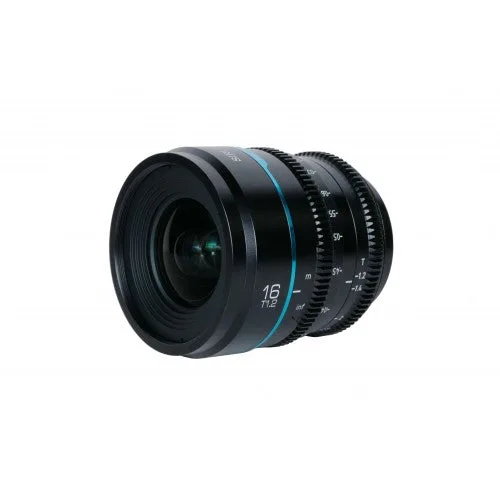
Sirui Nightwalker Series 75mm T1.2 S35 Cine Lens (Black)
-
Sirui Nightwalker Series 75mm T1.2 S35 Cine Lens (Black): Nightwalker lenses are described as sharing a consistent look, similar character, high sharpness and minimal breathing effect. Matching character across focal lengths is what makes a kit useful for multi-camera or edited sequences; minimal breathing matters for focus pulls.
-
Sirui Nightwalker Series 75mm T1.2 S35 Cine Lens (Black): The 75mm is a Super 35 (S35) cine lens, and the available variant is Sony E Mount (APS-C). Mount and sensor format are the first compatibility checks before you buy any cine lens.
Check the mount before anything else
- Sony E Mount (APS-C) is the listed variant: The supplied record shows the 75mm T1.2 in a Sony E Mount (APS-C) version. Confirm your camera body uses that mount and an APS-C or Super 35 sensor area before ordering.
- Do not assume other mounts are available: The catalog evidence lists only the Sony E Mount (APS-C) variant for this lens. If you shoot another system, treat mount availability as unconfirmed rather than assumed.
- Super 35 framing changes the effective view: A 75mm on a Super 35 sensor gives a tighter field of view than the same focal length on full frame. Plan your shot list around a longer lens, not a standard one.
Where a 75mm T1.2 earns its place on set
The fast T1.2 aperture is the reason to choose this lens over a slower telephoto. In low light, it lets you keep shooting when you would otherwise be adding light or raising ISO. That suits night exteriors, dim interiors and available-light documentary work where the scene cannot be lit.
For portrait video, the longer focal length and wide aperture combine to isolate a subject from the background. The catalog's claim of high sharpness and minimal breathing supports the kind of controlled, repeatable focus pulls that portrait and interview work depend on. What the supplied information does not confirm is a specific minimum focus distance, filter thread, weight or image circle coverage, so check those against your rig before you commit.
75mm versus the wider Nightwalker options
- 75mm T1.2: Telephoto compression, strong subject isolation, best for low-light portrait video and tighter coverage. Harder to use in small rooms.
- 16mm T1.2: The wide end of the same kit. Better for establishing shots and confined spaces; less background separation than the 75mm.
- 24mm, 35mm and 55mm: The earlier Nightwalker focal lengths. A 35mm or 55mm is often the more practical first lens if you need a general-purpose view.
A simple decision test before you buy
Buy the 75mm T1.2 if you already own a wider Nightwalker lens and want to extend the set, or if your work is dominated by portraits, interviews and low-light telephoto shots on a Sony E Mount APS-C body. Skip it for now if you need one lens to cover everything, or if your sets are tight enough that a 75mm would leave you backing into walls.
The catalog price of USD 419.30 against a comparison price of USD 599.00 is context for the decision, not a reason on its own. Weigh it against whether the focal length fills a real gap in your kit.