Quick answer
Use a slicker brush first to lift loose hair and surface debris from a thick coat, then run a comb through the same areas to confirm the coat is truly tangle-free. If the comb snags, go back to the slicker or work the tangle out by hand before continuing. For most thick-coated dogs, the slicker does the bulk work and the comb is the honesty check.
What each tool actually does on a thick coat
A slicker brush uses rows of fine pins to grab loose undercoat, lift dander, and smooth the top layer without scraping the skin. On a dense coat, it covers ground quickly and is the tool you reach for when you can see hair coming away in the brush. A comb, by contrast, has a single row of teeth that separates hair down to the skin. It does not remove much volume on its own, but it tells you exactly where tangles are hiding. The practical difference is coverage versus proof: the slicker clears the coat, the comb verifies it.
How to sequence them without yanking
Start on a dry, mostly tangle-free coat. Work in small sections, brushing in the direction the hair grows, and keep the pins in contact with the coat rather than digging into the skin. After each section, comb through it once. If the comb glides, move on. If it catches, stop and work that spot with your fingers or the slicker before resuming. Trying to comb through a mat pulls hair, and a slicker dragged across a tight mat can make it tighter. For thick coats, short sessions beat one long marathon.
Where the slicker wins and where the comb wins
The slicker wins on large flat areas like the back, flanks, and thighs, where its rectangular head covers more coat per stroke. The comb wins on the finishing pass and in tight spots such as behind the ears, under the collar, and around the tail base, where a slicker head is too wide to read the coat accurately. If you only own one tool, a slicker removes more hair; if you only own a comb, you will find tangles but struggle to clear heavy undercoat. The two are not competitors so much as a sequence.
Trade-offs to weigh before you buy
- Slicker brush: speed versus precision: A slicker clears loose hair fast across large areas, but its pins can glide over a hidden mat instead of revealing it. That is why it needs a comb follow-up on thick coats. Choose the slicker as your volume tool, not your final check.
- Comb: accuracy versus hair removal: A comb finds tangles a slicker misses, but it removes very little undercoat on its own. On a heavy double coat, combing alone will leave shedding hair behind. Keep the comb for verification and tight spots, not bulk removal.
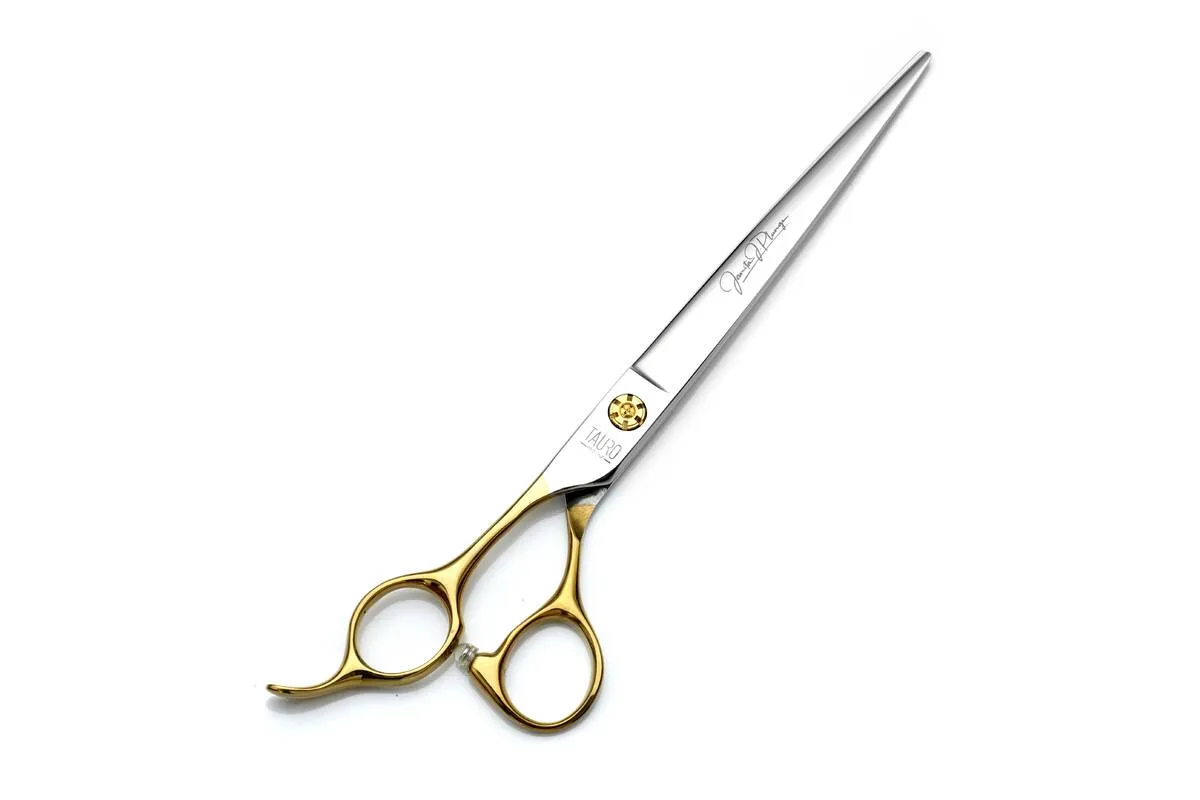
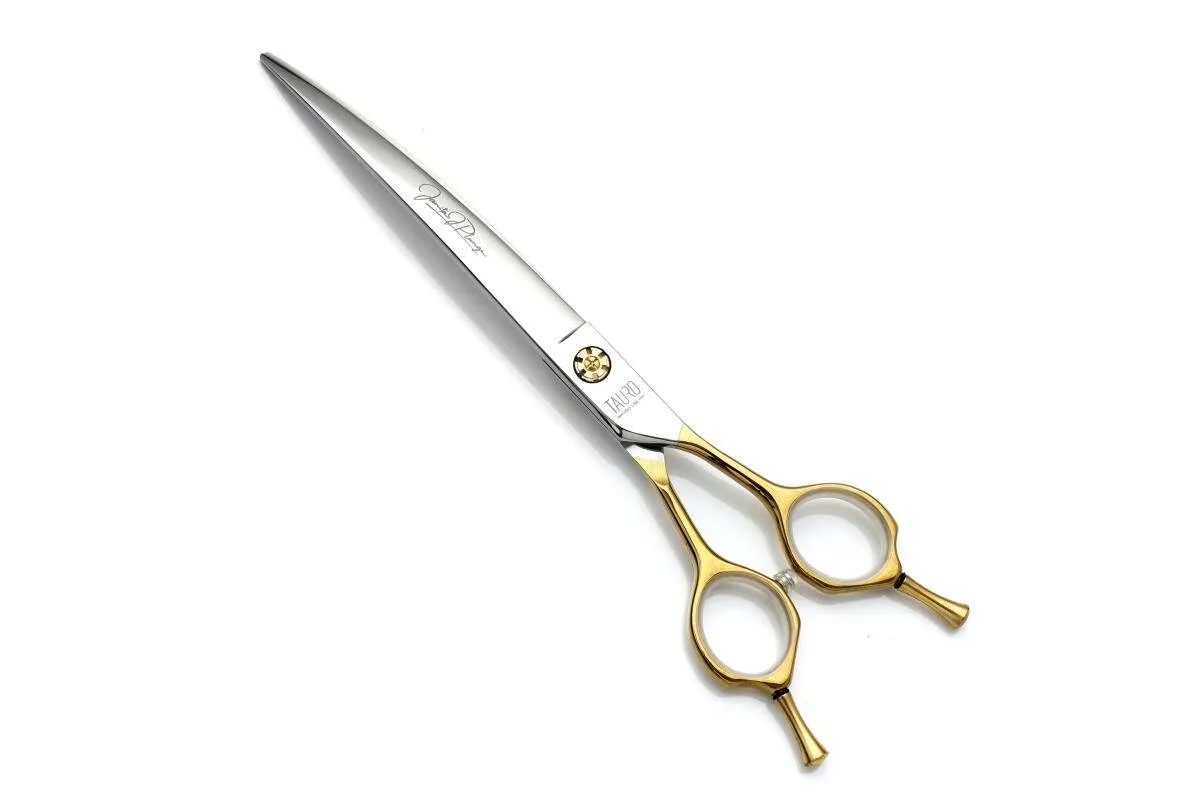
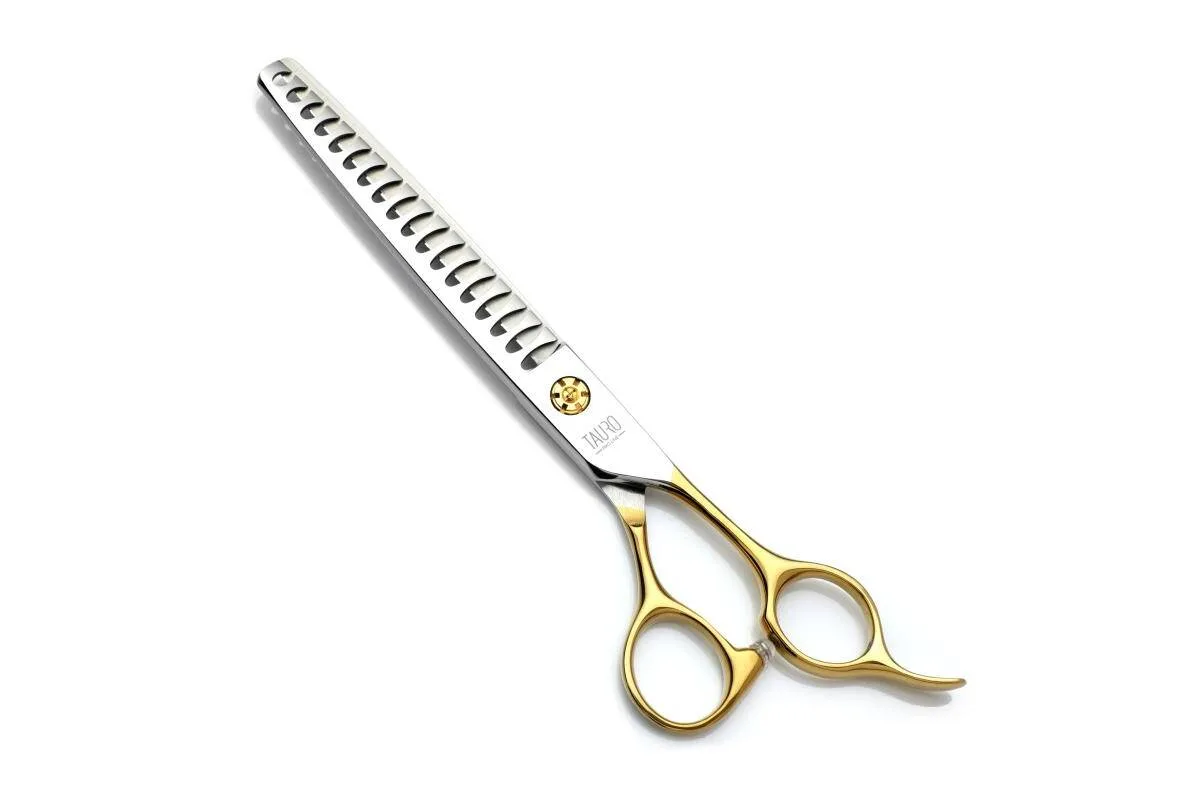
- Chunker scissors: bulk control versus a learning curve: Chunkers remove density from thick coats, but they are a cutting tool, so they demand a steady hand and a clear plan. They are not a substitute for brushing. Only reach for chunkers when brushing and combing cannot clear the coat.
Tools that fit this routine
- Ergonomic Rectangular Wooden Slicker Brush, 0.4” Pins: Ergonomic rectangular wooden slicker brush with 0.4-inch pins, designed for pets of all sizes and coat types, with a rectangular head for better coverage and control. The rectangular head covers more coat per stroke on thick dogs, and the 0.4-inch pins reach into dense hair without needing a second pass over the same area.
- Ultra Sharp Stainless Steel Chunker Grooming Scissors For Thick Coat: Ultra sharp stainless steel chunker grooming scissors made from 440C stainless steel, available in 7-inch (18 teeth) and 7.5-inch (24 teeth) options for removing bulk from thick, dense coats. If the slicker and comb reveal a coat that is too dense for either tool to clear, chunkers remove bulk before you continue, which reduces pulling on the skin.
- Pet Grooming Tool Bag with Adjustable Shoulder Strap Pink: Pet grooming tool bag with adjustable shoulder strap, made from durable water-resistant material, sized for clippers, brushes, scissors, and other grooming essentials. Keeping the slicker, comb, and scissors in one water-resistant bag means you are not hunting for the next tool mid-session, which matters when a thick coat needs several passes.
Which should you reach for?
Best for
- Owners of thick or double-coated dogs who need to remove loose undercoat before combing
- Groomers who want a fast first pass over large body areas
- Anyone building a two-tool routine where the comb confirms the slicker's work
Not for
- Pets with tight, skin-level mats that need professional dematting rather than brushing
- Owners looking for a single tool to do both bulk removal and tangle checking
- Short, smooth coats that do not build up undercoat