Quick answer
Use a slicker brush for removing tangles, mats, and loose undercoat on medium to long coats. Use a pin brush for gentle daily brushing on longer, silky coats or for finishing touches. The right choice depends on your dog's coat type and grooming goal.
What is a slicker brush?
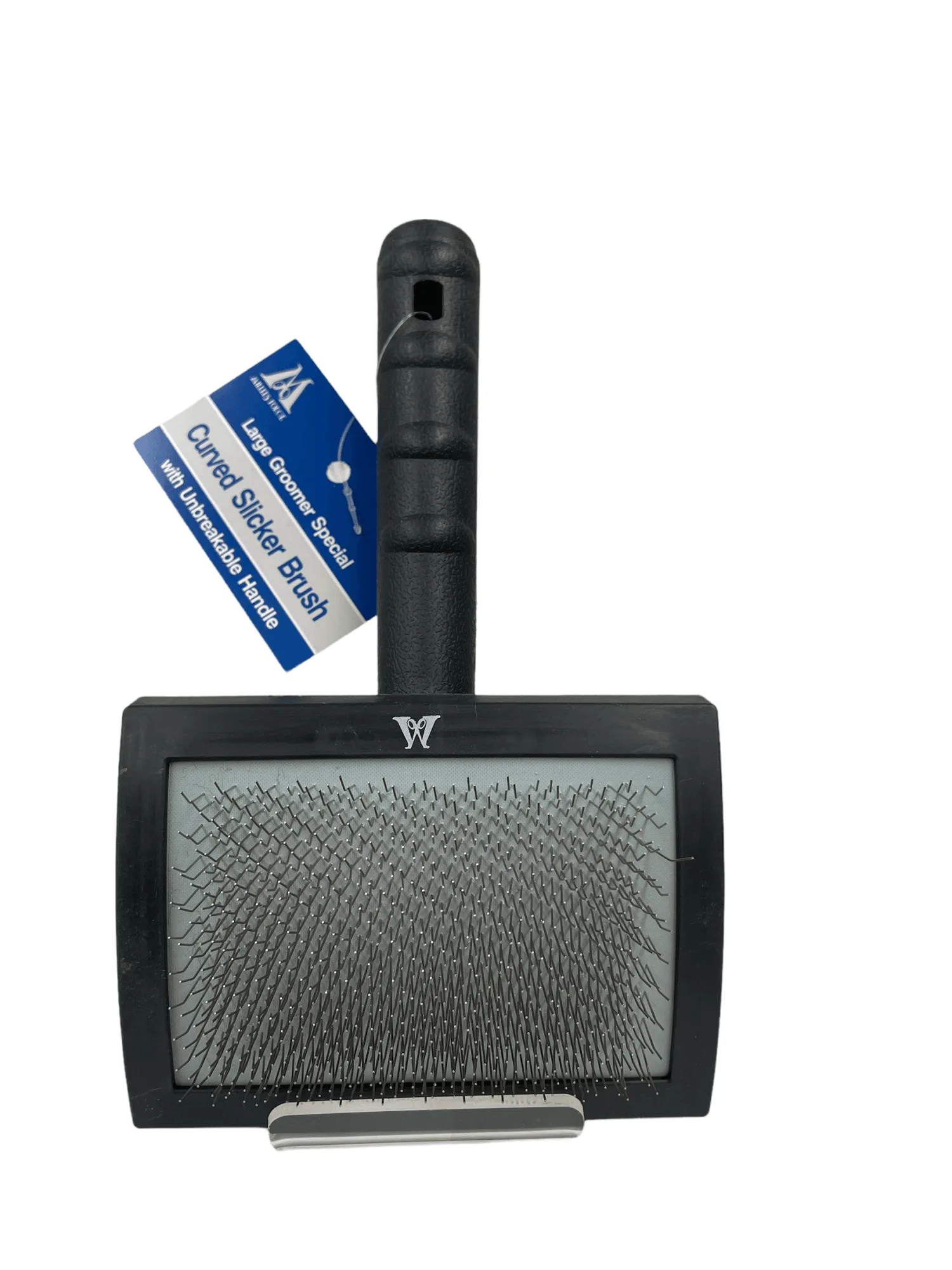
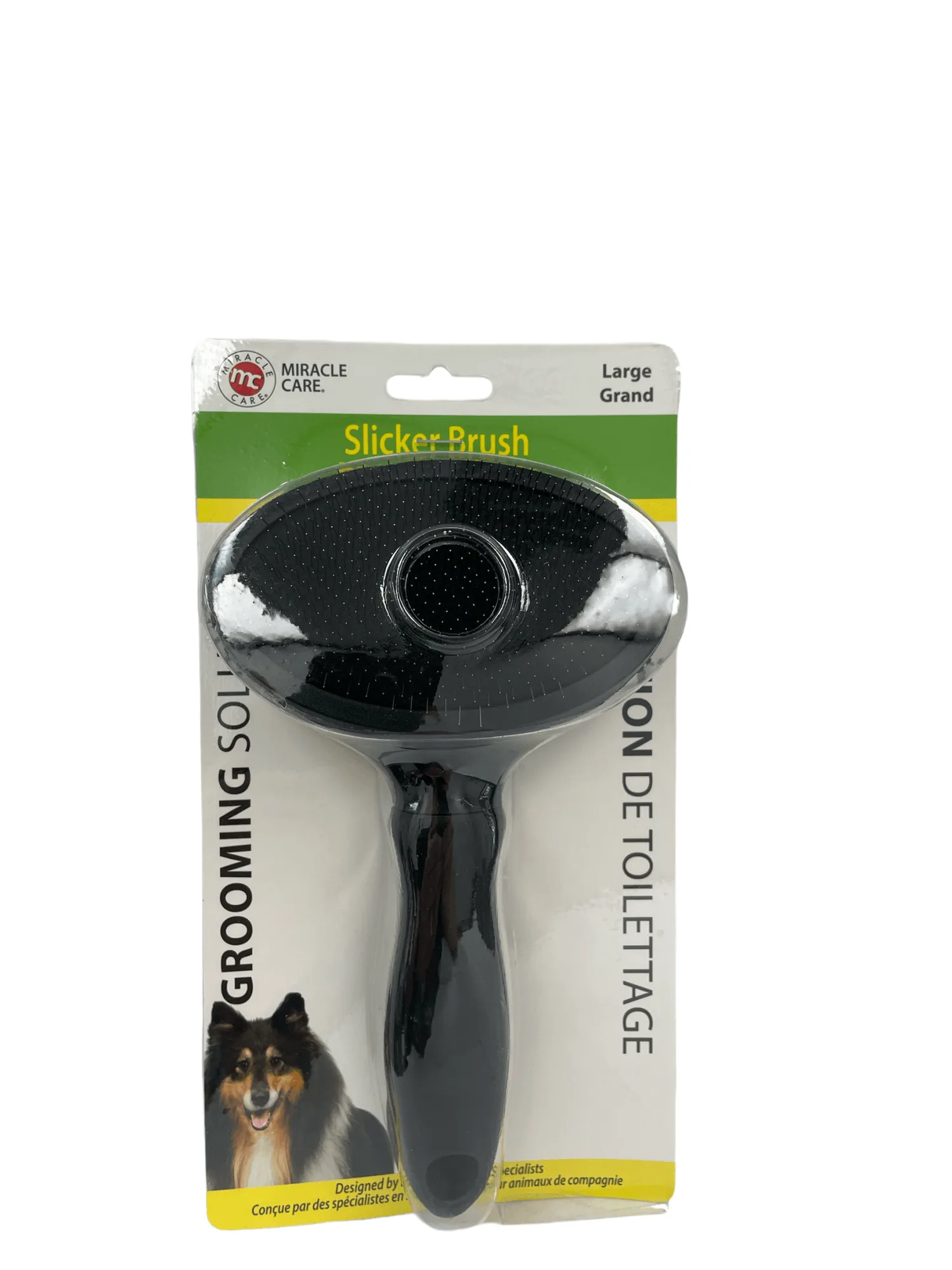
A slicker brush has a flat or curved pad with fine, closely spaced wire bristles that are bent at the tips. This design grabs and pulls out loose fur, tangles, and small mats without damaging the topcoat when used correctly. It is especially effective on double coats and medium to long hair that tends to mat.
What is a pin brush?
A pin brush looks like a human hairbrush with widely spaced straight pins topped with rounded tips. It is designed for gentle, daily brushing that removes surface debris and distributes natural oils. Pin brushes work best on long, silky, or wavy coats that do not mat easily, and they are often used as a finishing brush after detangling.
Key differences at a glance
The main difference is bristle density and tip shape. Slicker brushes have many fine, bent wires that catch undercoat and small tangles. Pin brushes have fewer, straight pins with protective tips that glide through the topcoat. This makes slicker brushes better for heavy shedding and mat prevention, while pin brushes are safer for sensitive skin and daily maintenance.
Trade-offs to consider
- Gentleness vs. detangling power: Pin brushes are gentler on the skin and ideal for daily brushing, but they lack the ability to remove mats or heavy undercoat. Slicker brushes can detangle effectively but require careful technique to avoid scratching sensitive skin. Use a slicker brush for detangling sessions and a pin brush for quick daily upkeep.
- Coat type compatibility: Slicker brushes work best on double coats, medium to long hair, and breeds prone to matting (e.g., Golden Retrievers, Collies). Pin brushes suit long, silky, or single-coated breeds (e.g., Yorkshire Terriers, Shih Tzus) that need gentle smoothing. Match the brush to your dog's coat texture and matting tendency.
- Size and ergonomics: Large slicker brushes like the Miracle Corp Slicker Brush-Large cover more area but can be bulky for small dogs. Curved slickers like the Millers Forge Curved Slicker-Large improve access to tricky spots but may feel different in hand. Choose a size and shape that fits both your dog and your grip comfort.
Two slicker brushes compared
- Miracle Corp Slicker Brush-Large: Miracle Corp Slicker Brush-Large is crafted from high-quality materials with non-abrasive bristles perfect for removing tangles and mats without damaging fur. Its larger size is designed to provide an efficient grooming experience for larger pets. If you groom large or thick-coated dogs regularly, this brush covers more surface area per stroke, saving time while still being gentle on the coat.
- Millers Forge Curved Slicker-Large: The Millers Forge Curved Slicker-Large features a curved design that reaches tricky spots like the underbelly and paws. Its fine bristles remove dirt, debris, and loose fur with ease, making it perfect for regular grooming of large dogs. The curved shape helps contour to your dog's body, making it easier to groom sensitive areas without missing spots or causing discomfort.
Which brush should you choose?
Best for
- Owners of medium to large dogs with thick or double coats who need efficient detangling and undercoat removal
- Groomers who want a curved slicker for hard-to-reach areas like the belly and legs
Not for
- Dogs with very short, smooth coats that rarely mat (a rubber curry or bristle brush is better)
- Daily-only brushing on sensitive-skinned breeds without matting issues (a pin brush is gentler)