Quick answer
Choose a sling bag by the items you carry daily, not by the liter count. For an everyday sling bag, a compact crossbody sling bag that holds a phone, wallet, keys, and a small power bank is enough. For a travel sling bag, pick a slightly larger size that fits a tablet, passport, and a light layer, and confirm the strap sits across your chest without pulling.
A sling bag is a small crossbody pack that sits diagonally across your torso, so it swings to the front for quick access. That single-strap design is why size matters more than it does on a backpack: too small and you leave essentials behind, too large and the bag pulls on one shoulder all day.
This guide gives you concrete rules for picking a size, checking fit, and deciding between a travel sling bag and an everyday sling bag. It also covers how to use a sling alongside a larger carry-on or backpack when you need both quick access and bulk storage.
Start with your daily carry, not the bag
Empty your pockets and current bag onto a table. Group items into three piles: pocket essentials (phone, wallet, keys), daily extras (power bank, cable, sunglasses, small notebook), and occasional items (water bottle, light jacket, tablet). A sling bag that fits the first two piles and has a little room left is the right everyday sling bag for most people.
Then measure the largest item in the occasional pile. If it is a tablet or a folded layer, you need a sling with a main compartment long enough to lay it flat. If your occasional items are bulky, a sling may be the wrong shape and a small backpack or tote will serve you better.
- If your daily carry is phone, wallet, keys, and a power bank, a mini or small crossbody sling bag is enough.
- If you add a tablet, passport, or a light layer, move up one size and check the main compartment length.
- If you carry a water bottle every day, look for a sling with an exterior bottle pocket or choose a different bag style.
Sling bag size guide: match capacity to use
Sling bags generally come in three practical sizes. Mini slings carry a phone, cards, and keys, and work best as a secondary bag on trips. Small slings add a power bank, cable, and sunglasses, and are the sweet spot for commuting and city days. Medium slings fit a tablet, a light layer, and a notebook, and can serve as your only bag on a short outing.
Use this sling bag size guide as a starting point, then verify with the bag's stated dimensions and your own items. If a product page does not list internal dimensions or compartment depth, treat that as a decision limitation and ask before buying, because a sling that is 2 cm too short will not close over a tablet.
- Mini: phone, wallet, keys, earbuds. Best as a secondary bag.
- Small: adds power bank, cable, sunglasses, small notebook. Best for daily commuting.
- Medium: adds tablet, passport, light layer. Best for travel days and short outings.
Check the fit before you commit
A sling bag should sit high on your back or chest, with the strap crossing from one shoulder to the opposite hip. The bag body should rest against your torso, not hang at your side. If it swings when you walk, the strap is too long or the bag is too heavy for its size.
Adjust the strap so the bag sits at the height where your hand falls naturally. You should be able to reach the main zipper without lifting your elbow above shoulder height. If you plan to wear the sling on your front for security, check that it does not block your view of your feet or restrict arm movement.
- Wear it high and close; a sling that hangs low will bounce and tire one shoulder.
- Test reaching the main compartment with the bag on your front and on your back.
- If you are between sizes, choose the smaller one for everyday use and the larger one only if you regularly carry a tablet or layer.
Crossbody sling bag vs. other small bags
A crossbody sling bag and a traditional crossbody purse share a diagonal strap, but a sling usually has a wider, more structured body and often a second strap or stabilizer. That makes it more stable for walking and cycling. A mini crossbody with a flip-lock closure, like the Coastal Flip Lock Mini Crossbody, is lighter and quicker to open, but it carries less and offers less padding.
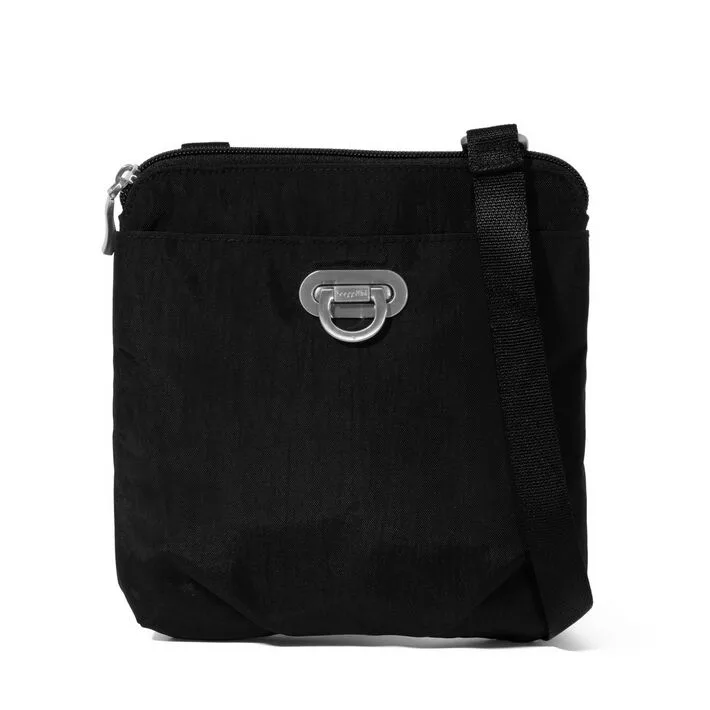
Coastal Flip Lock Mini Crossbody
If your priority is quick access and a secure closure, a compact crossbody works well. If you need to carry a tablet or a water bottle, a sling with a larger main compartment and an exterior pocket is the better choice. Neither is automatically better; the decision rule is whether you need structure and capacity or minimal weight.
- Choose a sling when you want stability, padding, and room for a tablet or layer.
- Choose a mini crossbody when you want the lightest possible bag for phone, cards, and keys.
- If you carry a laptop, a sling is not the right primary bag; use a backpack or briefcase instead.
Use a sling alongside your main luggage
On travel days, a sling bag works best as a personal item that stays on your body while your main bag goes in the overhead bin or under the seat. Keep your passport, phone, boarding pass, and a pen in the sling so you never open your larger bag in a security line. A sling also lets you leave your main bag in a hotel room and carry only what you need for the day.
If you are already carrying a backpack or tote, check that the sling strap does not dig into the other bag's strap. Wearing the sling across your chest and the backpack on both shoulders usually works, but test it before a long trip. For overnight trips where the sling is your only bag, a medium size with a tablet sleeve and a small toiletry pouch is the practical limit.
- Keep travel documents in the sling, not in your main bag.
- Test the sling with your other bags before you leave; strap overlap is the most common comfort problem.
- For a one-bag overnight trip, a medium sling plus a packing cube is more realistic than a mini sling.
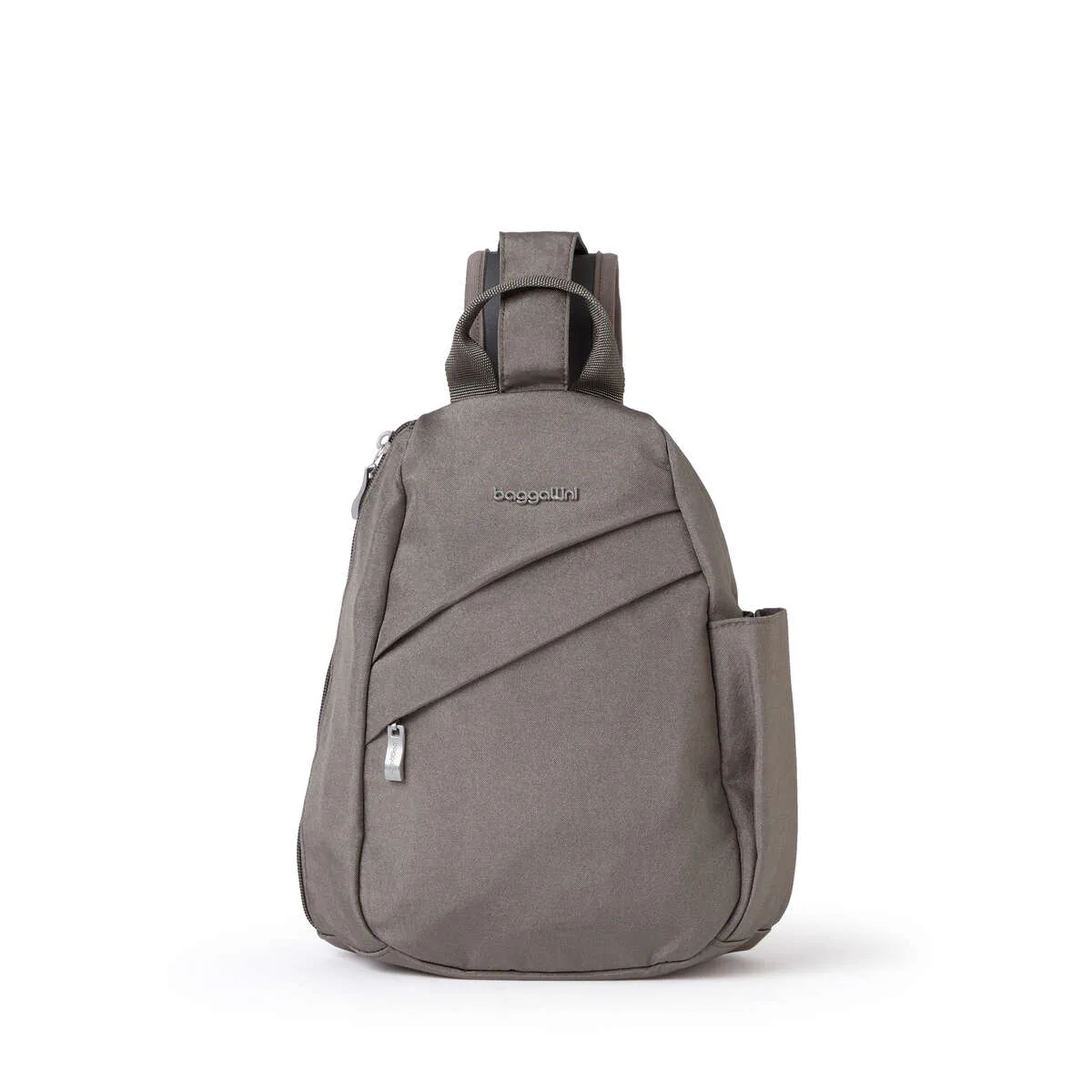
medium sling
Sling bag size decision rules
- Rule 1: Carry list first: Write down every item you carry on a normal day. If the list fits in two pockets, choose a mini or small sling. If it includes a tablet or a light layer, choose a medium sling. If your list does not fit, size up before you buy.
- Rule 2: Measure the longest item: Measure your tablet, notebook, or folded layer. Compare it to the sling's stated internal length. If the product page does not list internal dimensions, treat that as a decision limitation and ask the seller. A sling that is 2 cm too short will not close over your tablet.
- Rule 3: Fit check at the height of your hand: Adjust the strap so the bag sits where your hand falls naturally. You should reach the main zipper without lifting your elbow above shoulder height, and the bag should not swing when you walk. If it swings or hangs at your side, shorten the strap or size down.
- Rule 4: Match the bag to the trip: For travel, choose a sling that holds passport, phone, and a light layer, and wear it on your front in crowds. For everyday use, choose the smallest sling that holds your daily carry. One sling rarely does both jobs perfectly; pick the priority.
Product facts that help you decide
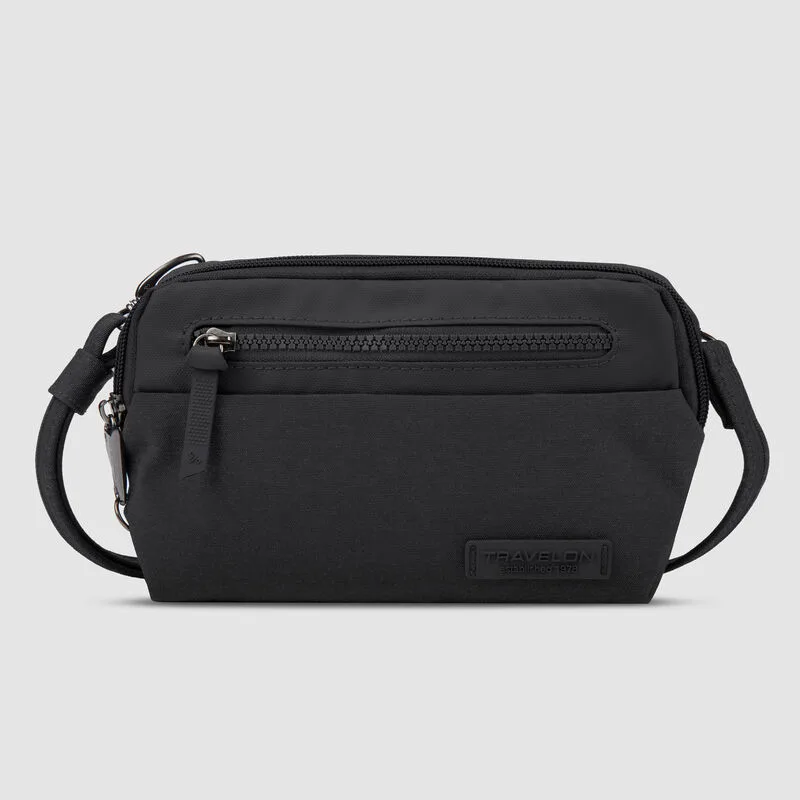
- Metro Convertible Small Crossbody: Water-resistant, built-in security, and quality workmanship provide a bag that will stand up to the daily pace of the urban experience. If you want a compact crossbody sling bag for city days and commutes, this is a small-size option with security features and water resistance.
- Coastal Flip Lock Mini Crossbody: This mini crossbody bag comes with a sleek new flip lock closure and plenty of quick-access pockets. A mini size with a flip-lock closure and quick-access pockets suits phone, cards, and keys when you want the lightest everyday carry.
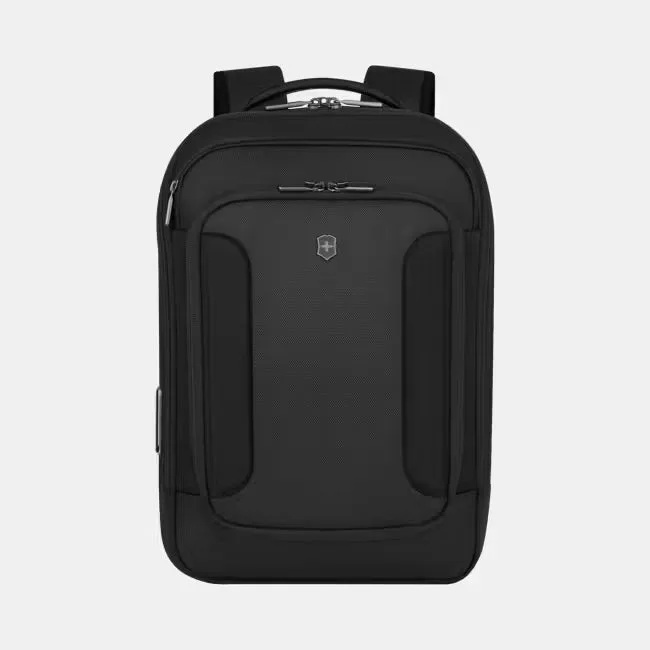
- Werks Traveler 7.0 Compact Backpack: Cleverly designed to integrate everything you need for work, including dedicated business organization and electronic device compartment with anti-scratch lining. If your daily carry includes a laptop and work files, a compact backpack with device organization is a better primary bag than a sling; use the sling as a secondary personal item.
Who should choose which sling size
Best for
- Commuters and city walkers who carry phone, wallet, keys, power bank, and sunglasses
- Travelers who need a personal item for passport, phone, and boarding pass while a larger bag stays stowed
- Anyone who wants a crossbody sling bag that stays stable while walking or cycling
Not for
- Carrying a laptop or large work files as your primary load; choose a backpack or briefcase instead
- Packing for an overnight trip without a second bag; a sling alone is too small for clothes and toiletries
- People who dislike a strap across the chest or prefer two-shoulder carry
Pick your sling size by your daily carry list first, then confirm the strap fit and the main compartment length against your largest item. If you need a compact everyday option, the Metro Convertible Small Crossbody and Coastal Flip Lock Mini Crossbody are practical starting points. If your day includes a laptop, keep the sling as a secondary bag and carry a backpack for the bulk.