Quick answer
Yes, slow feeder cat bowls can slow eating, but only if the design forces your cat to pick, lick, or paw at food instead of gulping it. They are not a medical fix for vomiting or digestion problems, and they won't suit every cat. For many fast eaters, a ceramic slow feeder like the Fussy Cat - The Slow Feeder is a practical, low-cost way to add a few seconds to each bite.
Myth: Any bowl with bumps slows a cat down
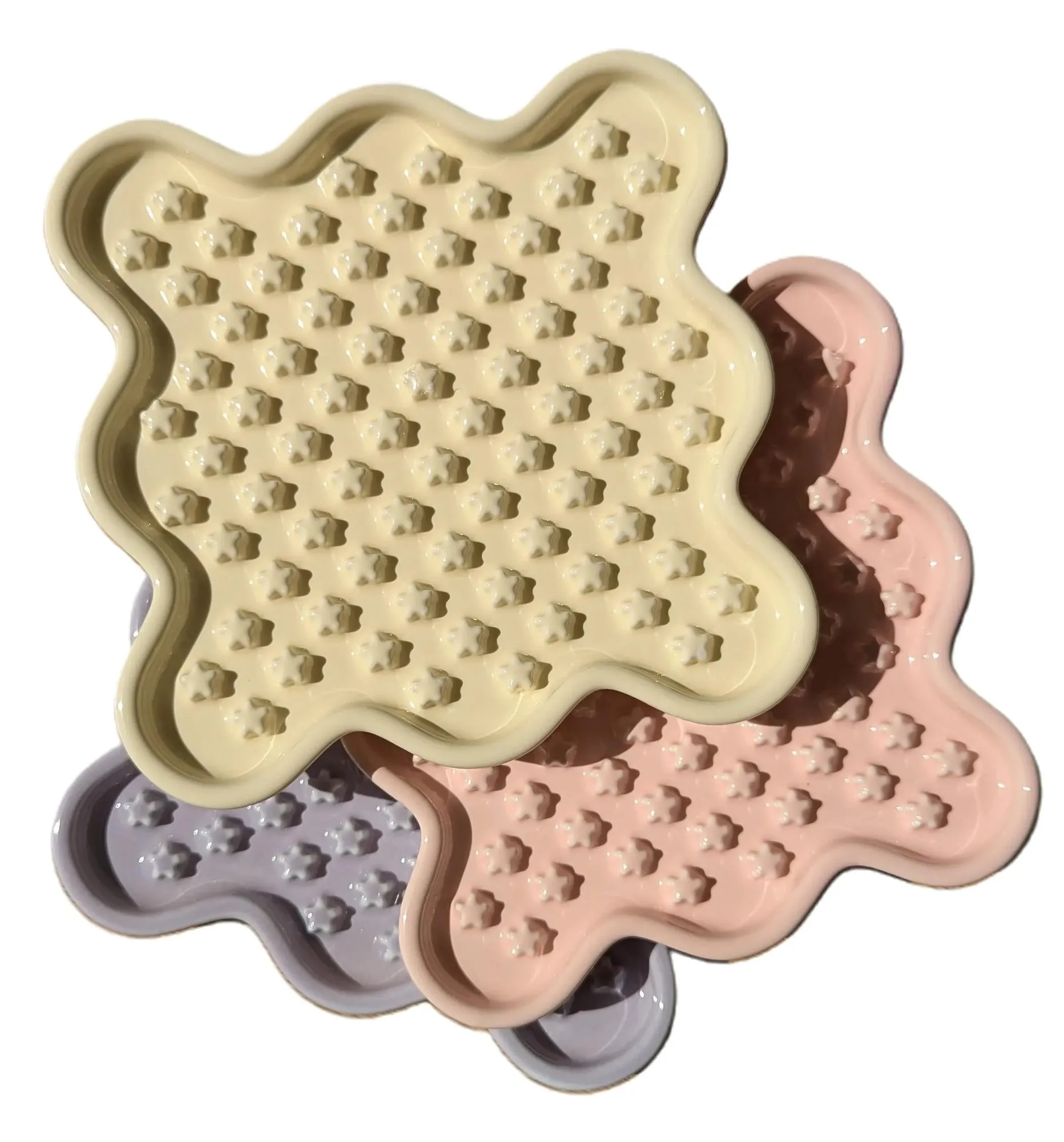
A bowl only slows eating if its shape makes the cat work for each mouthful. Flat plates or shallow dishes with a few ridges often let cats scoop food just as quickly. A true slow feeder has obstacles, channels, or a lick-mat surface that force the tongue and paw to navigate around them. The Fussy Cat - The Slow Feeder is designed like a lick mat, so the cat has to pick, lick, and paw at the food rather than swallow it in one go. That physical barrier is what changes eating speed, not the label on the bowl.
Myth: Slow feeders are only for overweight cats
Fast eating shows up in cats of any weight. Some cats gulp because they were fed in a multi-cat home, others because they're bored, and some just eat quickly. A slow feeder can help any cat that finishes a meal in under a minute or two. It also adds a bit of mental stimulation, which is useful for indoor cats that don't hunt. If your cat is a normal weight but inhales food, a slow feeder is still worth trying.
Myth: Slow feeders fix vomiting and digestion problems
Slowing eating can reduce gulping, and gulping is sometimes linked to vomiting right after meals. But a slow feeder is not a treatment for underlying digestion issues, food sensitivities, or medical conditions. If your cat vomits often, loses weight, or seems uncomfortable after eating, see your vet. A slow feeder is a management tool, not a cure. It may help with the mechanics of eating too fast, but it won't address causes like allergies or illness.
Myth: All cats take to slow feeders immediately
Some cats get frustrated when food doesn't come easily. Fussy cats may walk away if the bowl feels awkward or smells wrong. That's why material matters. Many cats dislike the smell of plastic or the feeling of their whiskers touching a bowl's edge. The Fussy Cat - The Slow Feeder is handmade from ceramic with a sealed surface, so it doesn't hold odors the way some plastics can. Ceramic also has enough weight that it won't slide around while your cat works at it. If your cat is hesitant, start with wet food or a high-value treat smeared into the grooves so the payoff is worth the effort.
Verdicts on common slow feeder claims
- Claim: Slow feeders stop cats from eating too fast: A well-designed slow feeder with obstacles or a lick-mat surface does slow eating by forcing the cat to work for each bite. The Fussy Cat - The Slow Feeder uses that approach. Verdict: True for many cats, but not a guarantee for every cat.
- Claim: Slow feeders are a cure for vomiting: Slowing eating may reduce gulping-related vomiting, but it does not treat medical causes like food allergies, inflammation, or illness. Verdict: False. See your vet for persistent vomiting.
- Claim: Any cat will use a slow feeder right away: Fussy cats may reject a bowl that smells like plastic or feels uncomfortable. Ceramic options like the Fussy Cat - The Slow Feeder avoid those issues, but some cats still need a gradual introduction with tasty food. Verdict: False. Patience and the right material matter.
Product facts behind these verdicts
- Fussy Cat - The Slow Feeder: The Fussy Cat - The Slow Feeder is a ceramic bowl designed like a lick mat, promoting healthy eating by slowing down the whole eating process and forcing cats to pick, lick, and paw at the food. This design directly addresses gulping by adding physical obstacles, which is the core mechanism that makes a slow feeder work.
- Fussy Cat - The Slow Feeder: Handmade from ceramic with a totally sealed surface, which avoids the plastic smell some cats dislike and prevents whiskers from touching a rough edge. Fussy cats are more likely to use a bowl that doesn't smell or feel unpleasant, so the material can make or break the slow-feeding habit.