Two miniature kits, two very different builds
The Hands Craft Slow Life Café and Hikari House are both DIY miniature house kits, but they ask for different things from you. One is a cozy coffee shop scene packed with tiny cups and appliances; the other is a multi-level Japanese-style home with floor-to-ceiling windows and switch-activated LED lighting. The right pick depends on whether you want a quick, detailed café build or a longer architectural project with a specific age range and a confirmed assembly time.
This comparison sticks to what the catalog confirms for each kit. Where a detail is not supplied, such as a piece count for the café or an age range for the café, that is a limitation of the available information, not a guess about the product.
What each kit includes and what it asks of you
-
Hands Craft | Slow Life Café: The Slow Life Café kit includes detailed furniture, kitchen appliances, tiny cups, and accessories, all in scale for a coffee shop scene, plus light fixtures with tiny LED bulbs, an LED light, electrical wires, a battery case, glue, and tweezers. If you want a self-contained café scene with the core tools included, this kit gives you the decorative pieces and the basics for lighting and assembly in one box.
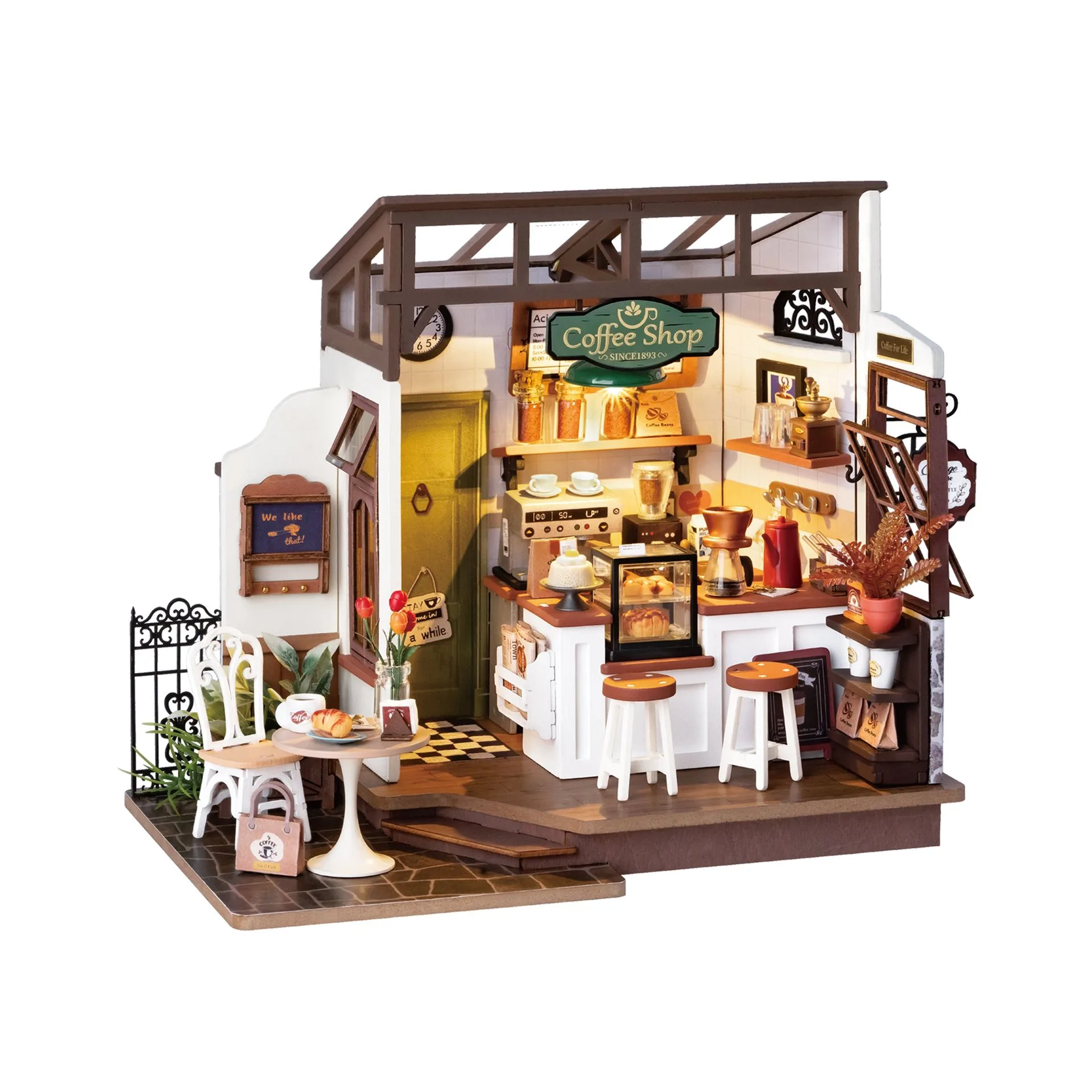
Hands Craft | Slow Life Café
-
Hands Craft | Hikari House: The Hikari House kit is a multi-level contemporary home inspired by Japanese-style design, with realistic miniature furniture, floor-to-ceiling windows, a switch-activated LED light, 431 pieces, and a listed assembly time of 6–8 hours. The confirmed piece count and assembly time make it easier to plan a longer build, while the switch-activated light and window design suit display in a room or on a shelf.
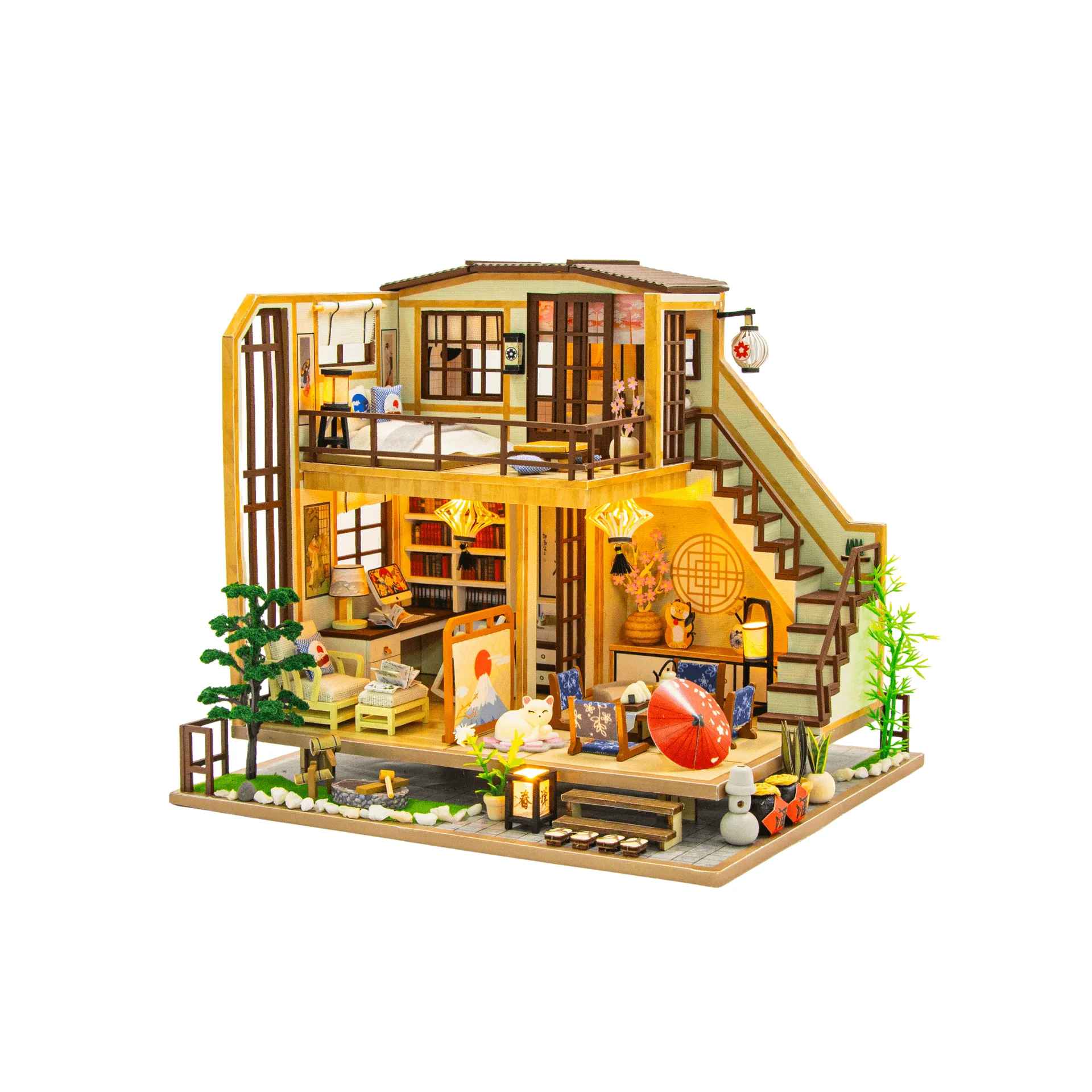
Hands Craft | Hikari House
-
Hands Craft | Slow Life Café: The Slow Life Café kit requires 2 AAA batteries, which are not included. You can buy batteries before you start so the LED lighting works as soon as the build is finished.
-
Hands Craft | Hikari House: The Hikari House kit requires 2 AAA batteries, which are not included, and has a listed age range of 14+. The age range and battery requirement are practical checks before buying, especially if the kit is a gift for a younger builder.
Café scene vs Japanese-style house: theme, lighting, and display
Both kits use LED lighting, but the way you activate and display that light differs. The café's warm LED bulbs are meant to add a finishing touch to a room, table, or shelf. The Hikari House uses a switch-activated LED light integrated into a multi-level home with large windows, which changes how the finished piece reads in a display space.
- Theme and contents: Slow Life Café builds a coffee shop interior with a counter, tables, a tiny coffee machine, cups, and kitchen appliances. Hikari House builds a Japanese-inspired contemporary home with multiple levels and miniature furniture.
- Lighting: Slow Life Café includes light fixtures with tiny LED bulbs and a battery case. Hikari House includes a switch-activated LED light integrated into the home. Both need 2 AAA batteries, not included.
- Display footprint: The Hikari House has a confirmed assembled size of 8.7 x 7.7 x 7.7 inches. The supplied information does not list assembled dimensions for the Slow Life Café, so measure your shelf or table and treat the café's final size as unconfirmed until you check the product page.
- Build time and piece count: Hikari House lists 431 pieces and a 6–8 hour assembly time. The Slow Life Café does not list a piece count or assembly time in the supplied information, so plan for an open-ended session rather than a fixed block.
Tools and preparation before you start
The Slow Life Café includes glue, tweezers, an LED light, electrical wires, and a battery case. The catalog also recommends extra tools: a ruler, scissors, a utility knife, pliers, a pencil, a binder clip, and a screwdriver. Some paper pieces need to be cut out and glued together, so a clear workspace and a cutting mat are worth setting up first.
The Hikari House record does not list included tools in the supplied information. If you choose that kit, check the product page or packaging for the tool list before you begin, and have your own craft knife, glue, and tweezers on hand as a sensible fallback.
- Buy batteries first: Both kits need 2 AAA batteries that are not included. Pick them up with the kit so you can test the lighting as soon as assembly is complete.
- Set up a cutting and gluing zone: The Slow Life Café includes paper pieces that need cutting and gluing. A ruler, scissors, utility knife, and binder clip from the recommended list help keep those steps tidy.
- Plan for a longer session with Hikari House: With 431 pieces and a 6–8 hour assembly time, Hikari House suits a builder who wants a multi-session project. The café's time is not listed, so it may fit a shorter or more flexible schedule.
Which kit fits your plans?
Choose the Slow Life Café if you want a coffee shop scene with tiny cups, appliances, and warm LED lighting, and you like the idea of a kit that includes core tools like glue and tweezers. It is a good fit for a display on a table or shelf where a cozy, detailed interior is the goal.
Choose the Hikari House if you prefer a Japanese-style miniature house with a confirmed 14+ age range, a 431-piece build, and a listed 6–8 hour assembly time. Its assembled size of 8.7 x 7.7 x 7.7 inches and switch-activated LED light make it easier to plan a specific display spot.
If you are buying as a gift, the Hikari House age range is a clear checkpoint. The Slow Life Café's age range is not confirmed in the supplied information, so check the product page before buying for a younger builder. Neither kit's record confirms certifications or developmental outcomes, so base the decision on the theme, listed specifications, and the builder's interest rather than on claims the catalog does not make.