Quick answer
For most small pets, a stoneware bowl like the Great&Small Penrose Teal Stoneware Small Animal Bowl offers the best balance of hygiene, stability, and durability. Plastic bowls are lightweight and cheap but can be chewed and harbor bacteria. Ceramic bowls are heavy and stable but may chip.
Why material matters for small animal bowls
Guinea pigs, rabbits, and other small animals have specific needs when it comes to their feeding bowls. The material affects hygiene, safety, and how easily the bowl tips over. A bowl that is too light can be flipped, spilling food and water. A bowl made from unsafe materials can leach chemicals or be chewed into sharp pieces.
Stoneware: the top choice for most owners
Stoneware bowls are fired at high temperatures, making them dense, non-porous, and resistant to bacteria. The Great&Small Penrose range is dishwasher safe, which simplifies cleaning and ensures a hygienic feeding surface every day. The no-slip feet keep the bowl in place, reducing mess. Stoneware is heavy enough to resist tipping but not so brittle that it shatters easily.
Plastic: lightweight but risky
Plastic bowls are inexpensive and come in many colors, but they have drawbacks. Small animals, especially rabbits and guinea pigs, may chew on plastic, ingesting harmful particles. Plastic can also develop scratches that trap bacteria, making thorough cleaning difficult. If you choose plastic, opt for a heavy-bottomed, chew-resistant design and replace it at the first sign of damage.
Ceramic: stable but breakable
Standard ceramic bowls are heavy and stable, which helps prevent tipping. However, they are more prone to chipping or cracking if dropped or if your pet is particularly active. Chipped ceramic can create sharp edges that may injure your pet. Always inspect ceramic bowls regularly and discard any with damage.
Stoneware vs Plastic vs Ceramic: trade-offs at a glance
- Stoneware: Best overall: hygienic (dishwasher safe), stable (no-slip feet), durable, and safe. Slightly heavier than plastic but not brittle like ceramic. The Great&Small Penrose bowl is a great example.
- Plastic: Lightweight and cheap, but can be chewed, scratches easily, and may harbor bacteria. Not recommended for chewers. Replace often. If you must use plastic, choose a heavy-bottomed design and inspect for damage weekly.
- Ceramic: Heavy and stable, but can chip or crack. Chipped ceramic can be sharp. Not dishwasher safe in many cases. Good for non-chewers if you check regularly. Inspect ceramic bowls before every use and discard if chipped.
Product facts
-
Great&Small Penrose Teal Stoneware Small Animal Bowl: The Great&Small Penrose Teal Stoneware Small Animal Bowl is dishwasher safe and has no-slip feet. Dishwasher-safe means you can sanitize it easily, and the no-slip feet keep the bowl stable during feeding, reducing spills and mess.
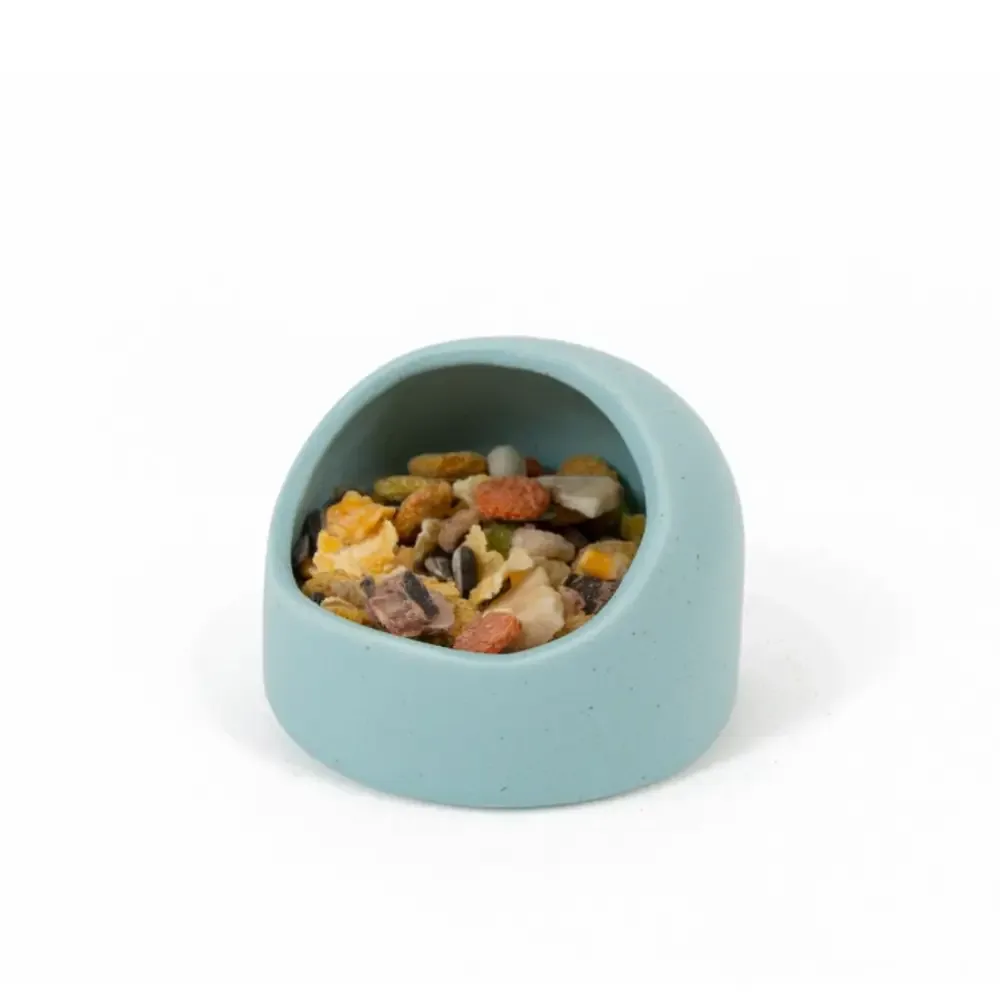
Great&Small Penrose Teal Stoneware Small Animal Bowl
Which bowl is right for your pet?
Best for
- Owners who want a hygienic, stable bowl that is easy to clean and safe for daily use
- Guinea pigs and rabbits that tend to tip lighter bowls
Not for
- Owners on a very tight budget (plastic is cheaper upfront)
- Pets that are extremely aggressive chewers (stoneware can still be damaged over time)