Quick Answer
Choose Smart Games when you want a single-player logic puzzle with rules, levels, and a right-or-wrong solution that builds reasoning and planning. Choose a jigsaw puzzle when you want a quiet, open-ended activity that builds visual-spatial skills and patience. Many families keep both: a logic game for focused brain teaser sessions and a jigsaw for calm, screen-free downtime.
Both Smart Games and jigsaw puzzles let one child work alone, so they often end up in the same shopping cart. But they ask the brain to do very different things. A jigsaw is a picture you rebuild piece by piece; a single-player logic puzzle is a problem you solve with rules and a correct answer.
That difference shapes everything: how long a session lasts, how mistakes feel, and which skills get practice. Knowing the trade-offs helps you pick brain teaser games for kids that actually get used instead of sitting on the shelf.
How the Two Puzzle Types Actually Work
A jigsaw puzzle gives you a fixed image and a pile of interlocking pieces. There is no rulebook and no wrong move, only pieces that fit or do not. Progress is visible: the border grows, the picture emerges, and the finish line is the last piece. Most children can start a simple jigsaw before they can read, and adults can work alongside them without changing the challenge.
A Smart Games-style logic puzzle flips that structure. You get a challenge card or level, a set of playing pieces, and a goal, such as placing pieces so certain conditions are met. Each puzzle has one valid solution or a small set of solutions. You test an idea, hit a dead end, and revise. The feedback is logical rather than visual, which is why these are often described as single player logic puzzles rather than picture puzzles.
- Jigsaws reward pattern matching and persistence; logic puzzles reward planning and rule-following.
- A jigsaw has no failure state, while a logic puzzle deliberately lets you be wrong before you are right.
Skills Each Type Builds
Jigsaw puzzles strengthen visual-spatial reasoning, shape recognition, and the ability to hold a partial picture in mind while scanning for the next piece. They also teach a gentle form of patience because the reward is continuous. For younger children, that makes jigsaws a low-pressure entry point into focused table time.
Logic puzzles build a different set of muscles: sequencing, deduction, and the habit of testing an assumption before committing to it. Because the solution is verifiable, children learn to check their own work instead of asking an adult whether it is right. That self-correction loop is valuable for school-age kids who are ready for a challenge that has a clear answer.
- Use jigsaws when you want calm, open-ended focus.
- Use logic puzzles when you want a child to practice reasoning and self-checking.
Session Length, Replay Value, and Independence
A jigsaw is usually a one-and-done experience at a given size. Once the picture is built, the challenge is gone unless you take it apart and wait a while. The upside is that jigsaws scale easily: a 24-piece puzzle and a 500-piece puzzle use the same skill at different intensities, so siblings of different ages can work side by side.
Logic puzzles tend to have more replay value because the challenge set can be reset. You can solve the same puzzle again faster, or move to a harder level. That makes them efficient for travel, waiting rooms, and quiet time, since a single compact game can occupy a child repeatedly. The trade-off is that a logic puzzle demands more adult explanation the first time, especially for younger players.
- Jigsaws are easier to share; logic puzzles are easier to replay solo.
- If a child gets frustrated by rules, start with a jigsaw and introduce logic puzzles later.
Where 3D and Collectible Puzzles Fit
Not every puzzle is flat. Build-and-keep options such as EUGY 3D puzzles sit between the two categories: they are assembled like a craft, but they follow a set sequence and end in a display piece. The EUGY Armadillo 3D Puzzle is described as eco-friendly and can be assembled in 10 to 20 minutes, which makes it a short, satisfying project rather than a long table session.
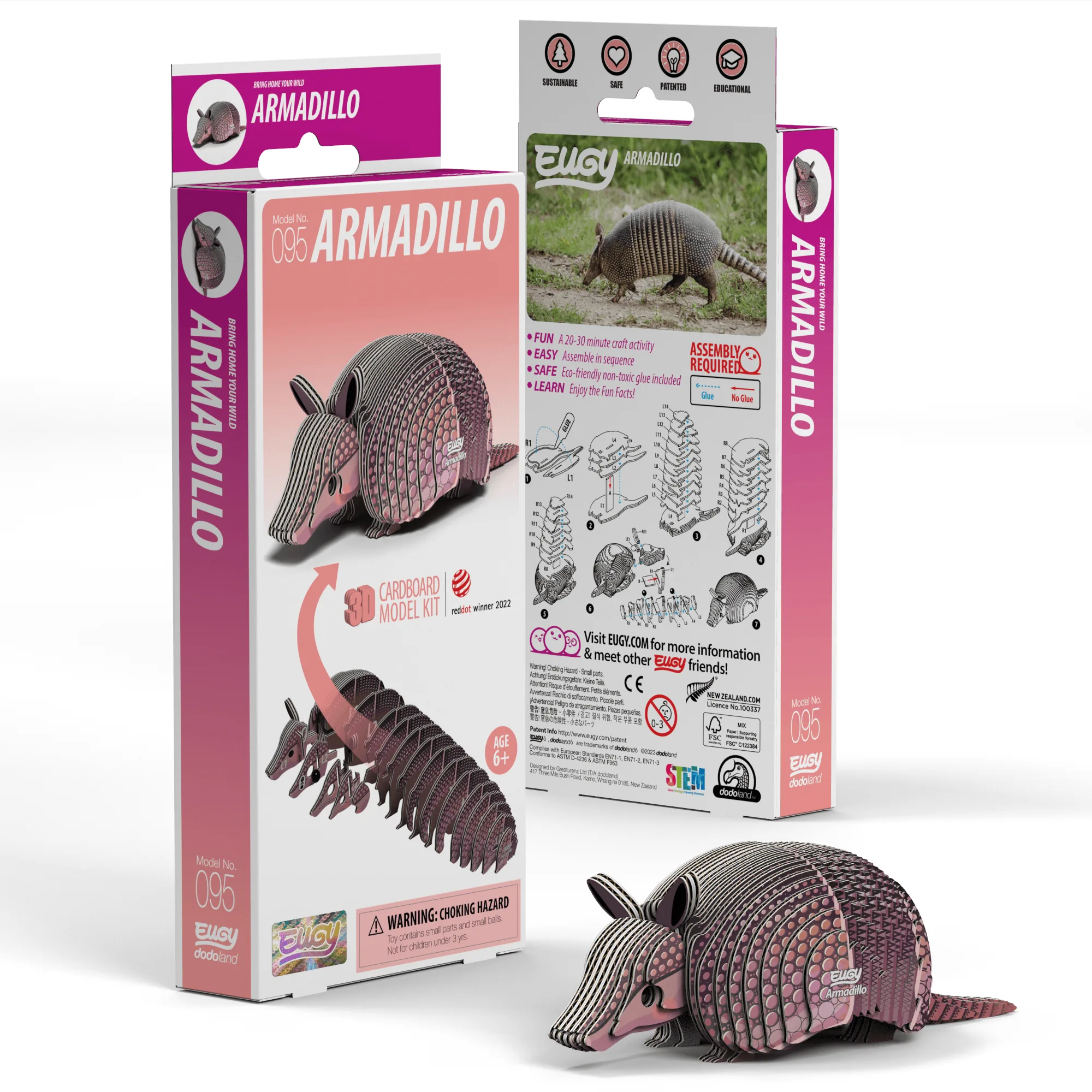
EUGY Armadillo 3D Puzzle
The EUGY Silver Arowana 3D Puzzle follows the same format, and the catalog notes there are over 100 designs and counting to collect. That collectible angle changes the motivation: children may finish a build quickly and then want the next one, which is closer to how a logic puzzle series works than how a single jigsaw works. If your child likes finishing something and moving on, this middle ground can be a better fit than either extreme.
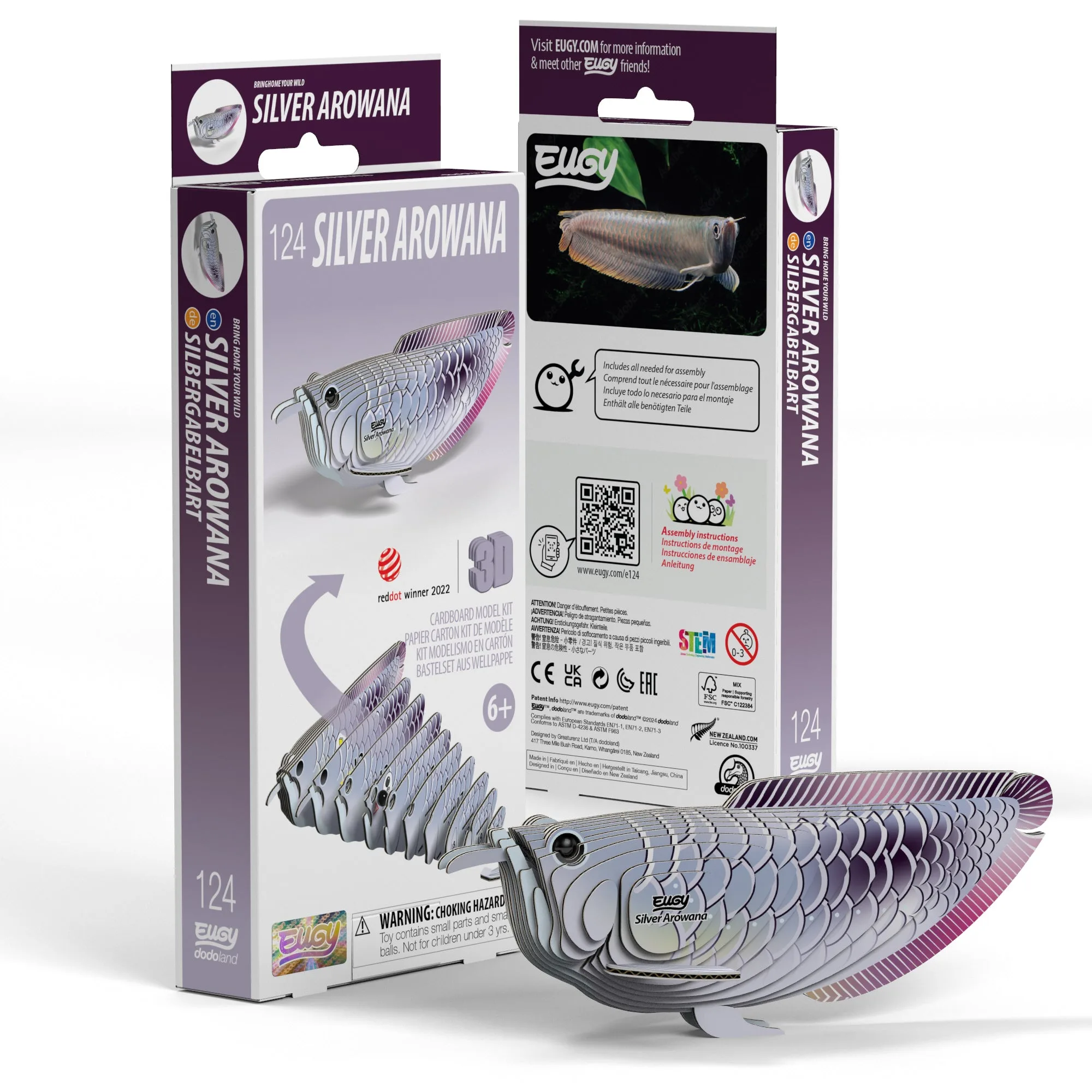
EUGY Silver Arowana 3D Puzzle
- Choose a 3D puzzle when you want a short build with a keepsake result.
- Check the stated assembly time before buying, since it sets expectations for younger kids.
Practical Buying Checks
Before you buy, match the puzzle to the child rather than to the box art. For a jigsaw, check piece count and whether the image has distinct color zones, since busy repeating patterns are harder for beginners. For a logic puzzle, check whether the challenge levels start easy enough that a first attempt succeeds, because early wins keep kids engaged.
Also consider storage and cleanup. Jigsaws need a flat surface that can stay out for days, while logic puzzles usually pack back into a small box. If your home has no safe table, a compact single-player game will get more use. If your child needs movement and conversation while thinking, a jigsaw on the floor may work better.
- Match difficulty to the child's current success rate, not to their age alone.
- Buy for your storage reality: a game that cannot stay set up will not get finished.
Trade-Offs at a Glance
- Jigsaw puzzles: Open-ended, no rules, and no wrong answers, which makes them easy to start and share. The trade-off is limited replay value once the picture is complete. Best when you want calm, low-pressure focus and sibling collaboration.
- Single-player logic puzzles: Rule-based challenges with verifiable solutions build deduction and self-checking. The trade-off is a steeper first attempt and more need for adult setup. Best when you want a repeatable brain teaser that a child can solve independently.
- 3D collectible puzzles: Short builds such as EUGY Armadillo and EUGY Silver Arowana 3D Puzzles finish in 10 to 20 minutes and produce a display piece. The trade-off is that the building phase is brief. Best when you want a quick win plus a collection to grow over time.
Products That Show the Difference
- EUGY Armadillo 3D Puzzle: EUGY is described as a super-fun 3D puzzle that is eco-friendly and can be assembled in 10 to 20 minutes, with over 90 designs to collect. The short build time and collectible range make it a good bridge for kids who like a defined finish but want variety, unlike a single jigsaw.
- EUGY Silver Arowana 3D Puzzle: The catalog lists this as an eco-friendly 3D puzzle assemblable in 10 to 20 minutes, with over 100 designs and counting to collect. A second design in the same format shows how the collectible model works in practice, so siblings can each build their own without duplicating.
Which Should You Choose?
Choose this if
- You want a quiet, shareable activity for mixed ages: pick a jigsaw.
- You want a child to practice reasoning and solve alone: pick a single-player logic puzzle.
- You want a short project with a keepsake result: pick a 3D collectible puzzle such as EUGY.
Skip this if
- Your child needs movement and conversation to stay engaged: a jigsaw may hold attention longer than a rule-based game.
- You have no flat surface that can stay set up for days: choose a compact logic game instead of a large jigsaw.
- Your child gets upset by being wrong: start with a jigsaw before introducing a puzzle with a single correct solution.
Smart Games and jigsaw puzzles are not competitors so much as different tools. Keep a jigsaw for calm, open-ended table time and a logic puzzle for focused brain teaser sessions, and match the difficulty to what your child can already finish successfully.