Quick Answer
Both smart locks and traditional deadbolts provide solid physical security, but smart locks add convenience and remote control. For most homeowners, a smart lock like the eufy https://eufydu.com/products/t8506111-185b33f39b4f085451b6bcd8-563630Smart Lock C220 offers better security and peace of mind without sacrificing reliability.
When it comes to securing your home, the choice between a traditional deadbolt and a smart lock is more than a matter of convenience—it's a security decision. Traditional deadbolts have been the standard for decades, but smart locks are rapidly gaining ground with features like keyless entry, remote monitoring, and integration with broader security systems.
In this analysis, we'll compare the security aspects of both options, address common concerns about smart lock safety, and help you decide which is right for your home. We'll also look at how a specific smart lock, the eufy Smart Lock C220, stacks up.
Physical Security: The Core of the Debate
At their core, both traditional deadbolts and smart locks provide a physical barrier against forced entry. Traditional deadbolts are simple, mechanical devices that have been tested and refined over many years. They are generally resistant to picking and brute force, especially when properly installed with a strike plate and long screws.
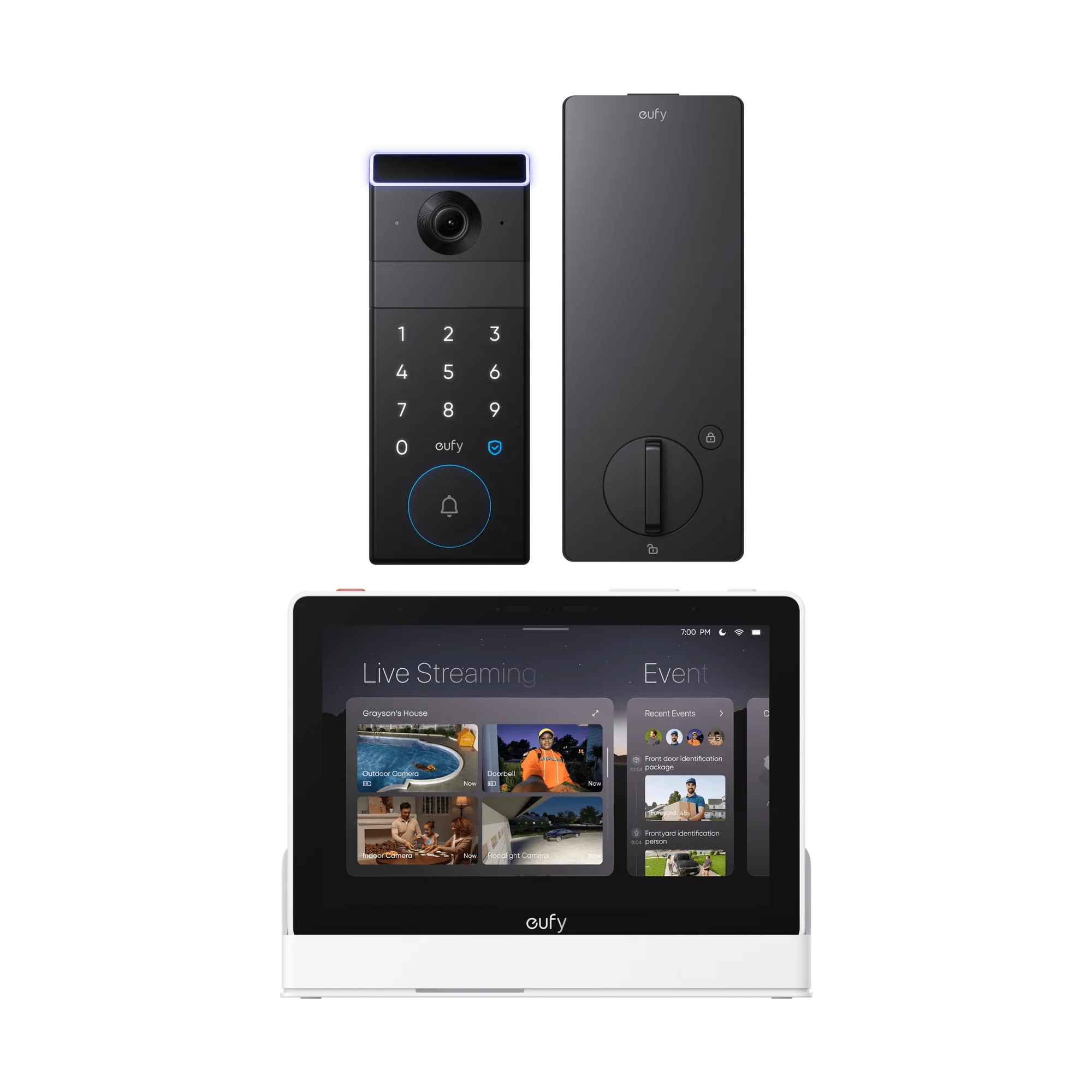
Smart locks, on the other hand, combine the same physical locking mechanism with electronic controls. The eufy Smart Lock C220, for example, uses a traditional deadbolt mechanism but adds a fingerprint sensor and keypad. This means the physical security is comparable, but the access methods are more advanced. However, smart locks introduce potential electronic vulnerabilities, which we'll address later.
- Look for a smart lock with a solid metal construction and a secure deadbolt mechanism.
- Ensure proper installation with a reinforced strike plate for maximum physical security.
Convenience vs. Reliability: The Trade-Off
Traditional deadbolts are simple and reliable: you always have a key, and there's no risk of battery failure or electronic malfunction. However, they require you to carry a key and can be a hassle if you lose it or get locked out.
Smart locks offer convenience: you can unlock with a fingerprint, a code, or your smartphone. The eufy Smart Lock C220 features a self-learning AI fingerprint sensor that gets more precise with every use, so you won't have to fumble with keys. But they depend on power; if the batteries die, you need a backup plan. The C220 uses 8 AA batteries that last around 8 months, which is a reasonable trade-off for the convenience.
- Keep spare batteries and a physical key (if available) as a backup.
- Consider a smart lock with a low-battery warning to avoid being locked out.
Security Features: What Smart Locks Offer
Smart locks go beyond simple locking. They can integrate with home security systems, send alerts when someone enters, and allow remote access control. For example, the eufy Smart Lock C220 can be part of a larger eufy security ecosystem, enabling you to monitor and control access from your phone.
Traditional deadbolts lack these features entirely. They cannot tell you if someone is trying to pick the lock or if a family member arrived home. This is where smart locks clearly outshine traditional deadbolts in terms of overall security and awareness.
- Smart locks can provide entry logs and alerts, enhancing your situational awareness.
- Integration with other smart home devices can trigger cameras or lights when someone enters.
Are Smart Locks Safe? Addressing Common Concerns
One of the biggest concerns about smart locks is hacking. While it's true that any internet-connected device can be vulnerable, reputable smart locks use encryption and secure protocols to protect against unauthorized access. The eufy Smart Lock C220 uses a fingerprint sensor and local processing, reducing the risk of remote hacking.
Another concern is battery failure. However, most smart locks have a low-battery indicator and some have a physical key override. The C220, for instance, runs on 8 AA batteries with an 8-month lifespan, and you can always use a key if the battery dies. These measures mitigate the risks, making smart locks a safe option for most homes.
- Choose a smart lock from a trusted brand with a strong security track record.
- Regularly update the firmware and use two-factor authentication if available.
Diagnosis: Is a Smart Lock Right for You?
- Symptom: You often forget your keys, worry about lost keys, or want to monitor who enters your home. If this sounds like you, a smart lock can solve these pain points.
- Likely Cause: Traditional deadbolts lack flexibility and remote access, making them inconvenient for modern lifestyles. Consider upgrading to a smart lock for added convenience and control.
- Corrective Action: Choose a smart lock with robust security features like fingerprint recognition and long battery life, such as the Smart Lock C220. Install the lock and integrate it with your security system for best results.
- Stop or Choose Another Option: If you are not comfortable with technology or prefer a purely mechanical solution, stick with a traditional deadbolt. Also, if your door is not compatible with smart locks, a traditional deadbolt is safer. Evaluate your comfort level and door compatibility before making a decision.
Smart Lock Features That Matter
- Smart Lock C220 (Nickel): 8 Months Battery Life: With 8 AA batteries, Smart Lock C220 runs around 8 months. Self-learning AI: Fingerprint door lock recognition gets more precise with every touch. Long battery life reduces maintenance, and the self-learning AI improves recognition accuracy over time, so you won't struggle to unlock your door.
- https://eufydu.com/products/t86p2121-74c09b11b3470d1c88e7b45e-563399eufy 4G LTE Cam S330: Forever Power: Empower your viewing to go anywhere you desire. Enjoy 24/7 off-the-grid freedom with the upgraded solar panel and a powerful 9,400 mAh battery. Dual Connectivity with 4G and Wi-Fi: Experience ultimate security and seamless connectivity. Pairing a smart lock with a camera like the S330 gives you visual verification of who is at your door, enhancing security even when you're away.
In the debate between smart locks and traditional deadbolts, smart locks offer superior convenience and enhanced security features that traditional deadbolts cannot match. While traditional deadbolts are reliable, they lack the modern capabilities that make home access easier and safer. If you're ready to upgrade, consider the Smart Lock C220 (Nickel) for a seamless blend of security and convenience.