Two ways to carry rewards on a training walk
Pocket treats are exactly what they sound like: a handful of kibble or treats loose in your jacket or trousers. A treat pouch like the EzyDog SnakPakTM Treat Bag gives those rewards a dedicated home with faster access and a cleaner routine. Neither is universally better; the right choice depends on how often you reward, how long your sessions run, and how much you want to manage with your hands.
This comparison focuses on practical differences you can observe in everyday training. It does not rank one option as best overall, because pocket treats remain a sensible low-effort choice for short, casual sessions.
Access speed, capacity, and cleanup compared
The table below sticks to features confirmed by the supplied product information and general handling differences. Where a detail is not confirmed, treat it as an open question rather than a flaw.
- Getting a treat out: Pocket treats require reaching into fabric and fishing around. The SnakPak uses quick twin magnetic closures for fast, simple access to rewards, according to the product description.
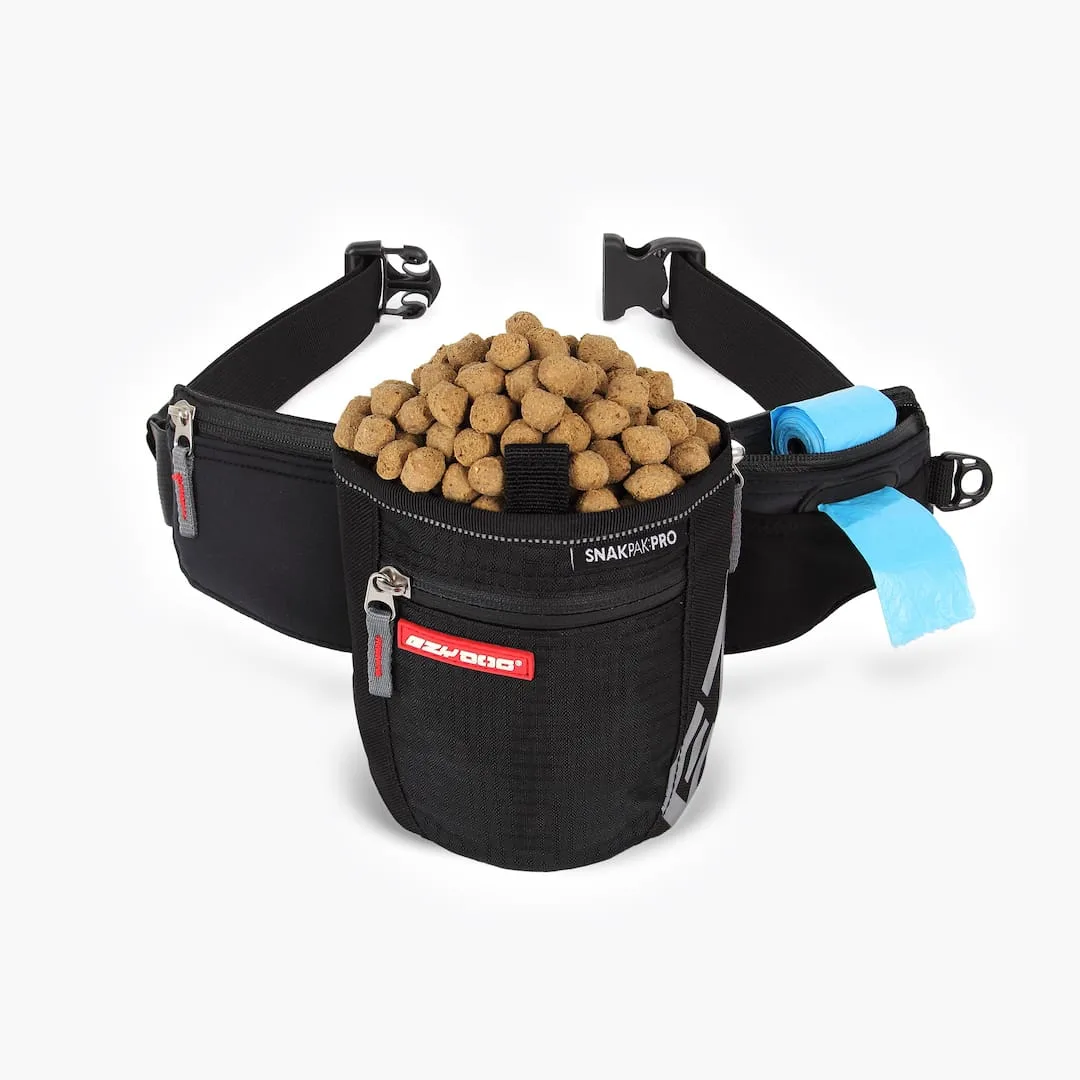
- Carrying method: Pockets rely on your clothing. The SnakPak offers two attachment systems: twin belt hooks to stabilize the bag at your waist or an adjustable webbing waist strap to secure around your body.
- Storage beyond treats: Pockets may already hold keys or a phone, but mixing them with treats is messy. The SnakPak has an easy-to-access front waterproof zip closure intended for keys, a smartphone, or money.
- Cleaning routine: Pocket cleanup usually means crumbs and residue in fabric. The SnakPak has a pull-up liner that can be wiped clean after use, per the supplied care note.
- Capacity: The supplied record does not state a treat capacity for the SnakPak. Pocket capacity depends entirely on the garment. If volume matters, check the pouch in person or contact the store before relying on a specific amount.
What the SnakPak adds to a training setup
-
SnakPak™ Treat Bag: Quick twin magnetic closures provide fast and simple access to rewards. Faster access can reduce the gap between a correct behavior and the reward, which is the main practical argument for a pouch over a pocket.
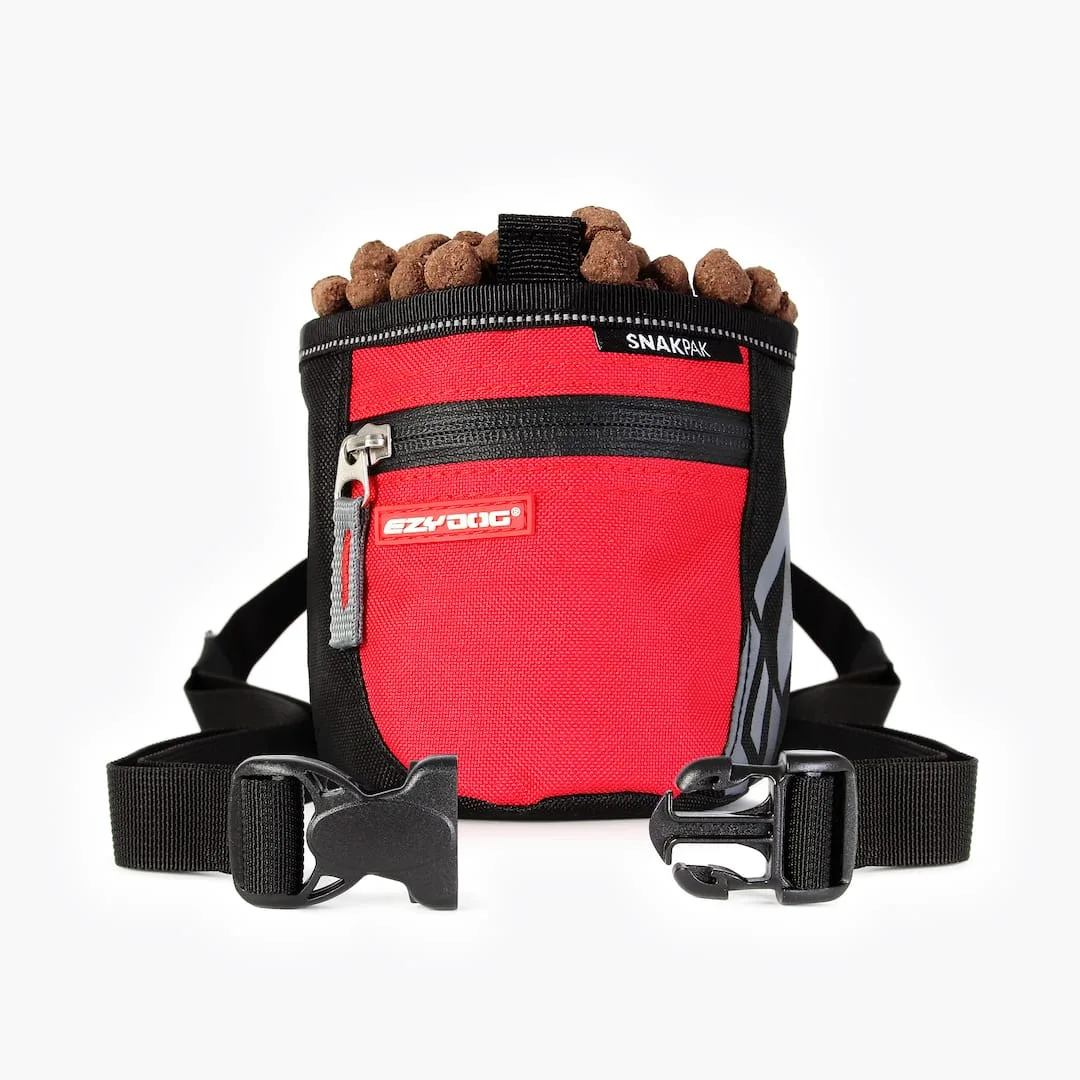
SnakPak™ Treat Bag
-
SnakPak™ Treat Bag: Two attachment systems: twin belt hooks to stabilize the bag at your waist, or an adjustable webbing waist strap to secure around your body. You can choose a stable belt-mounted setup or a strap-based fit depending on what you are wearing and how active the session is.
-
SnakPak™ Treat Bag: An easy-to-access front waterproof zip closure is designed for storing keys, a smartphone, or money. This separates valuables from treats, which pockets cannot do cleanly once treats are loose.
-
SnakPak™ Treat Bag: A pull-up liner can be wiped clean after use. A wipeable liner is a concrete cleanup advantage over fabric pockets, especially with moist or crumbly treats.
When pocket treats still make sense
Pockets win on simplicity. There is nothing to put on, adjust, or clean separately, and you can reward a sit or a recall without adding gear to your walk. For short sessions, a quick trip outside, or training that happens spontaneously, a small handful of treats in a pocket is often enough.
The trade-offs appear as sessions get longer or more structured. Loose treats can crumble, mix with lint, and become hard to retrieve quickly. If you also carry keys or a phone, the pocket becomes a compromise for both jobs. Those are the moments when a dedicated treat pouch for dog training starts to earn its place.
The honest limits of this comparison
The supplied product information does not include a stated treat capacity, specific liner material, or a full list of operating instructions for the SnakPak. That means this comparison cannot tell you exactly how many treats it holds or how it performs with every treat type. It also cannot promise that the magnetic closures suit every dog's nose or every handler's hand strength.
What the evidence does support is a clear functional difference: the SnakPak is built to organize rewards and small valuables at your waist, while pockets are built into what you already wear. Choose based on whether you want that organization enough to carry and clean a separate pouch.
A practical way to decide
If your training is mostly short and informal, start with pocket treats and see whether access speed or mess becomes a problem. If you already notice yourself fumbling for rewards, mixing treats with your phone, or cleaning crumbs out of seams, a hands-free treat bag like the SnakPak is the more deliberate setup. Its belt hooks and waist strap give you two ways to keep it stable, and the wipeable liner addresses the cleanup issue that pockets handle poorly.
The SnakPak comes in Red, Black, Blue, and Orange, so color is one less thing to overthink. The real decision is whether you want a dedicated training treat storage tool or prefer to keep using the pockets you already have.