Quick answer
Choose a 9mm snap-off knife for light, frequent cutting where a fresh edge matters more than blade strength, and choose a standard utility knife for tougher materials, deeper cuts, and scraping where a rigid blade holds up. If you cut cardboard all day, a snap knife keeps a sharp tip without stopping to swap blades, but a utility knife with a heavy blade handles thicker stock and prying better.
How the two blade systems actually differ
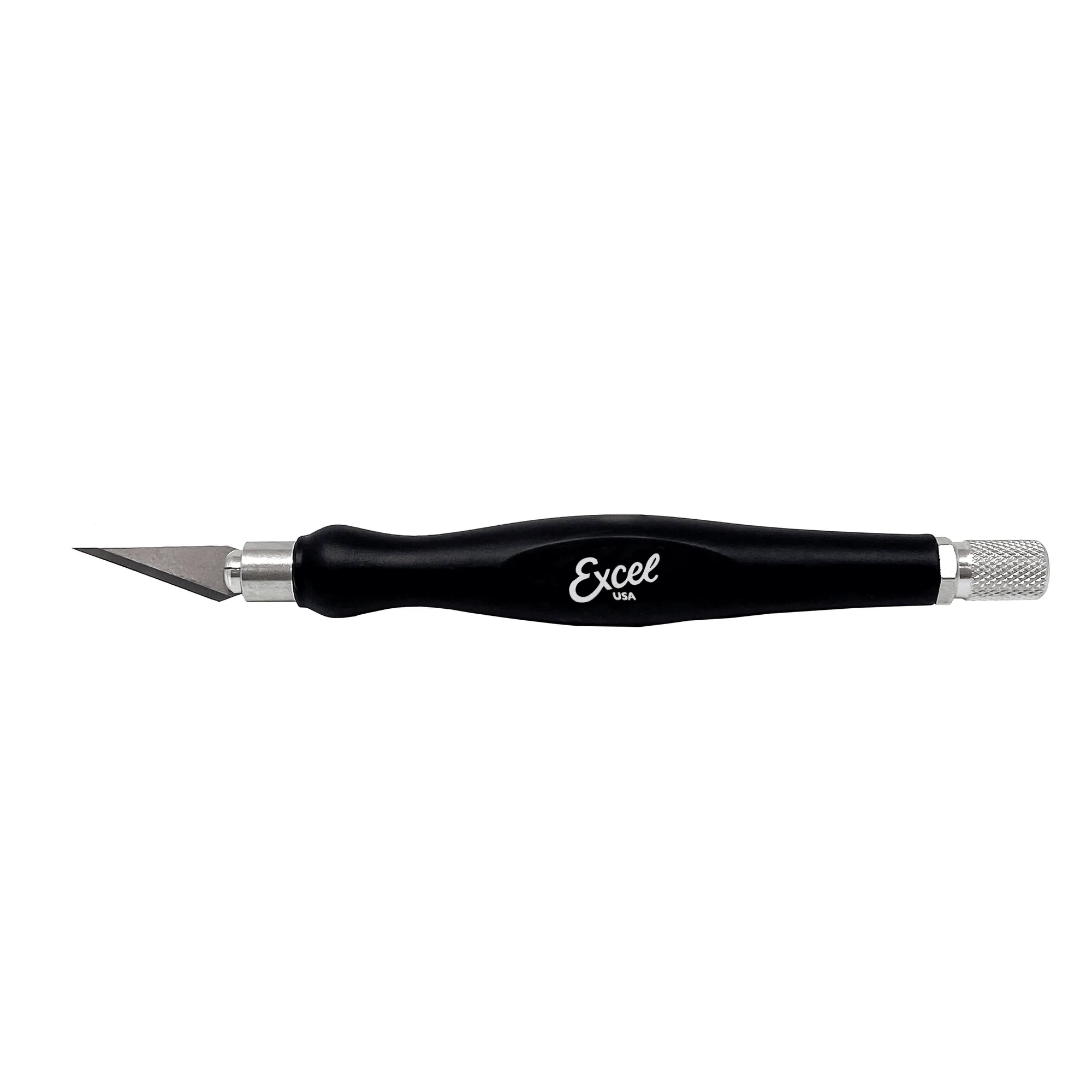
A snap-off knife uses a segmented blade, often a 9mm 13-point strip, that you extend and then snap off the dull tip to reveal a new sharp point. A standard utility knife uses a single fixed blade, commonly a 2-notch utility blade, that you flip or replace when it dulls. That single design difference drives almost every practical trade-off: snap knives trade blade strength for constant sharpness, while utility knives trade edge freshness for a rigid, replaceable cutting edge.
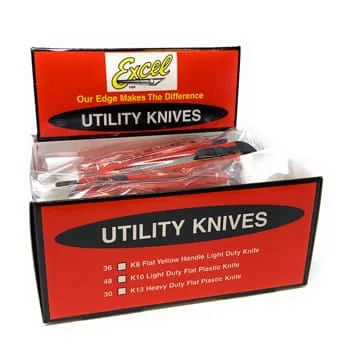
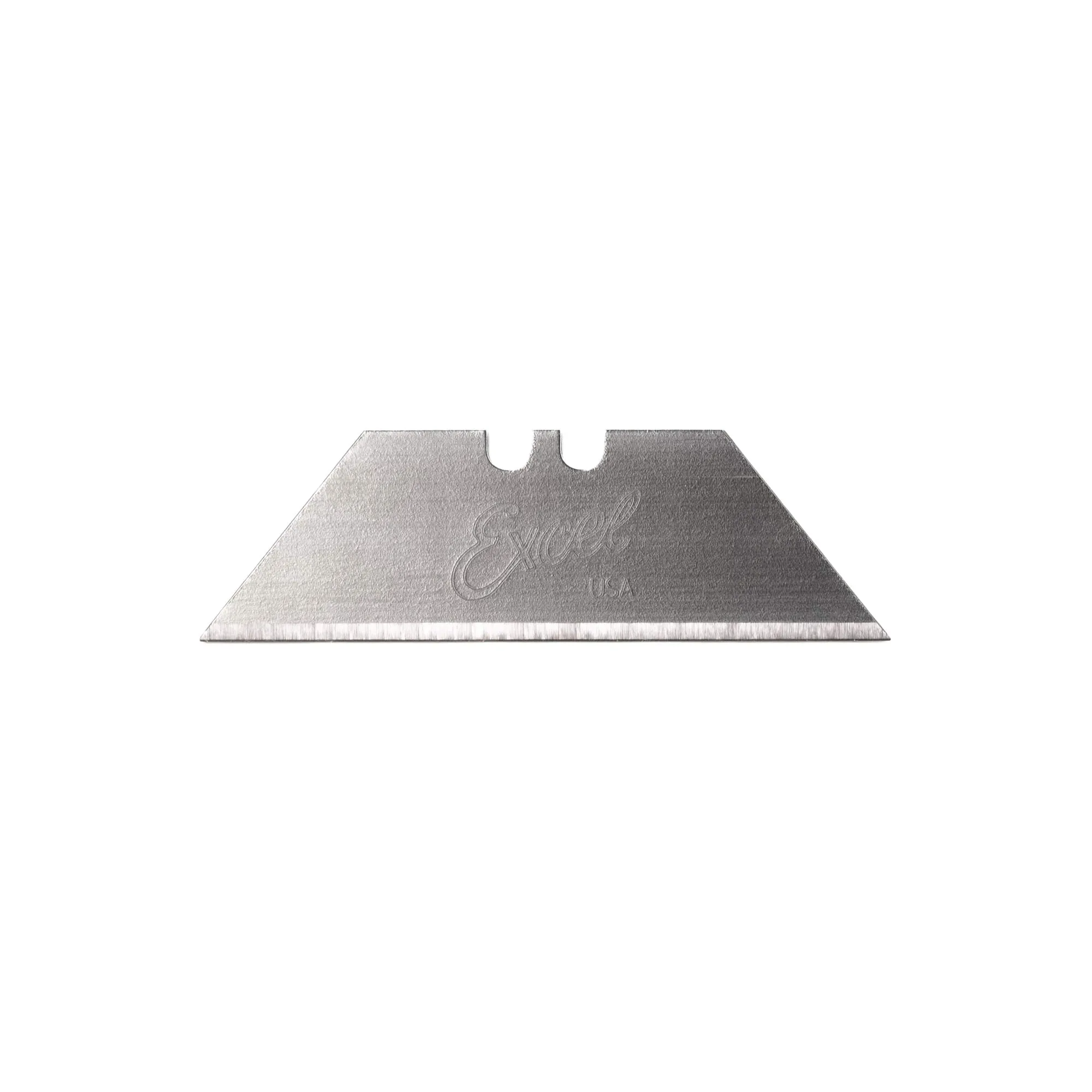
The Excel Blades #92 HD Utility Knife Blades 2-Notch are carbon steel replacement blades for standard utility knives, sold as a multi-pack. The Excel Blades K10 9MM Snap Knife - 48 Pack Display Set uses a slim plastic body and Excel Blades' #3 13-point snap blade (9mm) with a retractable blade and push lock. One is a blade supply for a tool you already own; the other is a complete lightweight knife system built around snapping.
Where a 9mm snap knife wins
Snap knives shine when you need a consistently sharp point for thin, repetitive cuts. Because you can snap off a dull segment in seconds, you keep cutting instead of hunting for a replacement blade. The K10's slim plastic body and push lock make it light enough to carry in a pocket or keep at a packing station, and the retractable blade protects the edge during storage.
Common 9mm snap knife uses include opening cardboard packages, trimming paper, cutting shrink wrap, and light craft or model work. If your cutting is mostly thin material and you value speed over brute force, the snap system keeps you moving.
Where a standard utility knife wins
A utility knife with a rigid carbon steel blade, like the #92 HD Utility Knife Blades, handles tougher jobs: thicker cardboard, drywall, roofing felt, and general jobsite cutting. The 2-notch blade design lets you flip or replace the blade when it dulls, and the heavier blade resists flexing under pressure. That makes it the better choice when you need to push hard or make deeper cuts.
Utility knife blade types vary, but the 2-notch standard is the common workhorse. If you already own a utility knife handle, keeping a multi-pack of #92 blades means you always have a fresh edge ready without changing tools.
Scraping and non-cutting tasks change the answer
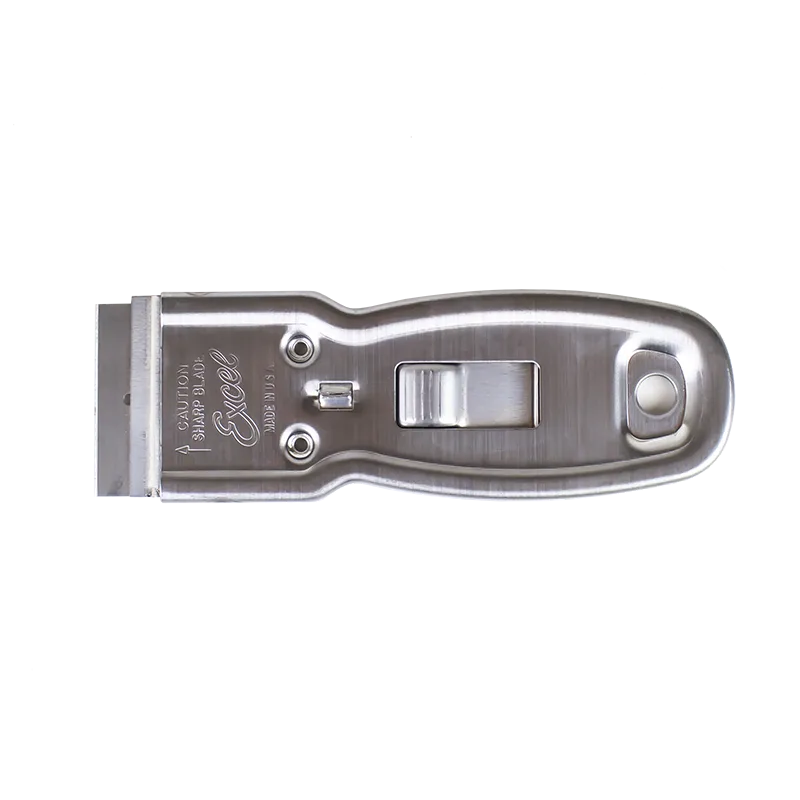
Neither a snap knife nor a standard utility knife is the right tool for scraping paint, adhesive, or rust. For that work, the Excel Blades K11 Metal Safety Scraper Tool Kit is the safer pick: it has a heavy-duty metal frame, a rust-resistant coating for extended heavy use, and a retractable blade that protects the edge in storage. Using a snap or utility knife as a scraper risks blade breakage and injury, so match the tool to the task.
Trade-offs at a glance
- Blade freshness vs blade strength: Snap knives give you a new sharp point by snapping off a segment, but each segment is thin and can flex. Utility knives use a single rigid blade that resists flexing but dulls until you flip or replace it. Pick snap for thin, frequent cuts; pick utility for tougher material.
- Cost pattern: A snap knife spreads cost across many snap points per blade, while a utility knife spreads cost across replacement blades. The K10 set supplies 48 complete knives, and the #92 blades come as a multi-pack. Match the pack size to how many users or how much cutting you have.
- Safety and storage: The K10 has a retractable blade and push lock for storage. Standard utility knives vary by handle, and the #92 blades are replacements, so safety depends on your existing handle. If storage safety matters, confirm your utility handle has a retraction or lock feature.
Product facts that affect your choice
- #92 HD Utility Knife Blades 2-Notch: Excel Blades #92 HD Utility Knife Blades 2-Notch are carbon steel replacement blades for standard utility knives, sold as a multi-pack. If you already own a utility knife handle, this is a low-cost way to keep rigid, replaceable blades on hand for tougher cutting.
- K10 9MM Snap Knife - 48 Pack Display Set: Excel Blades K10 9MM Snap Knife - 48 Pack Display Set includes 48 K10 knives with a slim plastic body, Excel Blades' #3 13-point snap blade (9mm), a retractable blade, and a push lock. A 48-pack suits shared workspaces, classrooms, or retail displays where many light-duty cutters are needed and blade changes should be quick.
- K11 Metal Safety Scraper Tool Kit: Excel Blades K11 Metal Safety Scraper Tool Kit has a heavy-duty metal frame, rust-resistant coating, and a retractable blade for storage. For paint removal and scraping, this dedicated scraper is safer and more durable than using a snap or utility knife blade.
Which should you choose?
Best for
- Light, repetitive cutting of cardboard, paper, and shrink wrap where a fresh point matters
- Shared workspaces, classrooms, or retail counters that need many inexpensive cutters
- Crafters and packers who want to snap off a dull tip instead of stopping to replace a blade
Not for
- Thick cardboard, drywall, roofing, or jobsite cutting that needs a rigid, heavy blade
- Scraping paint, adhesive, or rust, which calls for a dedicated scraper like the K11 Metal Safety Scraper Tool Kit
- Users who prefer a single fixed blade and already own a standard utility knife handle