Two first-sneaker approaches from Wheat
Choosing a first pair of baby sneakers comes down to how the shoe supports a growing foot and how easily you can get it on. Wheat offers two distinct answers: Sneaker Barres, a barefoot-style sneaker with a broad sole and double Velcro, and Sneaker Alin, a lightweight sporty sneaker with two Velcro straps and a latex insole. Both are listed as children's sneakers with Velcro closure, but they differ in shape, materials, and the sizing information Wheat provides.
This comparison sticks to what the product records confirm. Where a detail is not stated, treat it as a question to check with the retailer rather than a reason to assume the shoe lacks it.
Fit and shape: barefoot profile versus sporty everyday sneaker
- Sneaker Barres: Described as a light, flexible barefoot shoe with a broad fit and wide footbed, designed to support natural foot movement. The double Velcro closure allows easy adjustment. The leather lining and LWG-certified leather and suede upper are listed. No inner-length measurements are supplied for this model.
- Sneaker Alin: A lightweight, sporty sneaker with two adjustable Velcro straps across the foot. The upper combines LWG-certified suede and breathable textile, with a printed organic cotton lining and a soft latex insole covered in cotton. The two-component sole uses a phylon midsole and rubber outsole. Wheat lists it as unisex and normal in size, with inner measurements from size 24 to 35.
Sizing evidence for each sneaker
-
Sneaker Barres - faded denim: Recommended growth allowance: 1-1,5 cm (as stated in the product record). This is the only sizing guidance supplied for Sneaker Barres. It tells you how much extra room Wheat suggests, but the record does not include inner-length measurements by size, so you cannot map a foot length directly to a size from the supplied information.
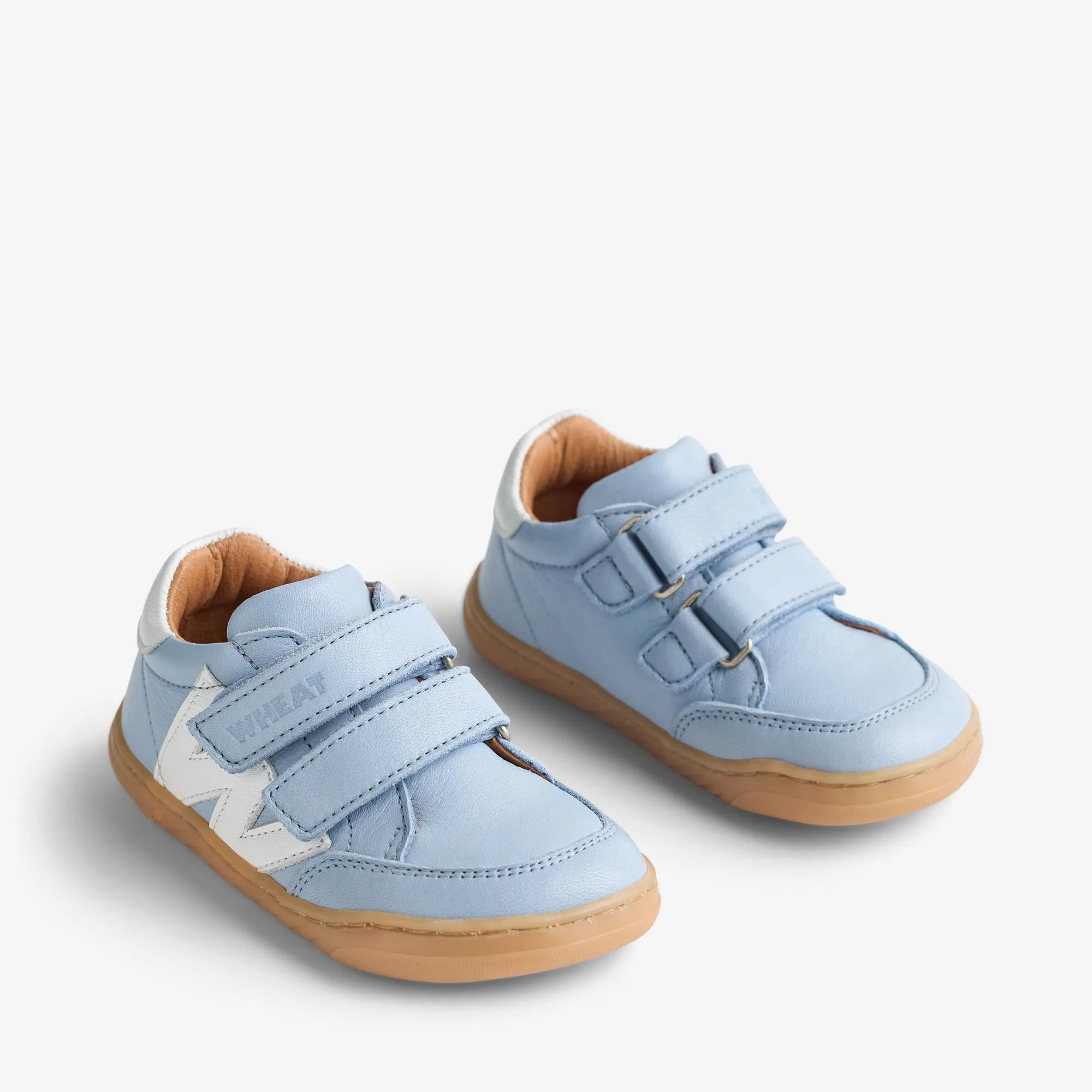
Sneaker Barres - faded denim
-
Sneaker Alin - eggshell: Recommended growth allowance: 1-1,5 cm, with inner measurements listed from size 24 (16,4 cm) through size 35 (22,7 cm). Sneaker Alin gives you both the growth allowance and a size-by-size inner-length chart. That makes it easier to match a measured foot to a size, provided you account for the recommended allowance.
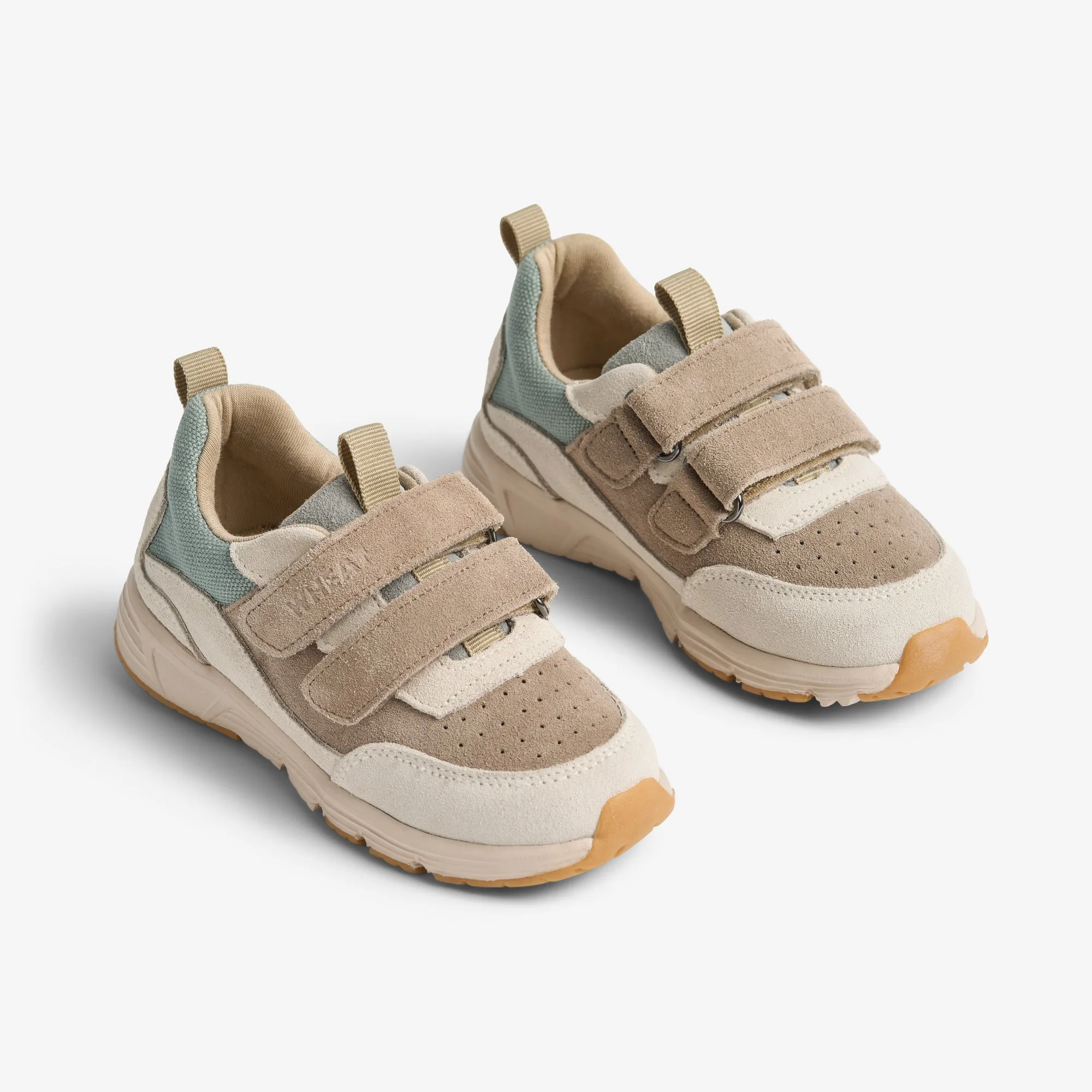
Sneaker Alin - eggshell
What the sizing charts do and do not settle
Sneaker Alin's inner measurements are a practical starting point: measure your child's foot, add the recommended growth allowance, and compare the total to the listed inner length for each size. The chart runs from size 24 to 35, so it covers a broad range of early sizes. Sneaker Barres has no equivalent inner-length list in the supplied record, which means you will need to rely on the recommended allowance and ask the retailer for measurements if you want the same precision.
Neither record confirms how the shoe performs on a particular foot shape, how it wears over time, or whether it is suitable for all walking stages. Those are fit questions best answered by trying the shoes on, checking toe room and heel hold, and watching how your child moves.
Materials and construction at a glance
- Sneaker Barres upper and lining: LWG-certified leather and suede upper, chrome- and metal-free leather lining and insole, and a durable rubber outsole. The barefoot shape and wide footbed are the defining construction choices.
- Sneaker Alin upper and lining: LWG-certified suede and breathable textile upper, printed organic cotton lining, soft latex insole covered with cotton, and a phylon midsole with rubber outsole. The latex insole is described as providing shock absorption.
- Closure on both: Both sneakers use double Velcro straps for adjustment. Neither record lists laces, elastic lacing, or a pull tab.
Which sneaker suits which first-shoe situation
If you want a barefoot-style first sneaker with a wide toe box and a flexible feel, Sneaker Barres is the closer match on the supplied description. Its broad fit and double Velcro are aimed at natural foot movement and easy on-and-off. The trade-off is that Wheat does not supply inner-length measurements for this model, so getting the size right may take more back-and-forth with the retailer.
If you prefer a sporty everyday sneaker with a documented size chart, Sneaker Alin is the more transparent choice. The listed inner measurements and normal-size guidance let you plan a purchase with more confidence before the shoe arrives. Its latex insole and breathable textile upper also suit daily wear, though the record does not claim waterproofing or all-weather performance for either shoe.
A practical fit check when the shoes arrive
- Check toe room against the recommended allowance: Both records state a recommended growth allowance of 1-1,5 cm. Use that as your reference when feeling for space at the front, rather than guessing.
- Confirm heel hold with the Velcro straps: Fasten both straps and check that the heel stays in place without pinching. The double Velcro on each model is the main adjustment point.
- Watch how your child walks: Look for tripping, slipping, or obvious discomfort. Neither product record promises injury prevention or a universal fit, so observation is the real test.
- Recheck the fit as feet grow: The recommended allowance is a guide for initial fit. Re-measure periodically, especially with Sneaker Barres where no inner-length chart is supplied.
What the product records leave open
Neither record includes care instructions, so check the label or ask Wheat before cleaning either sneaker. The records also do not state whether the shoes are machine washable, waterproof, or suitable for specific indoor or outdoor surfaces beyond the general rubber outsole description. Sneaker Barres lists only size 34 in the available variant evidence, while Sneaker Alin also lists size 34; the full size runs may be broader, but the supplied evidence does not confirm every size in stock.
Use the sizing evidence as your main decision tool: Sneaker Alin gives you a measurable chart, while Sneaker Barres gives you a barefoot shape and a growth allowance. Neither is automatically better; the right choice depends on how much sizing certainty you want before buying and how much you value the barefoot profile for your child's first sneakers.