Quick answer
For flat light skiing, choose a lens tint that boosts contrast—rose, pink, or amber—rather than dark or mirrored lenses that reduce visibility on overcast days.
Why flat light is a visibility challenge
Flat light happens when clouds or fog scatter sunlight evenly, eliminating shadows and depth perception. Without contrast, you can't see bumps, ice patches, or changes in terrain. Dark lenses make this worse by cutting what little light remains.
A lens tint that selectively enhances mid-tone colors—like rose, pink, or amber—can restore some of that lost contrast. These warm tints make the snow surface look more textured and help you spot subtle changes in slope angle.
What to look for in a flat-light goggle
The ideal flat-light lens has a visible light transmission (VLT) of 50–80%, meaning it lets in a lot of light while still filtering glare. Tints in the rose-to-amber spectrum are most effective because they boost the contrast of blue and gray tones common in overcast snow scenes.
Polarized lenses can reduce glare on bright days, but in flat light they may further dim the view. If you ski in mixed conditions, consider a goggle with a quick-swap lens system or a photochromic lens that adapts to changing light.
Trade-offs to keep in mind
No single lens tint works perfectly in all light conditions. A rose or pink tint that excels in flat light may feel too bright on a sunny day. If you ski mostly in variable light, a mid-range tint like amber or copper can serve as a compromise, though it won't be as sharp in deep overcast.
Lens coatings like anti-fog and scratch resistance matter more in wet, low-light conditions because fogging is more likely when temperatures hover near freezing. Prioritize goggles with good ventilation or dual-pane lenses.
Diagnosing your flat-light lens choice
- Symptom: You can't see bumps, shadows, or changes in snow texture on overcast days. Everything looks like a white sheet.
- Likely cause: Your current goggle lens is too dark (low VLT) or uses a neutral gray tint that doesn't enhance contrast in flat light.
- Corrective action: Switch to a lens with a rose, pink, or amber tint and a VLT of 50–80%. These warm colors increase contrast by filtering out blue light and making snow texture more visible. If you ski mostly in overcast conditions, consider a dedicated flat-light lens rather than a photochromic or interchangeable system.
- When to stop or choose another option: If you also ski on bright sunny days, look for a goggle with a quick-swap lens system so you can switch between a dark lens for sun and a rose or pink lens for flat light. A single mid-range amber tint can work in both conditions but won't perform as well in extreme flat light.
Goggle options that work in flat light
-
Phoenix At A Bloody Mary Bar: Phoenix At A Bloody Mary Bar has polarized lenses with UV400 protection and a red rose tint that won't slip or bounce. The rose tint enhances contrast in flat light, and the no-slip grip keeps the goggle in place when you're moving fast in low visibility.
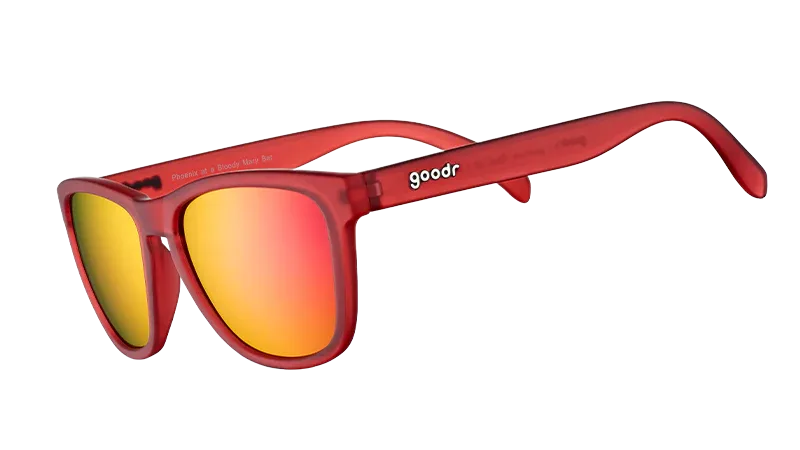
Phoenix At A Bloody Mary Bar
-
Carl Is My Co-Pilot: Carl Is My Co-Pilot offers pink and teal Mach G aviator shades with full UV400 protection and a no-slip, no-bounce fit. The pink tint boosts mid-tone contrast on overcast days, and the aviator shape provides a wide field of view for spotting terrain changes.
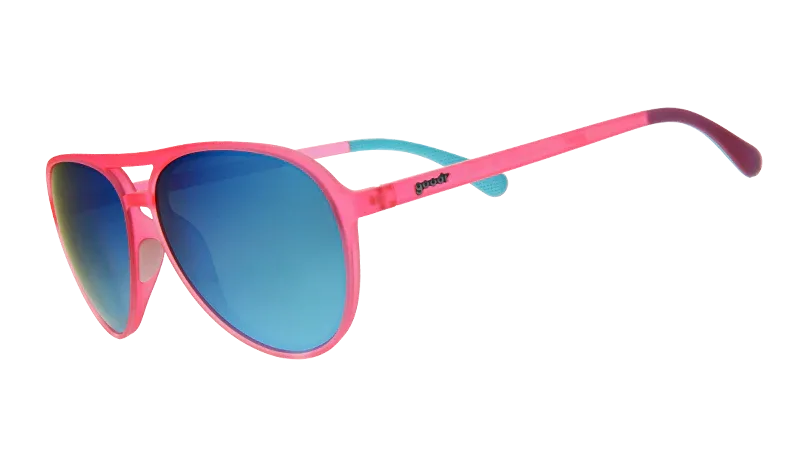
Carl Is My Co-Pilot