Quick answer
Snow goggles and sunglasses serve different purposes. Goggles offer a sealed fit that blocks wind and snow glare, while sunglasses provide convenience and style. For most winter sports, goggles are the safer choice, but sunglasses can work for low-intensity activities or as a backup.
The Real Difference: Fit and Coverage
The biggest difference between snow goggles and sunglasses is how they sit on your face. Goggles wrap around your eyes with a foam frame that seals out wind, snow, and peripheral light. Sunglasses, even wraparound styles, leave gaps where glare and particles can sneak in. This matters most at high speeds or in blowing snow, where a secure fit is non-negotiable.
That said, sunglasses are lighter and easier to stash in a pocket when the sun dips behind a cloud. If your winter activity is more about strolling than shredding, a pair with good UV protection can be enough.
Glare Protection: Goggles vs. Sunglasses
Snow reflects up to 80% of UV rays, and that intense glare can cause eye strain, headaches, or even snow blindness. Goggles typically have curved lenses that block glare from all angles, while sunglasses have flatter lenses that let light slip in from the sides. For high-glare conditions like skiing or snowshoeing on a sunny day, goggles are the stronger defense.
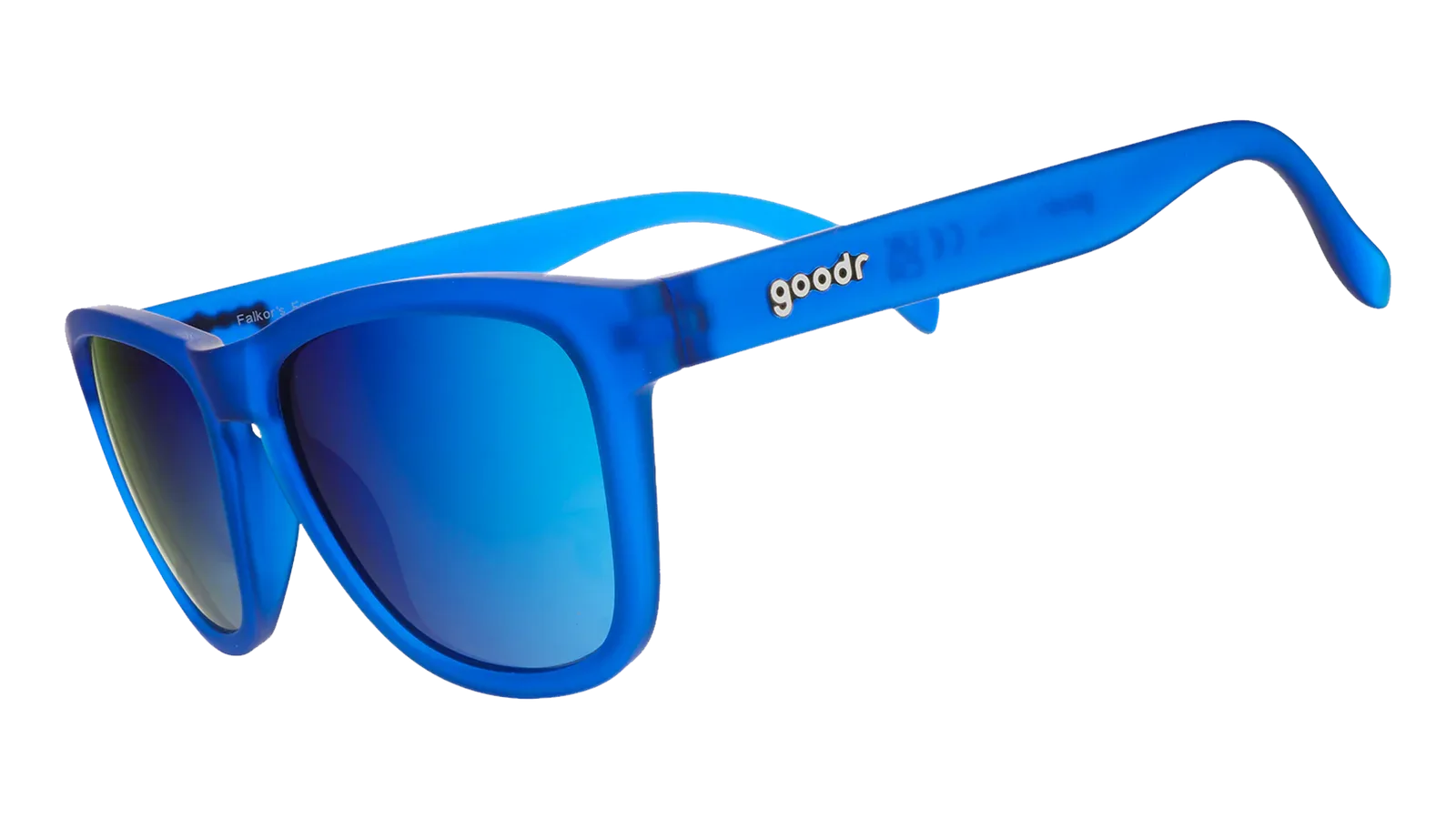
If you choose sunglasses, look for polarized lenses to cut reflected glare. Polarization is a lens treatment, not a UV rating, so also confirm the lenses block 100% of UV rays. For example, goodr's Donkey Goggles feature polarized blue lenses with UV400 protection, making them a solid choice for casual winter wear.
When Sunglasses Make Sense
Sunglasses are the better pick for low-intensity winter activities like walking the dog, running errands, or après-ski. They're easier to put on and take off, and you don't have to deal with fogging or a bulky strap. They also work well as a backup if your goggles fog up or get scratched.
For these scenarios, a pair with UV400 protection and a secure fit is key. The Professor 00G from goodr has black non-reflective lenses and a double-nose bridge that keeps them in place, even if you're ziplining to save a government official from subpar pâté.
The Fogging Factor
Fogging is a common complaint with both goggles and sunglasses, but the causes differ. Goggles fog when warm moisture from your face meets a cold lens, especially if the vents are blocked. Sunglasses fog less because they sit further from your face, allowing air to circulate. But that same gap lets in cold wind and snow, which can be just as annoying.
If you're prone to fogging, look for goggles with anti-fog coatings or better ventilation. For sunglasses, a snug fit reduces the gap without sacrificing airflow. The 90s Sedan Style Icon from goodr features green gradient lenses that handle bright light well, though they are not polarized—a tradeoff to consider for glare-heavy days.
Myth vs. Reality: Snow Goggles and Sunglasses
- Myth: Sunglasses are enough for any winter sport: Sunglasses leave gaps that let in wind, snow, and glare. For high-speed or high-glare activities, goggles provide a sealed fit that protects better. Choose goggles for skiing, snowboarding, or snowmobiling; save sunglasses for casual wear.
- Myth: Polarized sunglasses are the same as goggles: Polarized lenses reduce glare, but they don't block peripheral light or shield your eyes from wind and snow. Goggles offer full coverage that sunglasses can't match. If you need maximum glare protection, go with goggles; if you prioritize convenience, polarized sunglasses are a good compromise.
- Myth: Goggles are always the best choice: Goggles can feel bulky and may fog if not vented properly. For low-intensity activities, sunglasses are lighter and more convenient. Match your eyewear to the activity: heavy-duty for intense sports, light and easy for everyday winter outings.
Winter Eyewear Options from goodr
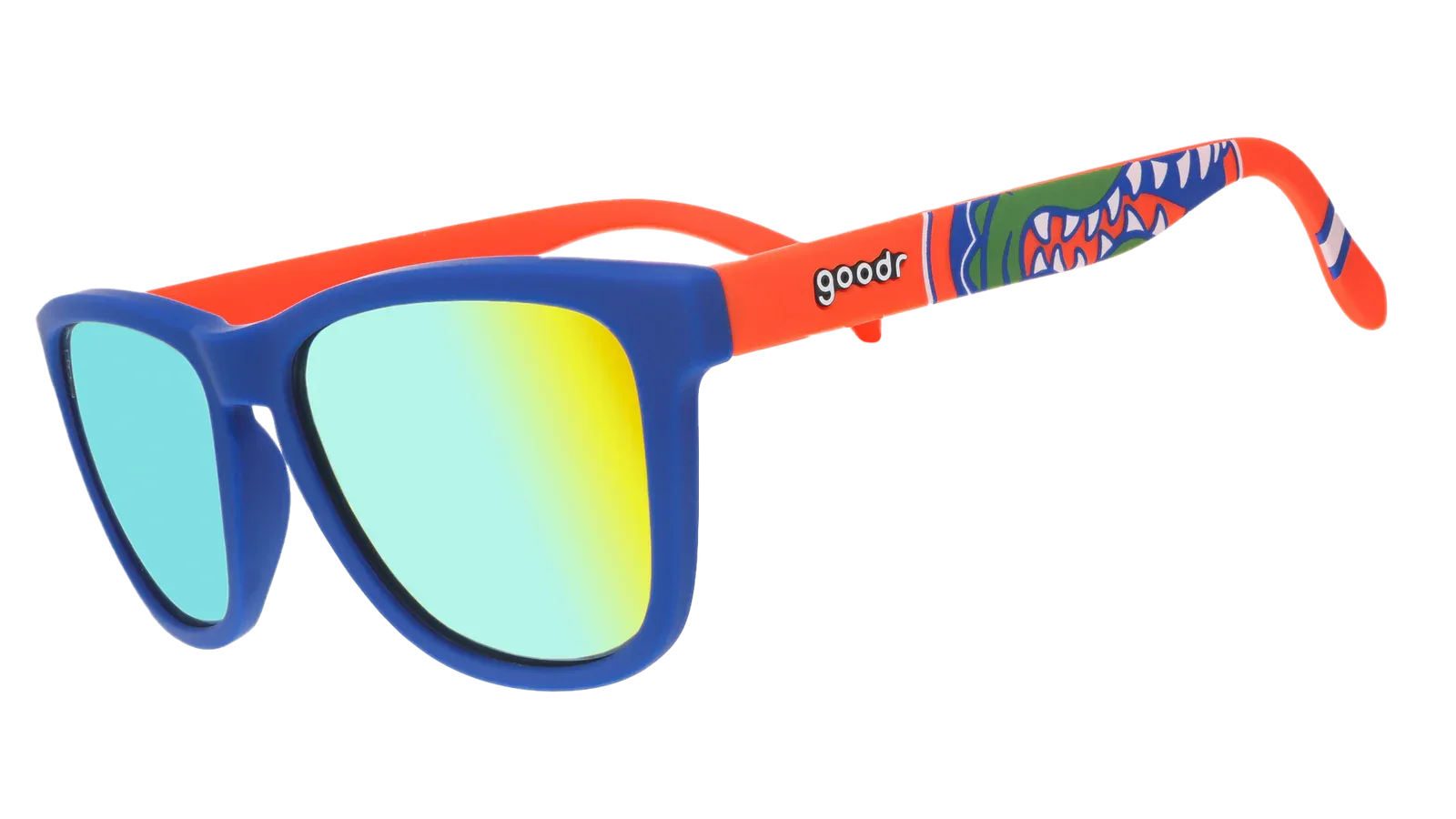
- Donkey Goggles: Orange and blue sunglasses that live to stand out from the drove. No slip, no bounce frames that stay put even when you gallop (tbh it’s really a spirited mosey). Polarized blue lenses with UV400 protection worth braying about. Polarized lenses cut reflected glare from snow, and the secure frame keeps them in place during active winter outings.
- Professor 00G: Black frames with black non-reflective lenses and a distinguished double-nose bridge were made for international people of mystery. Won't slip or bounce as you zipline down the Swiss Alps to save a high-ranking government official from subpar pâté at a cocktail soiree. Non-reflective lenses reduce glare, and the double-nose bridge ensures a stable fit for high-motion activities.
- 90s Sedan Style Icon: Dark teal OGs featuring green gradient lenses will have you cruisin’ in style. Not too flashy, not too subtle, just like a 90s sedan. Gradient lenses adapt to changing light, making them a versatile choice for unpredictable winter weather, though they lack polarization.