Quick answer
Social deduction games work by giving players hidden roles, then asking the group to talk, accuse, and vote while a hidden minority quietly steers the outcome. If your group enjoys bluffing and table talk more than heavy rules, buy a small hidden-role card game first. If your group prefers quieter logic and fewer confrontations, choose a deduction game with less social pressure.
Social deduction games live or die on the people at your table, not on the board. The genre hands each player a secret role, then turns the game into a conversation: who is lying, who is guessing, and who is quietly trying to survive. That means the same game can feel electric with one group and flat with another.
This guide explains how the core loop actually works, what separates hidden role games from party deduction games, and which details to check before you buy. You will also see concrete examples from games like This Game is Killer: Frozen Horror and boop so you can match the genre to your group size, patience, and tolerance for arguing.
boop
How social deduction games work
Most social deduction games follow the same loop: secret roles are dealt, players get a small amount of information, then the group talks, accuses, and votes. Some games add a night phase where hidden players act in secret. Others, like This Game is Killer: Frozen Horror, keep everything in the open turn structure and ask you to play just two cards: an Action and a passageway you move through. The object is simple enough to explain in a minute: survive at any cost, avoid the others, and kill the Horror if you can figure out who among you is not Human this round.
The tension comes from incomplete information. You rarely have proof, only behavior. That is why the genre rewards reading people more than memorizing rules. A quiet player might be a hidden role staying under the radar, or a new player still learning the flow. A loud accuser might be genuinely suspicious or deliberately deflecting. Good social deduction games give everyone a reason to talk, even when they have nothing concrete to say.
- Check the player count first: most social deduction games need at least four or five players to function, and some need more.
- Look for games that give every role something useful to do, so eliminated or quieter players still have a reason to stay engaged.
Hidden role games vs party deduction games
Hidden role games tend to be tighter and more structured. Players receive specific roles with defined abilities, and the game usually runs through rounds of information gathering and voting. The fun comes from figuring out which role is which and when to reveal what you know. These games often suit groups that like a puzzle wrapped in a conversation.
Party deduction games lean harder into speed, laughter, and chaos. They usually have simpler rules, shorter rounds, and more emphasis on performance than on deep logic. This Game is Killer: Frozen Horror sits in this space: it is a hilariously deadly party game about being trapped in the arctic with a shape-shifting monster that could be any one of you. If your group wants to shout, laugh, and play several rounds in an hour, party deduction is usually the better fit.
- Choose hidden role games when your group likes structured deduction and repeated voting.
- Choose party deduction games when your group wants fast rounds and does not mind a little chaos.
What to check before buying
Start with player count and round length. A game that needs six players will sit on the shelf if your usual group is four. A game that runs ninety minutes will not work as a warm-up. Next, check how players are eliminated. If a player can be knocked out early with nothing to do, that is a real cost for a casual group. Some games solve this by keeping eliminated players involved as ghosts or advisors; others simply end the round quickly.
Then look at the information structure. Does the game give you enough to make a real accusation, or is it mostly random? Games that hand out too little information can feel arbitrary, while games that hand out too much can solve themselves. Finally, consider tone. A cute abstract game like boop is not a social deduction game, but it shows how a light theme can hide real strategic bite. The same principle applies here: a friendly theme does not guarantee a friendly table.
- Confirm the minimum and maximum player count against your actual game night.
- Check whether eliminated players stay involved or sit out.
- Read how much information each role receives before you commit.
How to run a social deduction game night
Set expectations before the first deal. Tell everyone that lying is part of the game, not a personal attack. That one sentence prevents most hurt feelings. Then teach the rules with a short practice round so players learn the flow without a real win on the line. Keep the first game simple: use the basic roles and skip optional variants until everyone understands the core loop.
During play, watch the quiet players. If someone is consistently left out of the conversation, give them a direct prompt: ask what they saw or who they trust. Good moderating keeps the table lively without telling anyone what to think. After the game, reveal the hidden roles and talk through the key moments. That debrief is where new players learn why certain accusations worked and why others backfired.
- Run one practice round with open roles so everyone sees how information flows.
- Debrief after each game to turn arguments into shared references.
Decision rules for choosing a social deduction game
- If your group has four or fewer players: Skip most hidden role games and look for a deduction game designed for small counts. Many social deduction games need five or more players to create enough suspicion and enough voices. Player count is the first filter, not the theme.
- If your group hates being eliminated: Choose a game where eliminated players become ghosts, advisors, or voters, or pick a party deduction game with very short rounds so no one sits out for long. Short rounds are often better than complex comeback rules.
- If your group wants deep logic, not performance: Look for hidden role games with structured information phases and clear voting. If your group prefers quiet puzzle-solving, a strategy game like boop may fit better than a bluffing game. Match the game to the kind of thinking your group enjoys.
- If your group is new to the genre: Start with a party deduction game that teaches in one minute, such as This Game is Killer: Frozen Horror, and play a practice round with open roles before the real game. One easy teach beats a perfect rulebook.
Genre examples from our catalog
- This Game is Killer: Frozen Horror: This Game Is KILLER: FROZEN HORROR is a hilariously deadly party game about being trapped in the arctic with a shape-shifting monster that could be any one of you. The object is simple: survive at any cost. Avoid the others and kill the Horror if you can figure out who among you is not Human this round. Play just two cards, both an Action you will take and a passageway you will move through. This is a concrete example of a party deduction game with a very low rules barrier, which makes it a strong pick for mixed-experience groups that want fast, loud rounds.
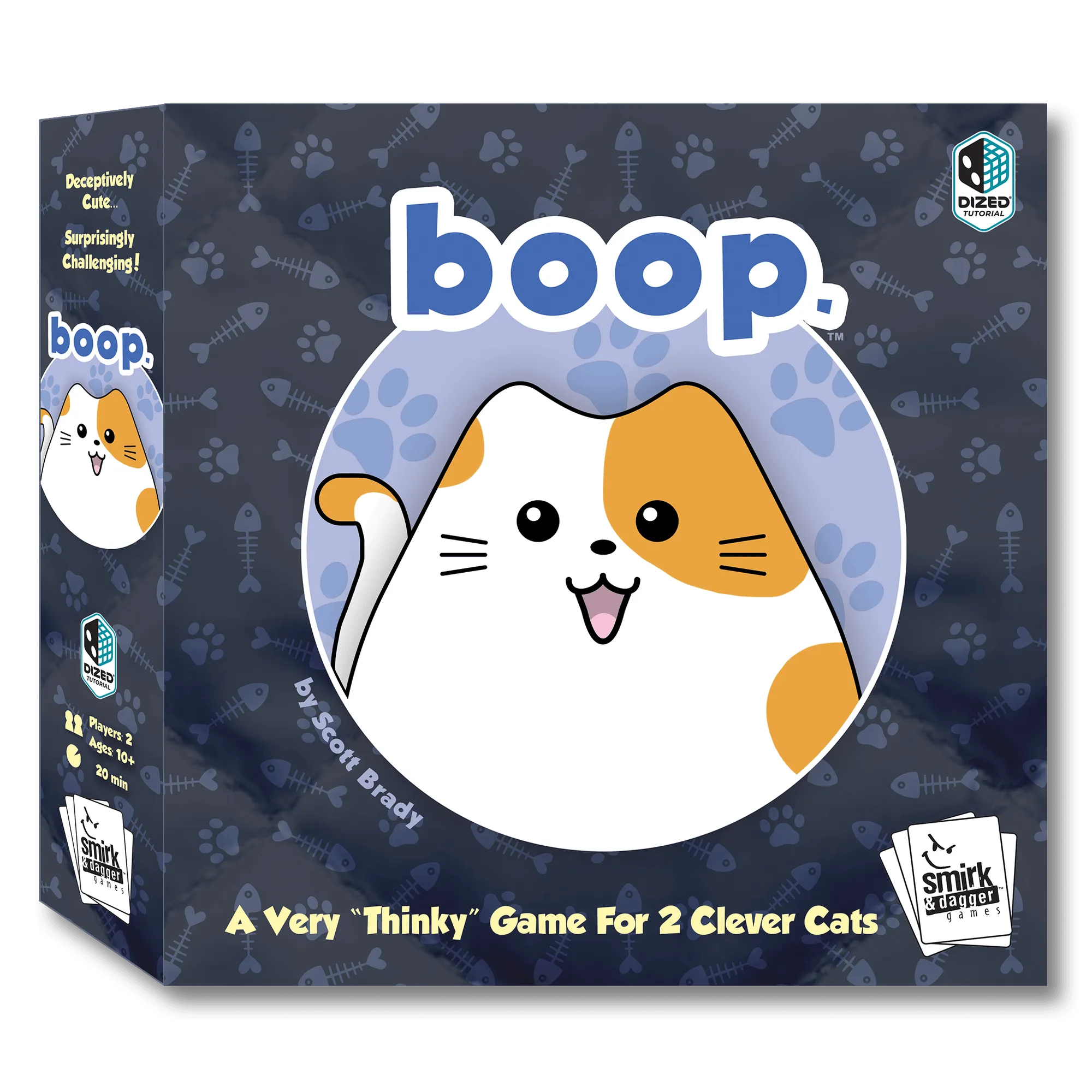
- boop: It looks adorable, but is a deceptively challenging abstract strategy game. Every time you place a kitten on the bed, it goes "boop," which pushes every other kitten next to it on the board one space away. Line up three kittens in a row to graduate them into cats, and then get three cats in a row to win. boop is not a social deduction game, but it shows how a friendly theme can hide real strategic depth. Use it as a comparison point when your group wants thinking without bluffing.
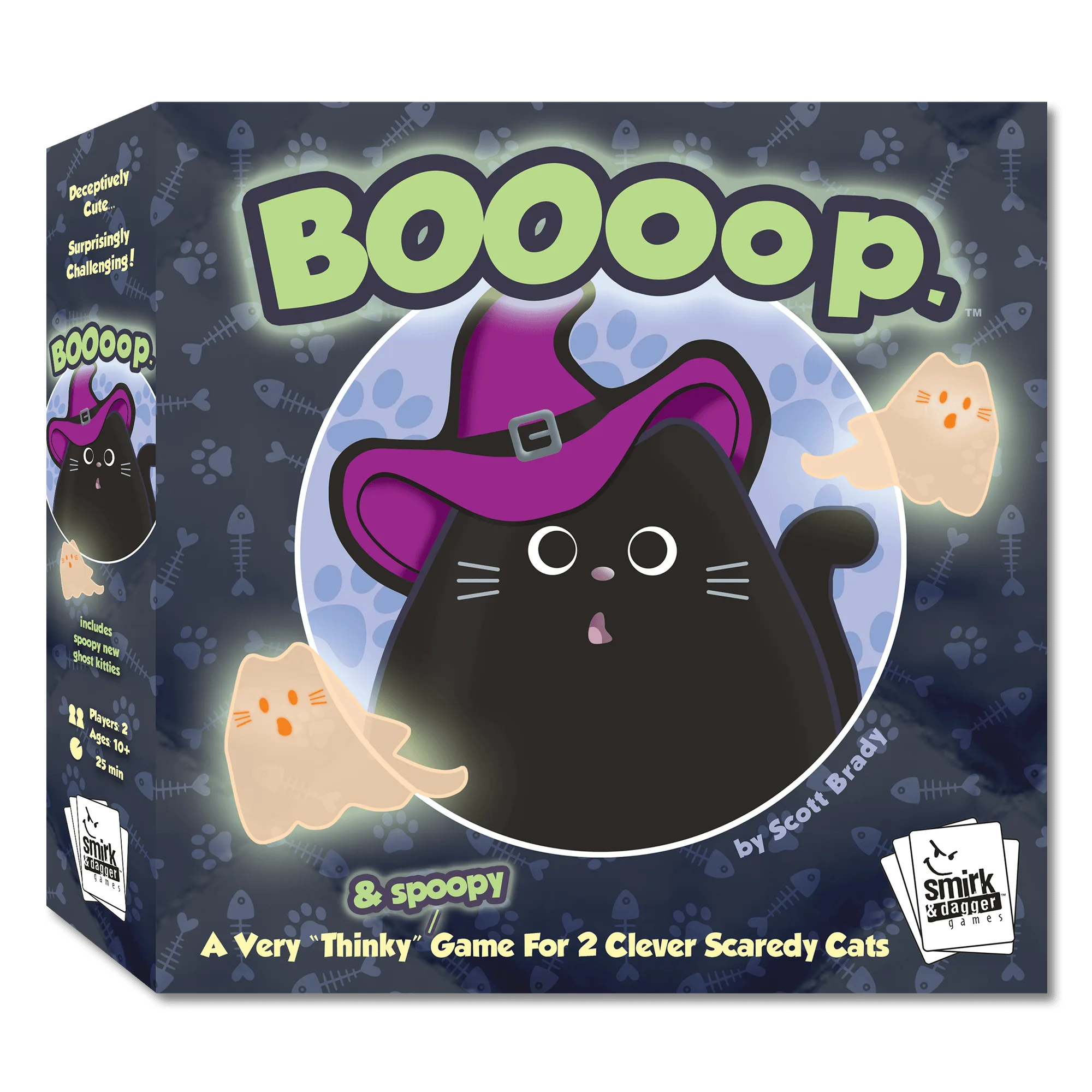
- BOOoop: a deceptively cute but thinky strategy game - now with Ghost Cats!: A spooky, fun Halloween edition of boop. Every time you place a kitten on the bed, it goes "boop." Line up 3 kittens in a row to graduate them into cats, and then get 3 cats in a row to win. And now, things just got boopier and spoopier, with NEW Ghost Cats that float between spaces. If your group likes the idea of a themed game night but does not want social pressure, a seasonal abstract like this is a useful alternative to hidden role games.
Who social deduction games are for
Best for
- Groups of five or more who enjoy talking, bluffing, and reading people
- Game nights that want short, repeatable rounds with a lot of table talk
- Players who like performance and social pressure more than heavy rules
Not for
- Two-player tables or very small groups that cannot support hidden roles
- Players who dislike confrontation, lying, or being eliminated early
- Groups that prefer quiet, solvable strategy puzzles over social guesswork
Social deduction games work best when you match the hidden role structure to the people at your table. Check player count, round length, and elimination rules before you buy, then teach with a short practice round. If your group wants bluffing and chaos, start with a party deduction game. If they want quiet thinking, choose a strategy game instead.