Quick answer
Most soft luggage wheel and handle problems come from grit in the wheel housing, loose screws, or fabric jammed in the telescopic handle tracks. Clean and lubricate the wheels, tighten accessible hardware, and clear debris from the handle channels before assuming the bag is finished. If the wheel housing is cracked, the handle tube is bent, or the frame is compromised, stop and consider repair or replacement instead of forcing it.
Soft luggage takes a beating on curbs, escalators, and baggage carousels. The wheels and handles are the first parts to show it, and a sticky wheel or stubborn handle can turn a smooth trip into a wrestling match. The good news: many issues are fixable at home with a few basic tools and a little patience.
This guide separates symptoms from causes so you can decide whether to clean, tighten, or replace. We will also point out when a repair is not worth the risk, and how to choose a bag that avoids these problems in the first place.
Wobbly or noisy wheels: diagnosis and fixes
A wheel that wobbles or squeaks usually has a loose axle screw or debris wrapped around the axle. Start by inspecting the wheel housing for hair, carpet fibers, or grit. Use tweezers or a small brush to clear it. If the wheel still wobbles, check whether the axle screw is accessible; many soft luggage wheels use a Phillips-head screw that can be tightened with a screwdriver. Do not overtighten, as you can strip the threads or crack the plastic housing.
If the wheel spins roughly even after cleaning, the bearing may be worn. Some wheels can be replaced if the housing is not riveted shut, but many soft luggage models use sealed, non-replaceable wheel assemblies. In that case, a luggage repair shop may be able to drill out the rivet and fit a new wheel, but the cost may approach the price of a new bag. For a bag like the TRANSIT'R PLUS L MONOTONE BLUE, which uses two wheels and a water-repellent fabric, keeping the wheels clean and dry will extend their life and protect the fabric from grime.
- Clean the wheel housing with a damp cloth and mild soap, then dry thoroughly.
- Avoid rolling over sand or gravel, which accelerates bearing wear.
- If a wheel is cracked or missing, stop using the bag to prevent damage to the frame.
Stuck or stiff telescopic handles: causes and remedies
A suitcase handle that will not extend or retract often has fabric, lint, or a small object jammed in the track. Extend the handle fully and look inside the channel with a flashlight. Use a vacuum with a narrow attachment or a long zip tie to dislodge debris. If the handle moves but feels gritty, apply a silicone-based lubricant to the tracks, not oil, which attracts dirt. Work the handle up and down several times to distribute the lubricant.
If the handle is bent, do not force it. A bent tube usually means the internal locking mechanism is misaligned, and forcing it can break the plastic housing. In that case, a repair shop may be able to replace the handle assembly, but if the bag is still under warranty, check the terms first. Eastpak's 30-year warranty covers manufacturing defects, so a handle that fails under normal use may be eligible for repair or replacement. The RESIST'R CASE L BLACK has a soft-closing telescopic handle designed for durability, but even robust handles benefit from a quick clean after a trip.
- Never yank a stuck handle; apply gentle pressure while pressing the release button.
- Keep the handle retracted when the bag is stored to prevent bending.
- If the handle will not lock in place, the internal spring may be broken; stop using it to avoid sudden collapse.
Zipper snags and fabric tears near wheels and handles
Zippers that catch on fabric or split open are common on soft luggage, especially near stress points like the wheel housing or handle base. A zipper that snags can often be fixed by rubbing a wax candle or a graphite pencil along the teeth. If the zipper slider is loose, use pliers to gently squeeze the top and bottom of the slider, but be careful not to break it. For fabric tears, a patch kit or a trip to a tailor can extend the bag's life.
If the fabric around the wheel or handle is torn, the structural integrity may be compromised. A small tear can be patched, but a large rip near a load-bearing point means the bag may fail when you least expect it. In that case, consider replacing the bag. The TRANSIT'R PRO L NAVY PRO COATED has a water-repellent coating and a quick-access top pocket, and its two smooth-rolling wheels are designed for extended trips, but no soft bag is immune to wear. Regular cleaning and careful packing can help.
- Use a zipper lubricant or wax, not oil, to keep zippers running smoothly.
- Reinforce high-wear areas with iron-on patches before they tear.
- Check the warranty before attempting a repair that might void coverage.
When to stop and choose another option
Some problems are not worth fixing. If the wheel housing is cracked, the handle tube is bent, or the frame is broken, a home repair is unlikely to hold. A professional repair might cost more than a new bag, especially for lower-priced models. If the bag is under warranty, contact the manufacturer first; Eastpak's 30-year warranty covers defects in materials and workmanship, but not normal wear and tear or airline damage.
If you decide to replace, look for bags with replaceable wheels, sturdy telescopic handles, and reinforced stress points. The TRANS4 M BLACK uses 360° spinning wheels and a telescopic handle for smooth movement, and its 100% nylon construction is durable. The RESIST'R ZIP M MONOTONE BLUE has a scratch-resistant and water-resistant shell, plus Japanese 360-degree spinning wheels and an integrated TSA lock. These features can reduce the likelihood of the problems discussed here.
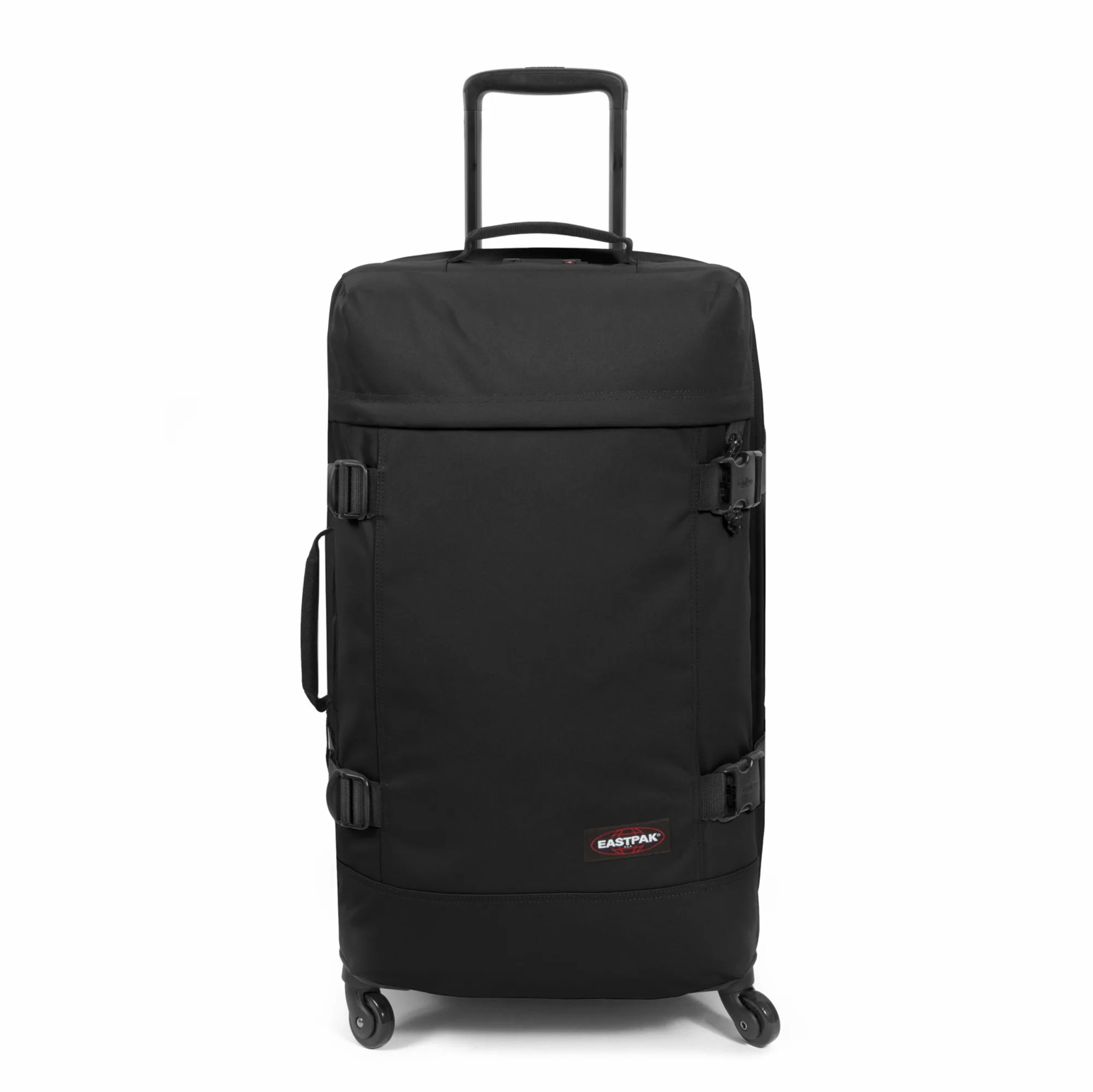
TRANS4 M BLACK
- Stop using a bag with a cracked wheel housing; it can damage the frame and contents.
- If repair costs exceed half the price of a new bag, replacement is usually smarter.
- Choose luggage with accessible screws or replaceable wheels if you want to repair it yourself.
Diagnosis: symptom, cause, action, and stop point
- Wheel wobbles or squeaks: Likely cause: loose axle screw or debris in the wheel housing. Action: clean the housing and tighten the axle screw if accessible. Stop if the housing is cracked or the wheel does not spin freely after cleaning. If the wheel still wobbles, the bearing is worn; consider professional repair or replacement.
- Telescopic handle is stuck: Likely cause: debris in the track or a bent tube. Action: clear the track and apply silicone lubricant. Stop if the handle is bent or will not lock; forcing it can break the housing. If the handle will not lock, do not use the bag; it may collapse unexpectedly.
- Zipper snags or splits: Likely cause: worn slider or fabric caught in teeth. Action: lubricate with wax or graphite and gently squeeze the slider. Stop if the zipper tape is torn or teeth are missing. A zipper that splits repeatedly needs replacement; a tailor can often fix it for less than a new bag.
Product facts that matter for repairs
- TRANSIT'R PLUS L MONOTONE BLUE: Two wheels and water-repellent protection, with a 30-year warranty. The two-wheel design is simpler to clean and maintain than four-wheel spinners, and the water-repellent fabric resists grime that can clog wheel housings.
- RESIST'R CASE L BLACK: Soft-closing telescopic handle and silent 360° wheeling system. A soft-closing handle reduces the chance of slamming and misalignment, while silent wheels indicate better bearings that are less likely to develop noise or wobble.
- TRANSIT'R 4 L + BLACK: 360-degree spinning wheels and aluminum tubes. Aluminum tubes are less likely to bend than plastic, and spinning wheels can be easier to maneuver, but they also pick up more debris, so regular cleaning is key.
Most soft luggage wheel and handle problems are manageable with simple cleaning and tightening, but know when to stop. If the damage is structural, repair or replace the bag, and consider models with durable wheels and handles for your next trip.