Quick answer
Choose soft toys by checking three things: safety features (embroidered or securely attached eyes, no loose small parts), materials that survive washing, and size appropriate for your child's age. For a durable first doll, Doll Cari from HABA is a strong pick because its embroidered face and chenille hair avoid loose parts. If you want a plush toy that doubles as a comfort object and a role-play companion, prioritize washability and stitching quality over novelty features.
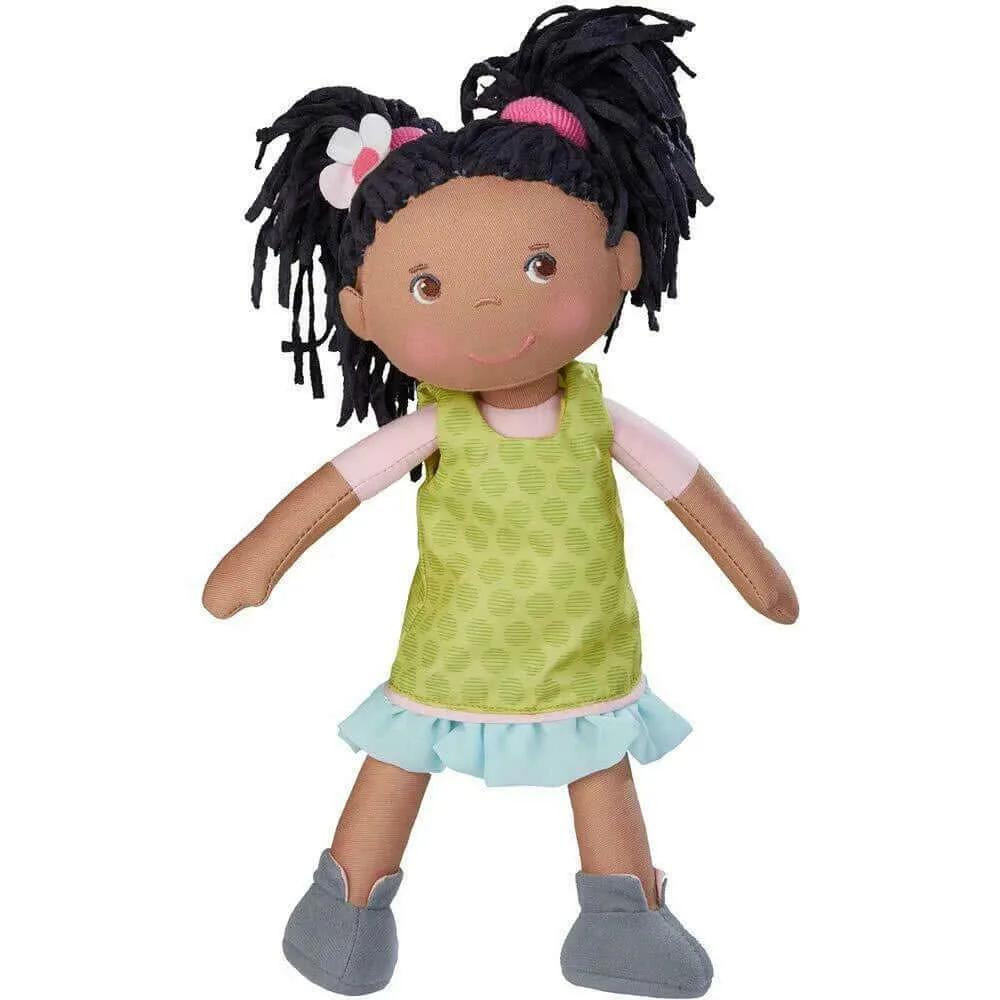
Doll Cari
A soft toy often becomes a child's most constant companion, which means it gets dragged, chewed, washed, and loved hard. That daily wear is why choosing soft toys is less about picking the cutest face and more about safety, materials, and how the toy holds up over months of use. This soft toys buying guide walks through the decisions that actually matter, with concrete rules you can apply in the store or online.
You will also see how a well-made doll fits into the broader toy shelf. We will look at safe soft toys, durable plush toys, and the trade-offs between plush comfort objects and wooden role-play toys. By the end, you should be able to look at any plush toy and judge whether it is worth bringing home.
Safety first: what to check before you buy
The biggest safety risks in soft toys are loose parts and inaccessible cleaning. Eyes, noses, and buttons that are glued or poorly attached can come off and become choking hazards. Embroidered features eliminate that risk entirely, which is why they are the safer choice for children under three. Check seams around the head and limbs, since those areas take the most stress when a child carries the toy by an arm or leg.
Washability is a safety issue too. A plush toy that cannot be cleaned becomes a home for dust and bacteria. Look for toys with simple surface-wash instructions or machine-washable materials, and avoid anything with electronics unless the battery pack is fully removable. If a toy has no care instructions, treat that as a decision limitation and assume surface washing only.
- Prefer embroidered or tightly stitched features over plastic eyes and noses for children under three.
- Squeeze the seams at the neck, arms, and legs to feel for weak stitching before buying.
- Check for a care label; if it is missing, plan for gentle surface washing only.
Materials and durability: what survives real life
Soft toys fail in predictable ways: seams split, stuffing clumps, and fabrics pill or fade. Durable plush toys usually use tightly woven fabrics and double-stitched seams. Chenille and short-pile fabrics tend to resist matting better than long faux fur, which tangles and traps debris. If the toy will be a daily comfort object, choose a fabric that feels smooth rather than shaggy.
Stuffing quality matters as much as the outer fabric. A toy that feels firm and evenly filled will keep its shape longer than one that feels lumpy or underfilled. When you can, compare two of the same toy and pick the one with more consistent density. For dolls, hair is a common failure point, so look for hair that is sewn or tied back rather than loose strands that can be pulled out.
- Choose short-pile or chenille fabrics over long faux fur for daily use.
- Test stuffing by squeezing the body; it should spring back and feel even, not lumpy.
- For dolls, check that hair is attached securely and not made of loose strands.
Age fit and play style
Age ratings on soft toys are about safety and developmental fit, not just size. A toy rated for 18 months and up may have small parts or longer fibers that are unsafe for a younger baby. For babies under 12 months, choose simple, lightweight plush with no attached ribbons or plastic parts. For toddlers, a slightly larger doll or animal supports role-play and comfort at the same time.
Think about how your child actually plays. Some children want a comfort object for bedtime, while others want a character for pretend play. A doll like Doll Cari works for both because it is soft enough to cuddle and detailed enough to star in stories. If your child is more interested in pushing and building, a wooden toy may get more use, and you can add a plush companion for quiet time.
- Match the toy's age rating to your child's age, not to their size or maturity alone.
- For under 12 months, skip ribbons, plastic parts, and long fibers.
- If your child prefers active play, pair a plush toy with a wooden role-play toy for balance.
How soft toys fit with wooden role-play toys
Soft toys and wooden toys serve different needs, and many families end up with both. A plush doll offers comfort and is easy to carry, while wooden toys like doll strollers and eating sets add structure to pretend play. If your child already has a doll, a wooden stroller or feeding set can extend the play and keep the doll involved in daily routines.
The trade-off is care and storage. Plush toys need washing and can attract dust, while wooden toys wipe clean and hold up to rough handling. A practical approach is to keep one or two high-quality plush toys for comfort and a small set of wooden accessories for active play. That combination covers more play styles without overflowing the toy bin.
- Use a plush doll as the comfort object and wooden accessories as the play structure.
- Rotate toys rather than buying many plush items at once to reduce clutter and wear.
- Store plush toys in a breathable bin, not a sealed plastic container, to prevent mildew.
Decision rules for choosing soft toys
- If your child is under 3: Choose soft toys with embroidered or tightly stitched features and no removable parts. Avoid long faux fur and attached ribbons. Safety check: no loose parts, no long fibers, no small accessories.
- If the toy will be a daily comfort object: Prioritize washability and seam quality over novelty. Look for short-pile or chenille fabrics and even, firm stuffing. Durability check: can it be washed, and will it keep its shape?
- If you want one toy to do more: Pair a plush doll with a wooden role-play accessory like a stroller or feeding set so the doll stays involved in active play. Value check: does the toy work for both comfort and pretend play?
- If the care label is missing: Treat the toy as surface-wash only and spot clean with a damp cloth. Do not submerge it or machine wash without instructions. When in doubt, clean gently and air dry fully.
Product facts that matter for soft toy buyers
- Doll Cari: HABA Brand Cari is a 12-inch African American soft doll with dark skin, a sweet embroidered face with rosy cheeks, dark brown eyes, freckles, and black chenille hair tied back in two. Embroidered features and tied-back chenille hair mean no loose plastic parts and less matting, making it a safer and more durable choice for daily cuddling and role-play.
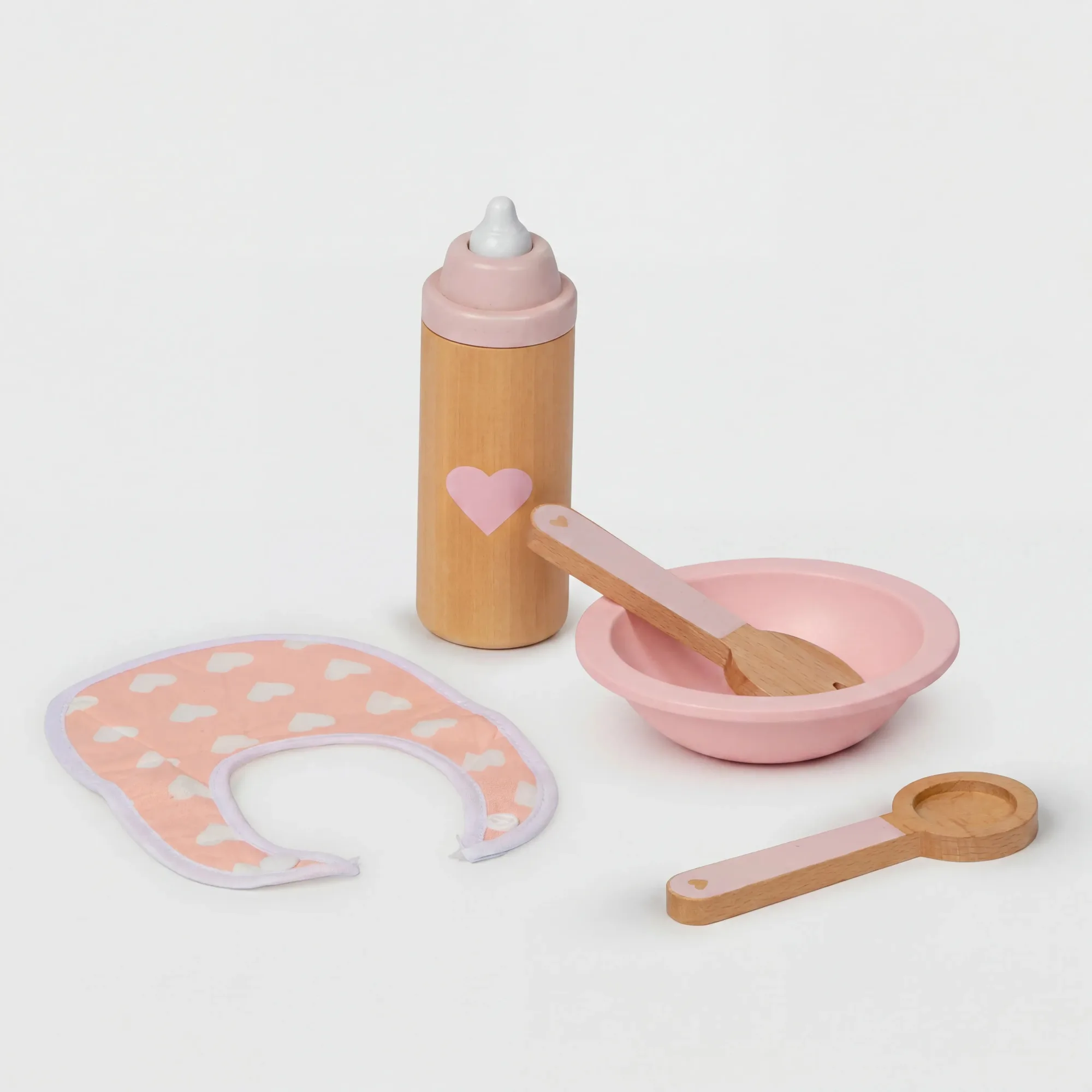
- Eating Set Pink: Wooden tableware set for 18+ months that encourages role-playing by feeding baby dolls and teddy bears; made of beech, no assembly required, 6.30 x 6.30 x 7.09 inches. A wooden feeding set gives a soft doll a practical role in pretend play, and the beech construction wipes clean easily, balancing the care needs of plush toys.
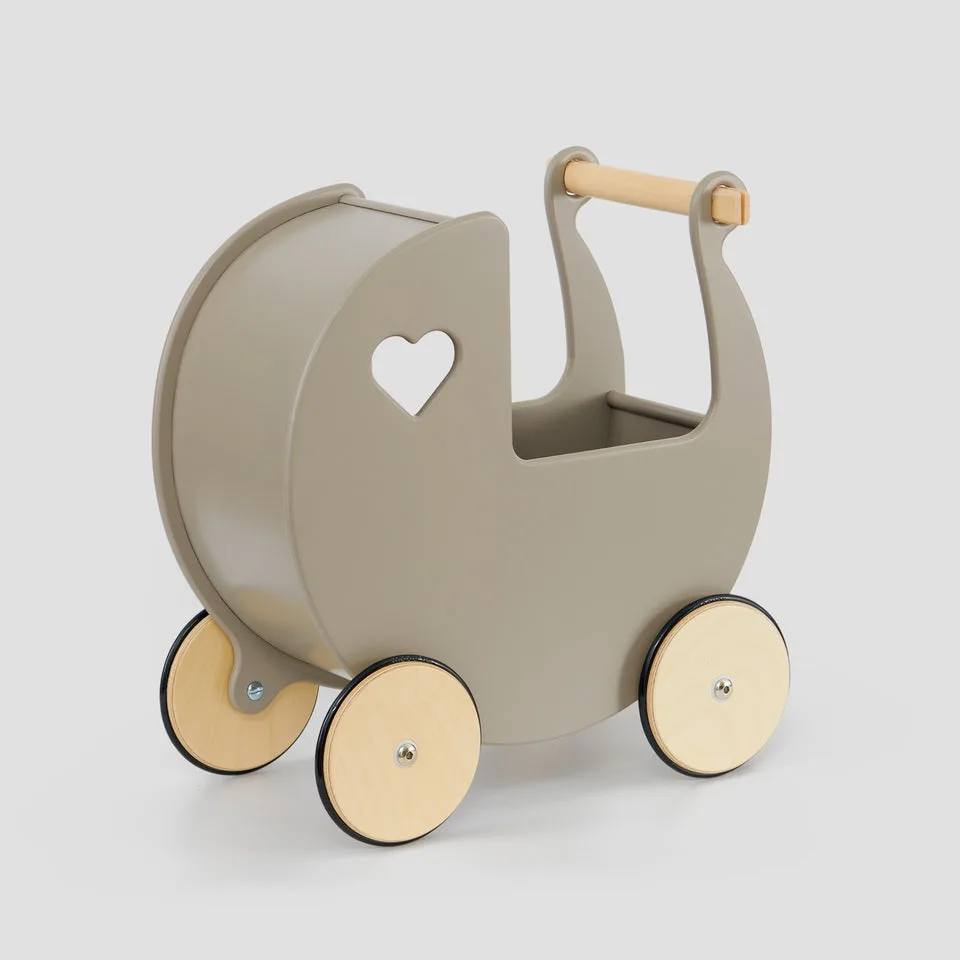
- Traditional Doll Stroller Warm Grey: Danish-designed traditional doll stroller from Moover's original highest-quality line of luxury wooden mobility toys; sturdy and dependable, with free bedding included. Pairs with a soft doll to encourage walking and role-play, and the included bedding adds value while keeping the doll off the floor during play.
Who should buy which soft toy
Best for
- Parents of toddlers 18 months and up who want a safe, durable first doll with embroidered features and no loose parts.
- Families looking for a plush companion that can also star in role-play with wooden strollers and feeding sets.
Not for
- Babies under 12 months if the toy has not been specifically rated for that age or has long fibers and small parts.
- Children who mainly want to push, build, and climb; a wooden mobility toy will get more use than a plush toy.
Choosing soft toys comes down to safety, materials, and how your child plays. Check for embroidered features and secure seams, pick fabrics that survive washing, and match the age rating to your child. A well-made doll like Doll Cari can be a daily companion for years, especially when paired with wooden role-play toys that keep the play active. Buy fewer, better soft toys and they will earn their place in the toy rotation.