Quick answer
Clean a softbox with a dry microfiber cloth or a soft brush first, and only use lukewarm water with a drop of mild soap on the diffuser when stains demand it. Always disassemble, dry fully, and store the fabric flat or loosely folded in a breathable bag. Never machine wash, tumble dry, or store a damp softbox closed.
Dust and lint on the black outer fabric
Dust dulls the reflective interior and gradually contaminates the diffuser. Vacuum the exterior with a brush attachment on low suction, or wipe it with a dry microfiber cloth. For the silver interior, use a clean, dry cloth only — moisture can streak the coating. Work outdoors or over a bin so loosened dust does not settle back into the fabric. Do this every few shoots, or whenever the softbox has been set up in a dusty venue.
Stains and marks on the white diffuser
The front diffuser is the part most likely to pick up fingerprints, makeup, or rain spots. Remove the diffuser panel first. Fill a basin with lukewarm water and a drop of mild liquid soap, then dip a microfiber cloth and wipe the stain gently — do not scrub, because the diffusion coating can be abraded. Rinse by wiping with a clean damp cloth, then hang the panel to air-dry completely away from direct sun and heat. If the stain is oil-based, a small amount of isopropyl alcohol on a cloth can help, but test on a corner first.
Creases, dents and bent rods
Fabric creases usually come from storing the softbox folded too tightly or leaving it compressed in a bag for months. Set the softbox up fully and let it sit for a few hours; most creases relax on their own. For stubborn creases, a handheld steamer held a few inches from the fabric can help, but keep heat away from the reflective coating. If a rod is bent or a seam is torn, that is structural damage — cleaning will not fix it, and the softbox will not sit flat on the flash. At that point, replacement is the practical choice.
Storage that protects the fabric
Store a softbox clean and bone-dry. Fold it loosely along its original crease lines, place it in its carry bag, and keep the bag in a cool, dry cupboard rather than a damp garage or a hot car. If you use a softbox only occasionally, take it out and set it up once or twice a year so the fabric does not take a permanent set. Keep the diffuser panel separate from the rods to avoid punctures, and never stack heavy cases on top of a softbox bag.
Softbox problem diagnosis
- Symptom: grey or dull light output: The reflective interior or diffuser has collected dust and grime, scattering light instead of directing it. Clean the interior with a dry cloth and wash the diffuser panel; if output is still uneven, the coating may be worn and replacement is the better call.
- Symptom: visible spots or smudges on the diffuser: Fingerprints, makeup, or water marks on the front panel. Wash with lukewarm water and mild soap, air-dry fully, and stop if the stain has soaked into the coating — further rubbing will damage the diffusion.
- Symptom: softbox will not sit flat or a rod feels loose: Bent rods, torn seams, or a stretched frame from tight folding. This is structural, not a cleaning problem. Replace the softbox rather than risk a modifier that falls out of position mid-shoot.
Product facts
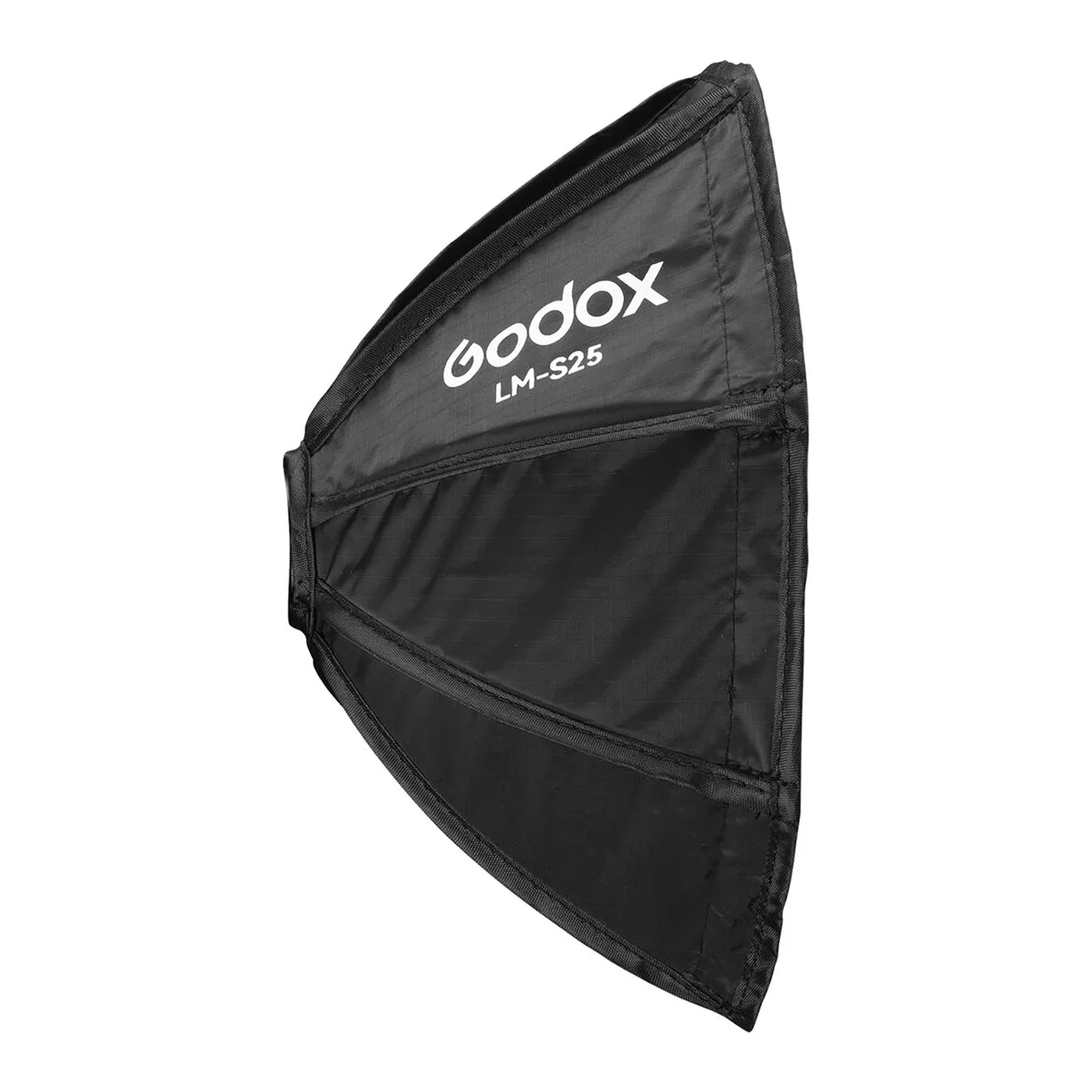
- Godox Octa Softbox for Lux Master Flash: Godox Octa Softbox for Lux Master Flash, USD 15.47 (catalog comparison price USD 24.95), with Price Guarantee and Rent Now options. At this price, replacing a damaged softbox is often more sensible than repairing torn seams or bent rods, and the rent option lets you test a modifier before committing.