Quick answer
Clean your softbox with a soft brush or vacuum, spot-clean the fabric with mild soap and water, and always store it fully dry in its carry bag with the speedring attached or separately padded. Never fold a damp softbox or leave it mounted under tension for long periods.
Why softbox care matters more than you think
Softboxes are fabric tents that stretch over a frame. Dust, fingerprints, and moisture don't just look bad—they degrade the reflective interior coating, cause hotspots, and can lead to mildew or yellowing that permanently alters color temperature. A clean, well-stored softbox protects your lighting investment and keeps your output consistent shoot after shoot.
The two most vulnerable parts are the reflective inner fabric and the speedring. The outer black fabric takes abuse, but the inner silver or white surface is what shapes your light. Once it's scratched or stained, you can't restore it to original performance. Similarly, a bent or corroded speedring can make mounting difficult and risk your light falling.
Gather the right cleaning supplies
Before you start, assemble a soft, lint-free microfiber cloth, a soft-bristle brush (like a clean paintbrush), a vacuum with a brush attachment, mild dish soap, distilled water, and a spray bottle. Avoid abrasive cleaners, solvents, or paper towels—they can scratch coatings or leave fibers behind.
If your softbox has a removable inner baffle, take it out first. Work on a clean, dry surface like a table covered with a towel. This prevents picking up grit from the floor that could grind into the fabric.
Step-by-step softbox cleaning process
Follow these steps in order. Rushing or skipping the dry-cleaning phase can push dust deeper into the fabric.
- Step 1: Disassemble and dry-clean. Remove the softbox from the light and take off the front diffuser and inner baffle. Use a vacuum brush attachment on low suction to remove loose dust from both sides of the fabric. Then go over it with a soft brush. Mistake to avoid: using high suction that stretches or tears the fabric.
- Step 2: Spot-clean stains. Mix a few drops of mild dish soap in distilled water. Dampen a microfiber cloth (not soaking wet) and gently blot the stain. Work from the outside of the stain inward to prevent spreading. Checkpoint: never rub aggressively—dab only.
- Step 3: Rinse and dry. Wipe the area with a clean, damp cloth to remove soap residue. Let the softbox air-dry completely in a well-ventilated area, away from direct sunlight. Mistake to avoid: using a hair dryer on high heat, which can warp the fabric or coating.
- Step 4: Clean the speedring. Wipe metal surfaces with a dry cloth. If there's sticky residue, use a small amount of isopropyl alcohol on a cloth. Check that all locking pins and screws move freely. Mistake to avoid: lubricating with oil—it attracts dust.
- Step 5: Reassemble and inspect. Once everything is bone dry, reattach the inner baffle and front diffuser. Look for tears, loose stitching, or bent rods. If you find damage, repair it before storage.
Softbox storage tips that prevent damage
Proper storage is half the battle. Always store your softbox in its original carry bag or a breathable cotton sack. Fold it loosely along the original crease lines—don't cram it into a tight ball. If the speedring is removable, store it separately in a padded pouch to avoid bending. For long-term storage, keep it in a cool, dry place away from direct sunlight and humidity. Avoid hanging a softbox by its fabric for extended periods; the weight can stretch the material and distort the shape.
When to replace instead of repair
If the reflective inner coating is scratched, flaking, or discolored, or if the fabric has a tear larger than a coin, replacement is usually more reliable than repair. A compromised softbox can cause uneven light that's hard to fix in post. Similarly, a speedring with stripped threads or a bent ring should be replaced—it's a safety risk for your light.
Softbox care steps
- Dry-clean first: Vacuum and brush loose dust from both sides of the fabric before any liquid touches it. Skipping this pushes dust deeper into the weave.
- Spot-clean with mild soap: Dab—don't rub—stains with a microfiber cloth dampened with mild soap and distilled water. Rubbing can spread the stain and abrade the coating.
- Air-dry completely: Let the softbox dry in a ventilated area away from direct heat or sunlight. Storing it damp invites mildew and musty odors.
- Care for the speedring: Wipe metal parts dry and check that pins and screws move freely. Never oil the speedring—oil attracts dust and grit.
- Store loosely in a bag: Fold along original creases and keep the speedring separate if removable. Tight folding or hanging by fabric causes permanent stretch.
Product facts
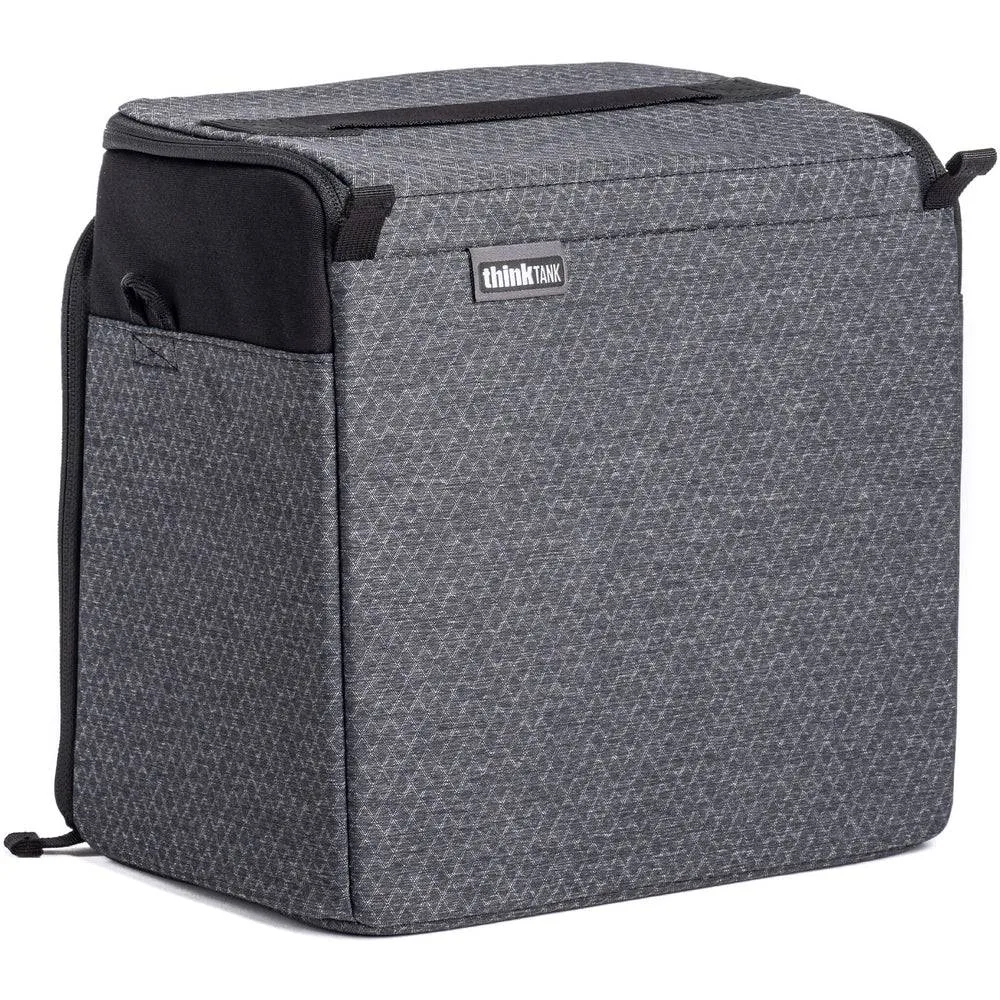
- Think Tank Photo Stash Master M Pro: The Stash Master Camera Cube series enables you to expand the photo gear capacity of any large backpack, roller or duffel. High-density velex interior and reinforced vertical dividers keep your gear secure and protected while carry handles make it easy to transport. Made from water-resistant fabrics with DWR coating. If you need to transport or store a softbox alongside other gear, a water-resistant camera cube with padded dividers adds a layer of protection against moisture and impact.