Quick answer
For most flights, choose hardside if you check a bag and want maximum protection from impact and rain, and choose softside if you want exterior pockets, easy access in the cabin, and a little packing give for odd-shaped items. If you fly carry-on only and pack tight, softside usually wins; if you check bags and carry fragile items, hardside usually wins.
The softside vs hardside decision is really about how you fly, not which material looks better in a photo. A hardside shell protects what's inside from impact and moisture, while a softside bag flexes, adds exterior pockets, and lets you reach a laptop or jacket without opening the whole suitcase.
This guide gives you concrete rules instead of vague advice. You'll see where each type wins, where it fails, and how small accessories like a toiletry case or packing stickers fit into the system. Use the decision rules below to match a suitcase to your trip, then check the fit guidance before you buy.
What actually differs between hardside and softside
Hardside luggage uses a rigid shell, usually polycarbonate or a similar molded material, so the bag keeps its shape under pressure. That rigidity spreads impact across the shell instead of concentrating it on one corner, and it keeps rain and spills away from your clothes. The tradeoff is that a hard shell has no exterior pockets and almost no flex, so you pack to the bag's fixed dimensions.
Softside luggage uses fabric panels over a frame, which lets the bag compress slightly and conform to what's inside. That flex is why softside bags often swallow a bulky jacket or an awkward souvenir that a hard case rejects. The tradeoff is that fabric can absorb moisture, exterior pockets add bulk, and a soft bag offers less protection for fragile items in a checked bag.
- Hard shell: better impact and water protection, fixed capacity, no exterior pockets.
- Softside: packing give, exterior pockets, lighter feel, less crush protection.
- Neither type is universally better; the trip type decides.
Match the bag to how you fly
If you check a bag on most trips, hardside is the safer default. Checked luggage gets thrown, stacked, and left in the rain on the tarmac, and a rigid shell handles all three better than fabric. If you carry-on almost every time, softside earns its place because you can reach a charger or a layer without unzipping the entire bag in a cramped seat.
Think about the return trip too. Softside bags handle overflow better when you buy more than you planned, while hardside bags force you to pack within a fixed volume. If your trips are short and tightly packed, that constraint is a feature; if your trips are long and unpredictable, it's a problem.
- Checked bag, fragile contents: hardside.
- Carry-on only, need in-flight access: softside.
- Long trips with variable packing: softside for give.
- Short trips with tight packing: hardside for protection.
How to judge build quality without guessing
Ignore the label and look at the parts that fail first: wheels, handles, zippers, and shell seams. On hardside bags, press the shell near the corners and check that it flexes slightly rather than cracking. On softside bags, check that the fabric is tightly woven and that zippers are covered or reinforced where the bag flexes most.
Interior organization matters more than most shoppers expect. A softside bag with a zippered pocket and a slip pocket keeps small items from migrating, which is the same logic behind a good toiletry case. If the interior is one open cavity, you'll spend every trip digging for cables and adapters.
- Test wheels and handle wobble in person when possible.
- Check zipper coverage at stress points.
- Prefer interiors with at least one zippered pocket and one slip pocket.
Accessories that work with either type
Your suitcase type doesn't change your packing accessories much, but it does change how you use them. Softside bags have exterior pockets that can hold a toiletry case or document pouch for quick access, while hardside bags push everything inside, so interior organization does more work. Either way, a dedicated case keeps liquids contained and makes security checks faster.
Personalization is another crossover. Stickers and tags help you spot your bag on a crowded carousel, which matters more with hardside because the shells look similar from a distance. If you check a bag regularly, a durable sticker or a distinctive tag is a cheap way to reduce the odds of someone walking off with your luggage.
- Softside: use exterior pockets for quick-access items.
- Hardside: invest in interior pouches and packing cubes.
- Add a sticker or tag to make a checked bag easy to identify.
Decision rules for softside vs hardside
- Rule 1: Checked bag, fragile or weather-exposed: Choose hardside when you check the bag and carry items that can crack, crush, or get wet. A rigid shell spreads impact and keeps rain out. If you check it and it can break, go hardside.
- Rule 2: Carry-on only, need quick access: Choose softside when you keep the bag with you and want to reach a laptop, charger, or layer without opening the main compartment. If you live out of a carry-on, go softside.
- Rule 3: Packing style decides the tie: If you pack tight and predictable, hardside's fixed volume is fine. If you pack loose or bring back extras, softside's flex saves you. Tight packer: hardside. Overflow packer: softside.
- Rule 4: Weight and stairs: Softside bags often feel lighter and flex when lifted, which helps on stairs and trains. Hardside shells protect more but can feel bulkier to handle. Frequent stairs and trains favor softside.
- Rule 5: Identification on the carousel: Hardside shells look alike from a distance. Add a sticker or tag so you can spot your bag fast and avoid a mix-up. Personalize any checked bag before you fly.
Products that support either setup
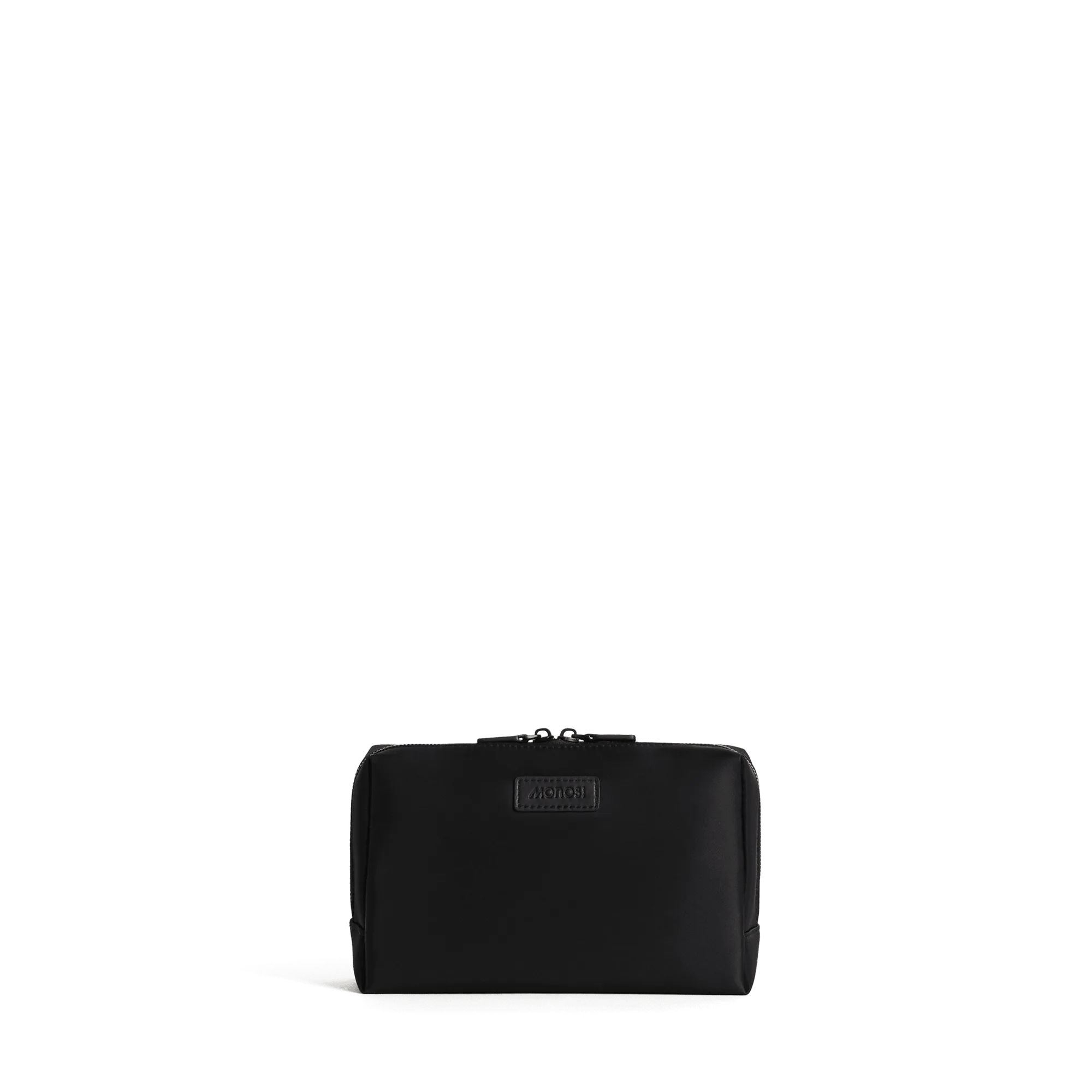
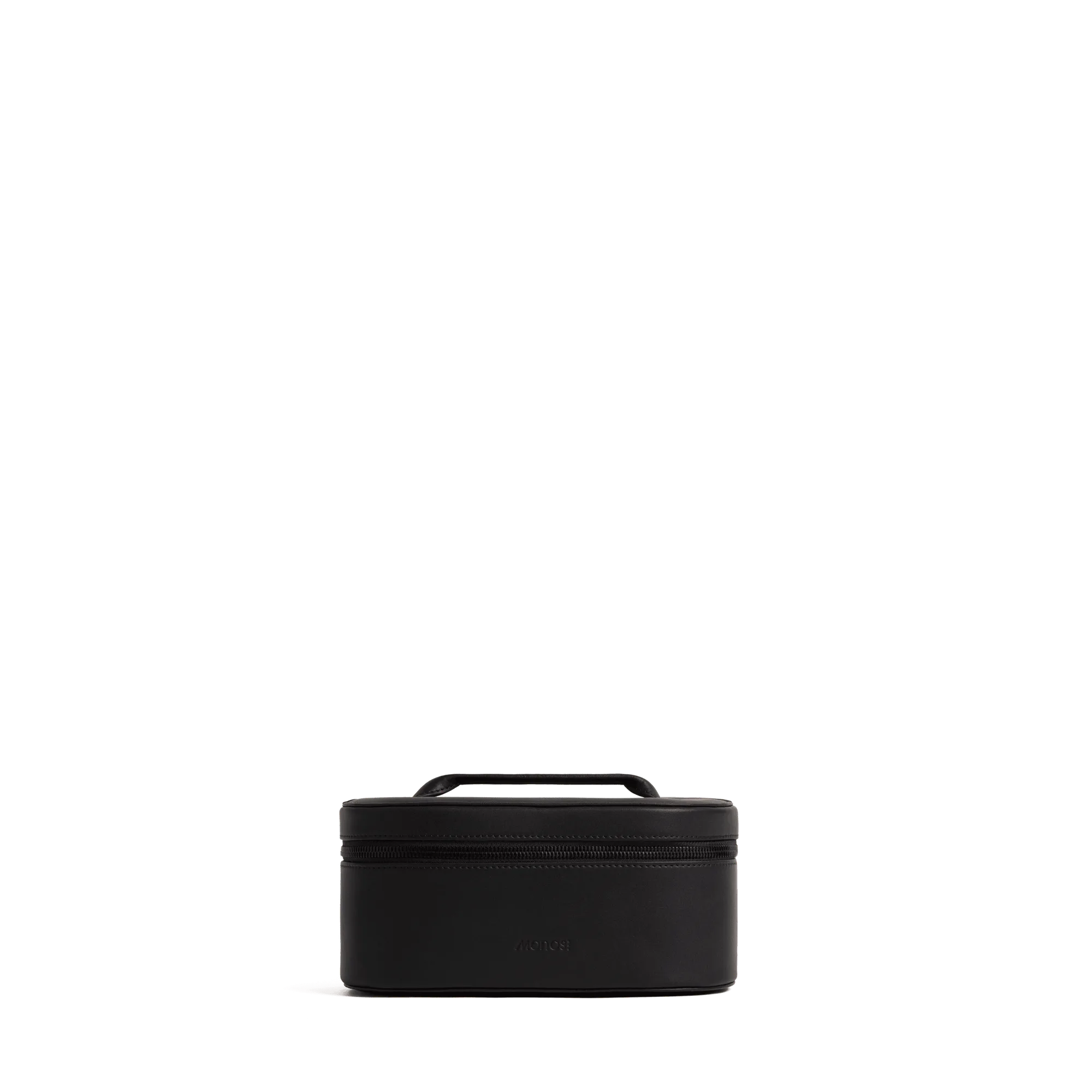
- Metro Toiletry Case: Made with premium nylon twill or ultra-microfibre vegan leather, both water- and scratch-resistant, with an interior zippered pocket and a slip pocket; the Large case adds an exterior pocket with magnetic snap. A water-resistant case keeps leaks contained inside a hardside shell and slides into a softside exterior pocket for quick access.
- Metro Cosmetic Case: Roomy main compartment for larger cosmetics and toiletries, elastic loops for brushes and tools, a clear zippered pocket under the lid, and a small removable pouch. The elastic loops and removable pouch keep small items from scattering, which matters more in a hardside bag where everything shares one cavity.
- Alphabet Stickers: Made with vegan leather and a plush 3D feel, with strong durable adhesive, designed to adhere to any Monos suitcase. A monogram makes a checked bag easy to identify on the carousel, which reduces the chance of a mix-up with a similar hardside shell.
Which type fits your trip
Choose softside if you...
- Fly carry-on only and want in-flight access to a laptop or layer
- Pack unpredictable amounts and need a little flex for extras
- Want exterior pockets for a toiletry case, documents, or a jacket
- Handle stairs and trains often and prefer a lighter, flexible bag
Choose hardside instead if you...
- Check a bag and carry fragile or crushable items
- Fly through rainy or snowy weather and want a water-resistant shell
- Pack tight, predictable loads and prefer fixed capacity
- Want maximum impact protection and don't need exterior pockets
There's no universal winner in the softside vs hardside debate, only a better match for your trip. Decide based on whether you check the bag, how much access you need in transit, and how predictable your packing is. Then add the small accessories that make either choice work: a water-resistant toiletry case, interior pouches, and a sticker or tag so your bag is easy to find.