Quick answer
Store your solar filter in a rigid, dust-free case when not in use, and inspect it before every solar session for pinholes, scratches, or coating damage. If you find any defect that lets light through, do not use the filter—replace it immediately. Clean only with a soft brush or air blower; avoid liquids unless the manufacturer explicitly allows them.
Why Solar Filter Care Is Non-Negotiable
A solar filter is the only thing between your eye and permanent retinal damage. Unlike a deep-sky filter, which you can replace if scratched, a compromised solar filter can cause instant and irreversible harm. That is why care and inspection are not optional—they are part of every solar observing session. The good news is that a few simple habits will keep your filter in safe working condition for years.
Daily Storage: Where and How
When you are not using your filter, store it in a cool, dry place away from direct sunlight. Heat can degrade the filter's coatings, and moisture can encourage mold or fungus growth on the optical surface. A padded, rigid case—ideally the one that came with your filter—prevents accidental crushing and keeps dust off. If you do not have the original case, a plastic food storage container lined with foam works well. Never leave a solar filter attached to the telescope when the scope is stored in a garage or shed; temperature swings and insects can cause damage.
How to Inspect a Solar Filter for Safety
Inspect your filter before every use, even if it looks fine. Hold it up to a bright light source—but never the sun—and look for pinholes, scratches, or areas where the coating appears uneven or missing. A small pinhole may seem harmless, but it can let through enough concentrated light to injure your eye. Also check the filter's mounting ring or cell for cracks, loose felt, or bent tabs that could let the filter slip off during use. If the filter is held on by friction, make sure it still fits snugly; if it feels loose, add self-stick felt spacers or replace the filter.
Cleaning Without Damaging the Coating
Less is more when cleaning a solar filter. Start with a squeeze-bulb air blower to remove loose dust. If stubborn particles remain, use a soft camel-hair brush or a clean microfiber cloth with very light pressure. Avoid rubbing—the metallic or dielectric coatings on solar filters are delicate. Never use alcohol, acetone, or household glass cleaners unless the manufacturer specifically says they are safe. If the filter has fingerprints or oily smudges that cannot be removed with dry methods, consult the manufacturer's instructions or consider professional cleaning. In most cases, a filter that needs wet cleaning is better replaced than risked.
When to Replace Your Solar Filter
Replace the filter if you see any pinhole that lets light through, if the coating is flaking or discolored, or if the mounting ring is cracked or no longer holds securely. Do not try to patch pinholes with tape or paint—these fixes are unreliable and dangerous. If you are unsure whether a defect is safe, err on the side of replacement. A new filter costs far less than a eye injury.
Step-by-Step Solar Filter Care Routine
- Inspect before every session: Hold the filter up to a bright light (not the sun) and look for pinholes, scratches, or coating damage. Check the mounting ring for cracks or loose felt. If you find any defect that lets light through, do not use the filter.
- Clean only when necessary: Use a blower or soft brush to remove dust. Avoid touching the surface. Never use liquids unless the manufacturer approves them. Over-cleaning can scratch the coating; less is more.
- Store properly after each use: Remove the filter from the telescope and place it in a rigid, padded case. Keep it in a cool, dry place away from sunlight and moisture. Never store the filter attached to the telescope in a garage or shed.
- Re-check fit before observing: Ensure the filter fits snugly around the front of the tube. If it feels loose, add self-stick felt spacers or replace the filter. A loose filter is a safety hazard; do not observe if it can slip off.
Product facts
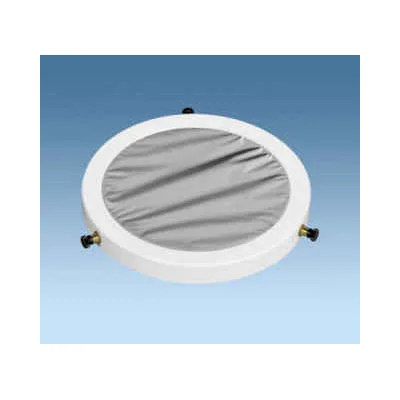
- AstroZap Baader Solar Filter For 12" SCT and 338 mm - 348 mm Telescopes - AZ1008: AstroZap Baader Solar Filter For 12" SCT and 338 mm - 348 mm Telescopes - AZ1008: To ensure that the solar filter you buy will fit properly, please take a few moments and measure the outside diameter of your telescope, spotting scope or binoculars before you order. Remember, the solar filter needs to fit snugly around the front of the tube assembly that holds the optics. If the filter is slightly larger than its diameter, the filter can be made to fit by the addition of self-stick felt spacers. A snug fit is critical for safety; a loose filter can slip off during observation, so measure your tube outside diameter before ordering and use the included felt spacers if needed.