Two Approaches to 4K Surveillance
Choosing between a solar-powered wireless camera and a wired Power over Ethernet (PoE) system means deciding how much installation flexibility matters versus continuous recording and simplified cabling. Defender offers both options in 4K resolution, each with a different set of trade-offs.
This comparison looks at the Defender EverWatch Solar Powered 4K AI Wireless Camera set and the AI-Powered Sentinel Turret 4K Wired 8CH NVR PoE Security System. Both capture 4K video and include AI-driven analytics, but their power source and connectivity shape where and how you use them.
What Each System Provides
-
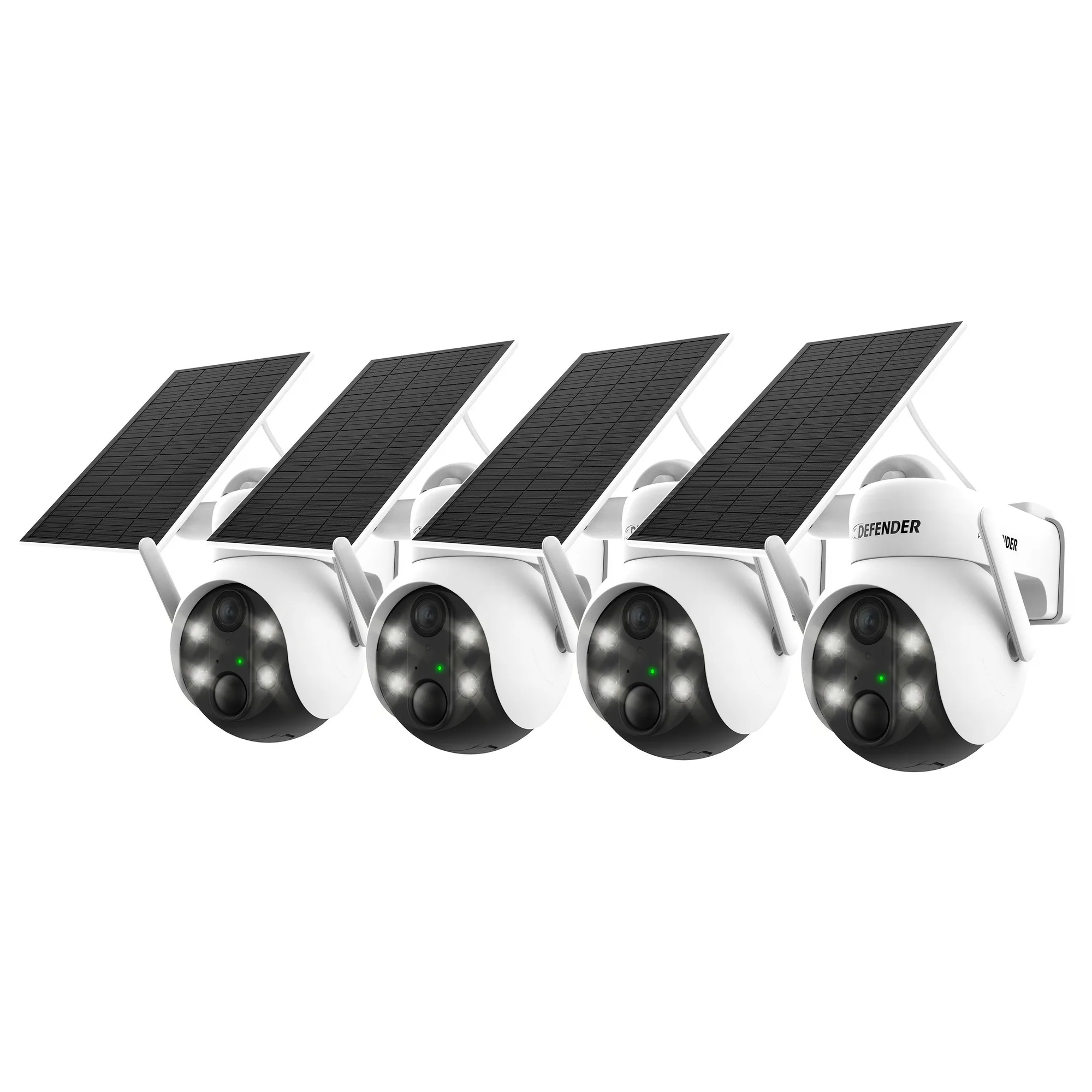
Solar Powered 4K AI EverWatch Wireless Security Camera, 3W Solar Panel, 3 pc: Three wireless 4K cameras, each with a dedicated 3W solar panel for solar-powered operation. AI-enhanced monitoring is part of the EverWatch line. No power cables or data cables are needed, so you can place cameras where wired options cannot reach, as long as the solar panel gets enough sunlight.
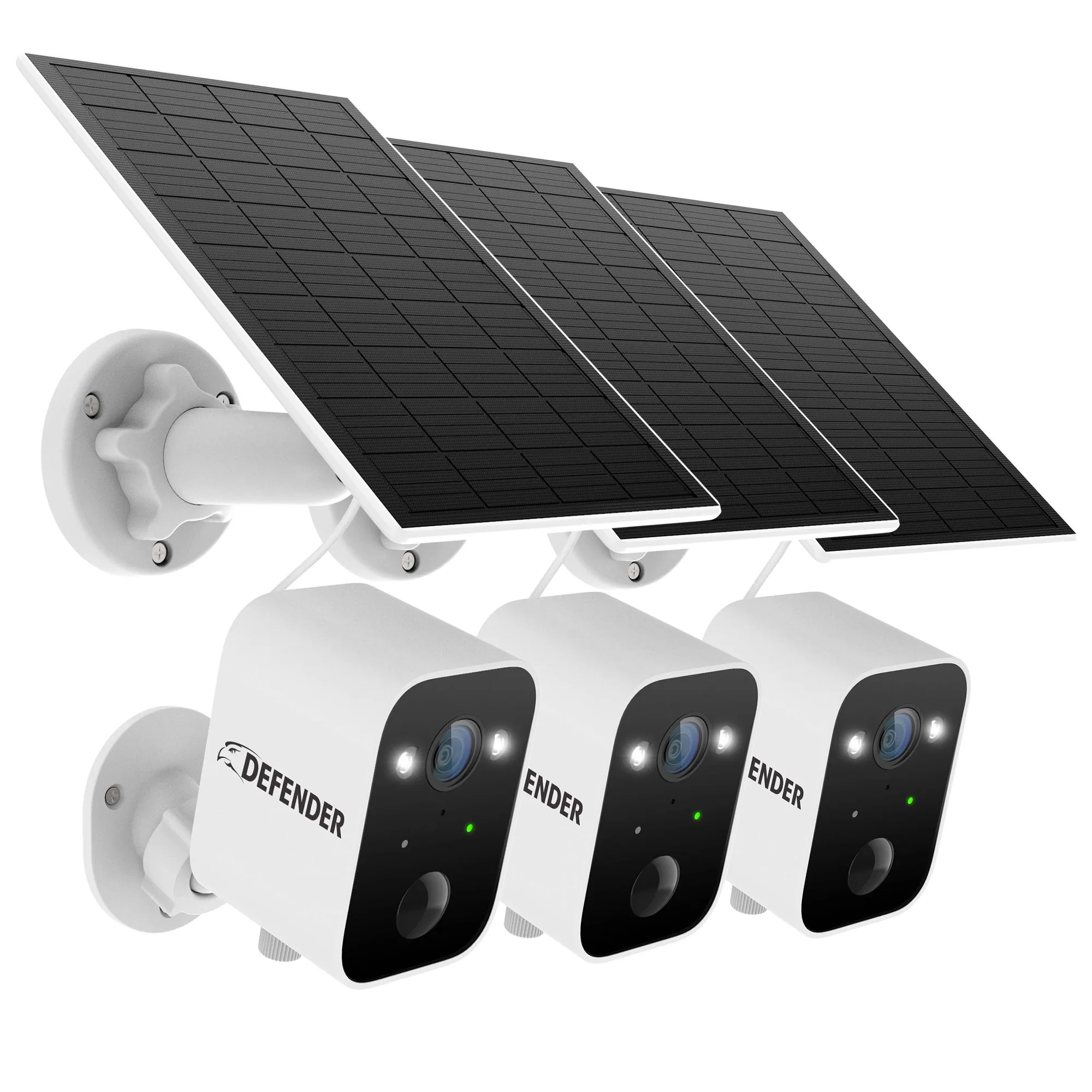
Solar Powered 4K AI EverWatch Wireless Security Camera, 3W Solar Panel, 3 pc
-
AI POWERED Sentinel Turret 4K Wired 8CH NVR PoE Security System, 8 Metal Cameras & 1TB HDD: Eight metal cameras with 4K resolution, an 8-channel NVR with Power over Ethernet, and a built-in 1 TB hard drive for local footage storage. PoE sends power and data over a single Ethernet cable, simplifying wiring. The NVR records continuously or on motion without relying on Wi-Fi or cloud storage.
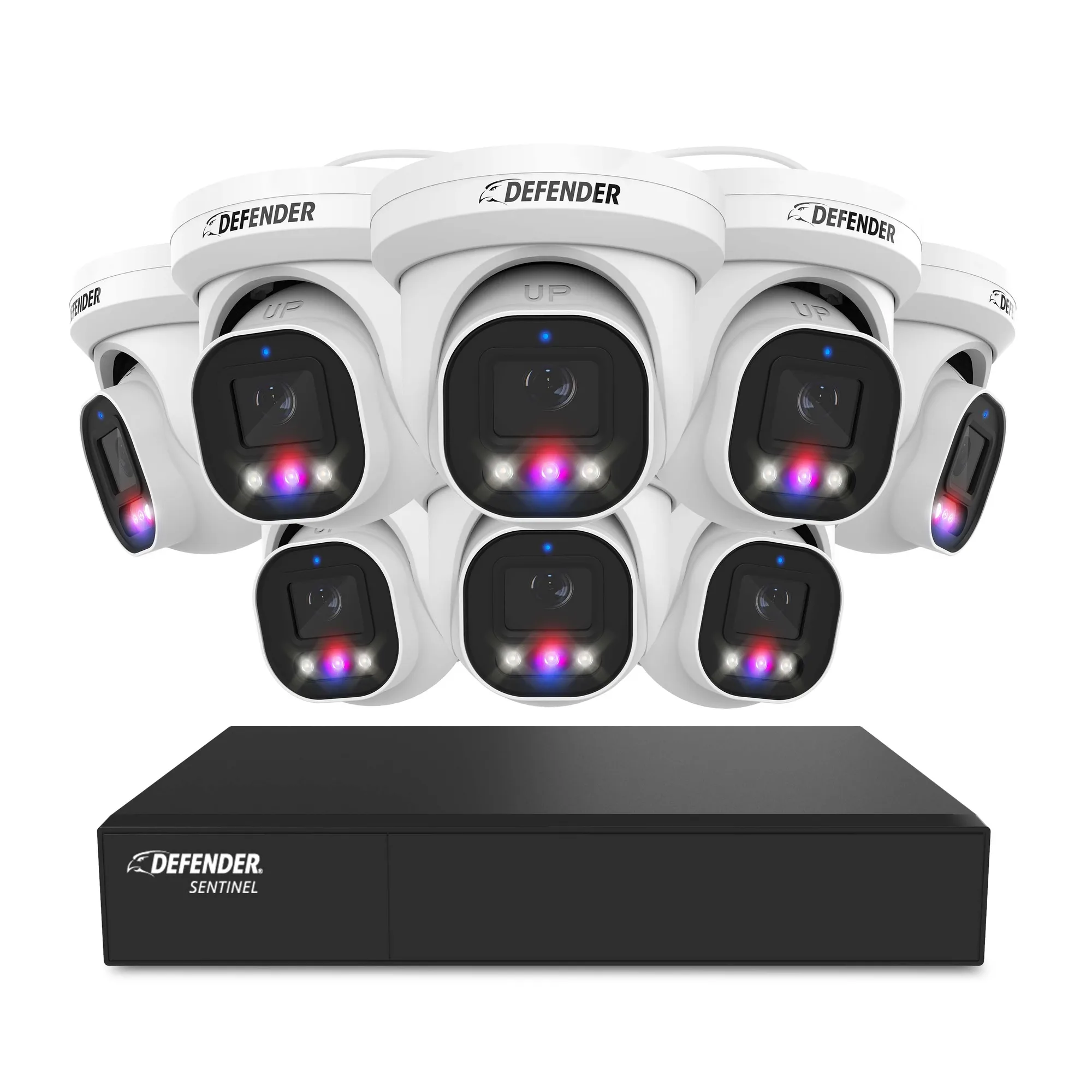
AI POWERED Sentinel Turret 4K Wired 8CH NVR PoE Security System, 8 Metal Cameras & 1TB HDD
Solar vs Wired: Key Differences
The table below highlights the main differences between the two Defender systems based on supplied information.
- Power source: Solar cameras use a 3W solar panel per camera; no external power needed. The wired system uses Power over Ethernet from the NVR, which must be plugged into AC power.
- Installation: Solar cameras are wireless, so placement is limited only by sunlight and Wi-Fi range. Wired cameras require running Ethernet cables, which can be more work but provides a stable connection.
- Number of cameras: The solar set includes three cameras. The wired system includes eight metal cameras, covering more areas out of the box.
- Recording and storage: The solar cameras rely on the camera's internal storage or cloud service (not specified in supplied info). The wired system has a built-in 1 TB hard drive in the NVR for local recording.
- AI features: Both systems include AI-powered analytics for smart detection and alerts, though specific capabilities are not detailed in supplied information.
When Solar Makes Sense
The Defender EverWatch Solar Camera set is ideal for locations where running power or Ethernet is impractical. A detached garage, a fence line, or a remote corner of a large property can get 4K coverage without trenching or drilling. The wireless design also means you can reposition cameras if your needs change.
Keep in mind that solar panels need adequate sunlight to keep the cameras powered. The supplied information does not specify battery capacity or how long the camera can run on stored power during cloudy days. If your installation site is shaded for long periods, a wired system may be more reliable.
When Wired PoE Is the Better Fit
The AI-Powered Sentinel Turret system is built for comprehensive, always-on coverage. With eight cameras and an NVR that stores footage on a 1 TB hard drive, it suits homes or businesses that want continuous recording without depending on Wi-Fi or cloud subscriptions.
PoE simplifies cabling because a single Ethernet cable carries both power and data. The metal camera housings are durable for outdoor use. The trade-off is that installation requires running cables to each camera location, which may involve more planning and effort. Once in place, the system offers a stable, low-maintenance setup.
What the Supplied Information Does Not Confirm
Neither product's supplied information includes details on night vision range, audio capabilities, weather resistance ratings, or mobile app functionality. For the solar camera, battery capacity and runtime without sunlight are not specified. For the wired system, the maximum cable length from the NVR to each camera is not provided.
When comparing these systems, focus on the confirmed differences: power source, number of cameras, installation method, and local storage. If you need specific technical details not listed here, check the product documentation or contact Defender support.