Quick answer
A rosewood sommelier corkscrew, like the Soft Machine, removes corks in one smooth motion with its patented gear system. Proper care keeps the wood handle and mechanism working flawlessly for years.
Why choose a rosewood sommelier corkscrew?
Rosewood handles offer a warm, comfortable grip that reduces hand fatigue during repeated use. The natural wood also absorbs minor shocks, making the corkscrew feel more stable in your hand compared to all-metal designs.
The trade-off is that wood requires more care than synthetic or metal handles. Rosewood can dry out or crack if exposed to moisture or extreme temperature changes, so regular oiling is recommended.
How the Soft Machine gear system works
The Soft Machine uses a patented gear system that multiplies your pulling force. Instead of jerking or rocking the corkscrew, you turn the handle in one continuous motion, and the cork glides out smoothly without breaking.
This mechanism is especially helpful for older or fragile corks that might crumble under sudden force. The gear system also reduces wrist strain, making it a favorite among sommeliers who open many bottles in a shift.
Step-by-step: Use and care for your rosewood sommelier corkscrew
- Position the corkscrew: Place the tip of the worm (the spiral) in the center of the cork. Hold the corkscrew perpendicular to the bottle top. Turn the handle clockwise until the worm is fully buried, but do not push through the bottom of the cork. Common mistake: entering the worm at an angle can cause the cork to snap. Keep the corkscrew straight.
- Engage the gear system: Once the worm is fully inserted, flip the lever arm down so it rests on the bottle rim. The gear system will now engage. Turn the handle counterclockwise in one smooth, continuous motion. The cork will rise steadily without jerking. Checkpoint: if the handle feels stiff, you may have inserted the worm too deep. Back it out slightly and try again.
- Remove the cork: Continue turning until the cork is almost out. Then gently pull the corkscrew upward to free the cork completely. Twist the cork off the worm by hand—never force it. Common mistake: pulling too early can strip the worm. Let the gear system do the work.
- Clean after use: Wipe the worm and metal parts with a dry or slightly damp cloth to remove wine residue. Do not submerge the corkscrew in water, especially the rosewood handle. For the wood, apply a drop of mineral oil or beeswax every few months to prevent drying. Checkpoint: never use vegetable oils—they can go rancid and stain the wood.
- Store properly: Keep the corkscrew in a dry place away from direct sunlight or heat sources. A leather pouch or drawer liner helps protect the rosewood finish. Avoid storing it in a damp kitchen drawer. Common mistake: leaving the corkscrew on a counter near a sink exposes the wood to moisture and can cause swelling or cracking.
Product spotlight
-
Sommelier Corkscrew in Rosewood – Soft Machine: Professional sommelier corkscrew with patented gear system. The Soft Machine Rosewood removes corks in one smooth, continuous motion with precision. This means you can open bottles with minimal effort and no cork breakage, even after a long service.
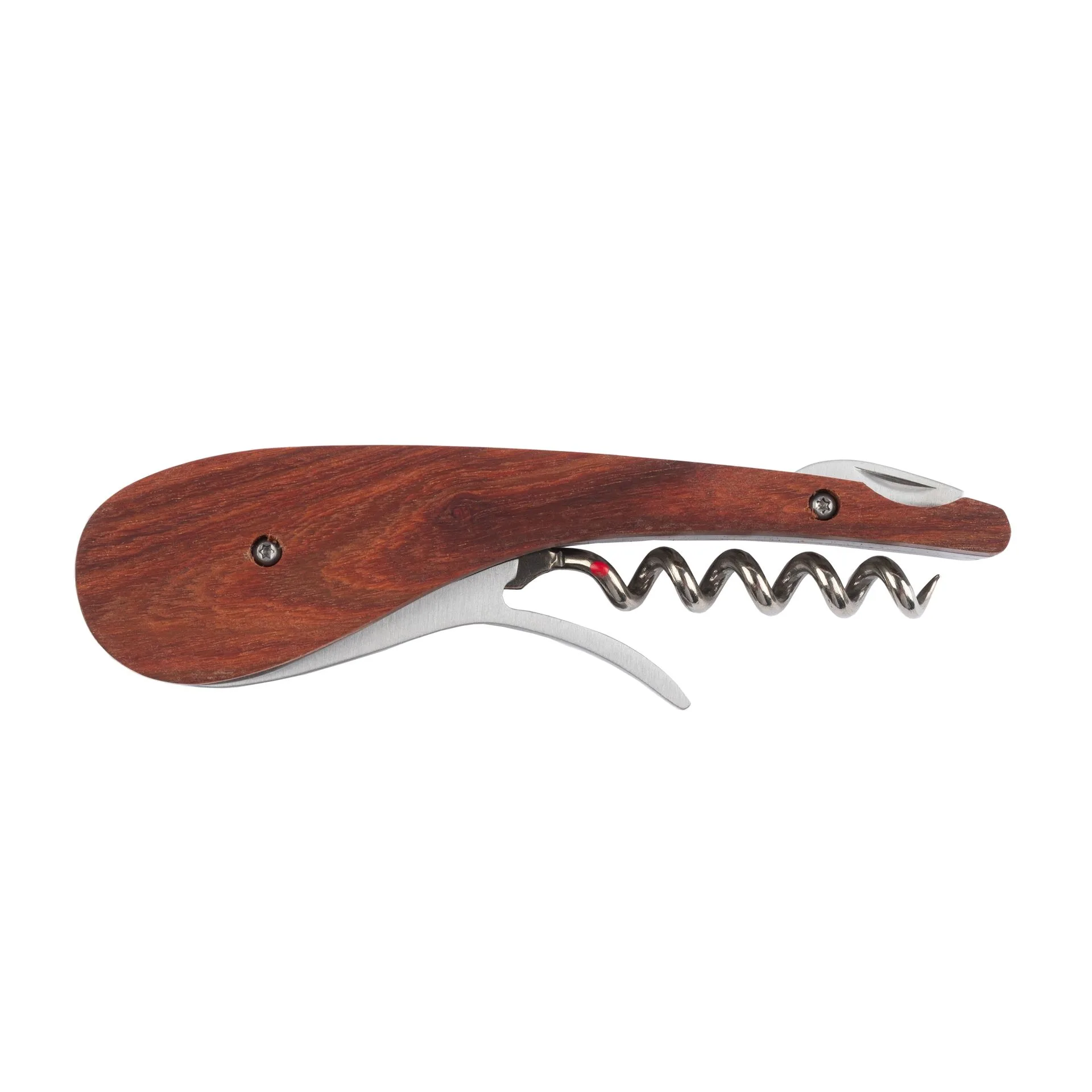
Sommelier Corkscrew in Rosewood – Soft Machine