Two Lenses, Two Travel Philosophies
For Sony E-mount shooters, the choice between the Sony FE 50mm f/1.4 GM and the Sony FE 24-240mm f/3.5-6.3 OSS often comes down to how you travel. One is a flagship prime that prioritizes image quality and low-light performance; the other is a 10x superzoom built for convenience and flexibility. Both can serve as your primary travel lens, but they suit very different habits and subjects.
Key Specifications at a Glance
The table below outlines the core specs that matter most for travel shooting.
- Focal Length: 50mm (75mm equivalent on APS-C) vs 24-240mm (10x zoom range)
- Maximum Aperture: f/1.4 (constant) vs f/3.5-6.3 (variable, narrows as you zoom)
- Image Stabilization: None (body-based IBIS only) vs Optical SteadyShot (OSS)
- Weight: Approx. 18.2 oz (516 g) vs not specified, but described as compact for a superzoom
- Weather Sealing: Dust- and moisture-resistant construction (both lenses)
Image Quality vs Versatility
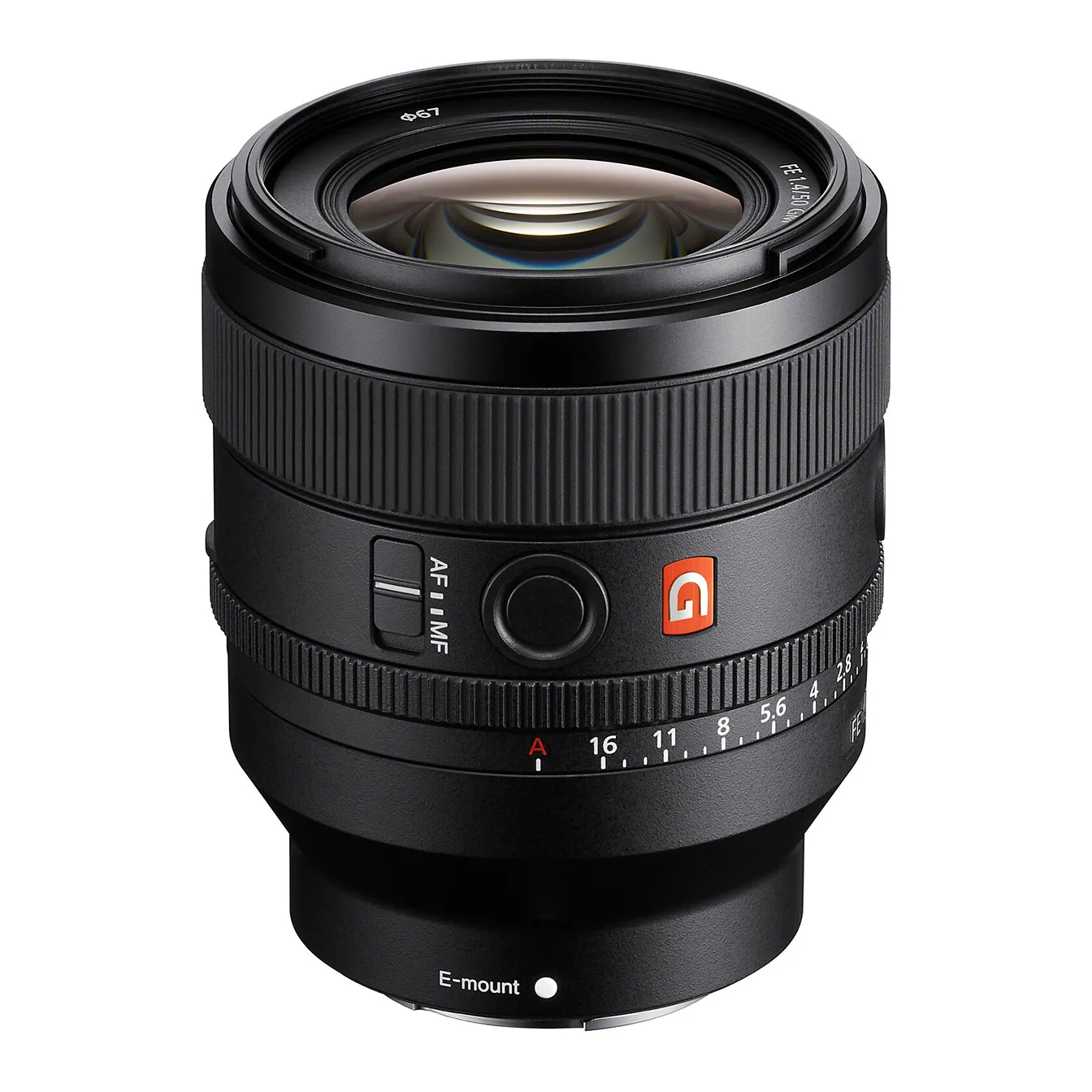
The 50mm f/1.4 GM is built around dual XA elements, an ED element, and Nano AR Coating II. Its 11-blade rounded iris and f/1.4 aperture deliver shallow depth of field and smooth bokeh, making it ideal for portraits, street details, and low-light scenes. The 24-240mm, by contrast, uses aspherical and extra-low dispersion elements to maintain consistent image quality across its wide zoom range, but its variable aperture limits low-light performance and background separation at the telephoto end. If your travel bag has room for only one lens, the 24-240mm lets you capture both a wide landscape and a distant subject without swapping glass.
What the Supplied Records Confirm
-
Sony FE 50mm f/1.4 GM Lens (Sony E): The Sony FE 50mm f/1.4 GM features dual XD Linear Motors, dual XA elements, and a de-clickable aperture ring. This combination gives you fast, quiet autofocus and smooth iris control for video, plus high optical resolution and soft bokeh.
Sony FE 50mm f/1.4 GM Lens (Sony E)
-
Sony FE 24-240mm f/3.5-6.3 OSS Lens: The Sony FE 24-240mm f/3.5-6.3 OSS covers a 10x focal range with Optical SteadyShot stabilization. OSS helps keep handheld shots sharp at long telephoto lengths, and the range reduces the need to carry multiple lenses.
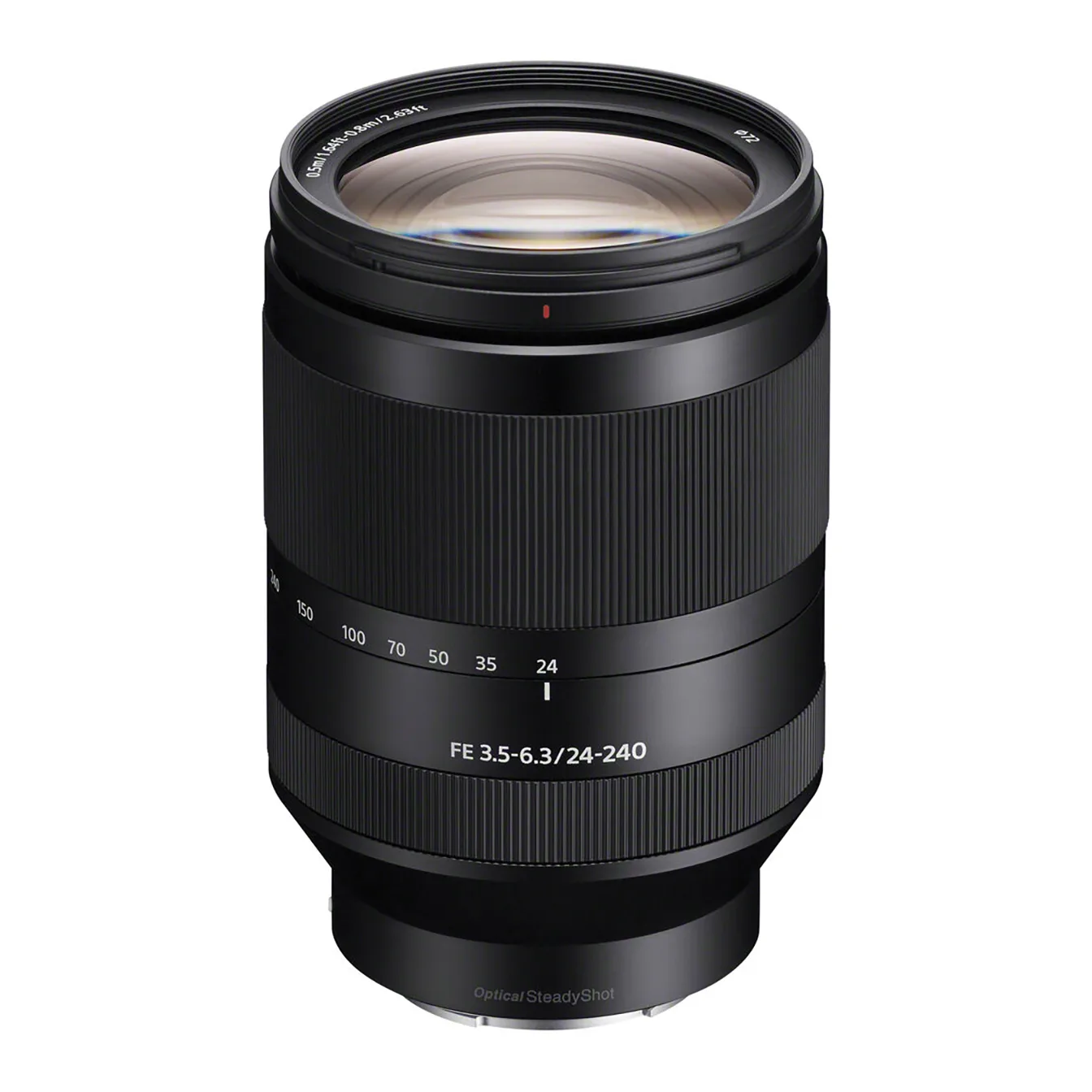
Sony FE 24-240mm f/3.5-6.3 OSS Lens
Low Light and Subject Isolation
The 50mm f/1.4 GM’s wide aperture captures more light, making it easier to shoot indoors or at dusk without raising ISO. The f/1.4 also creates pronounced background blur, which is difficult to achieve with the 24-240mm at any focal length. If your travel photography emphasizes people, food, or night scenes, the prime has a clear advantage. For daytime landscapes or group shots where you need depth of field, the zoom’s flexibility may be more practical.
Packing and Handling Trade-offs
Travel lenses live in your bag every day. Here is how these two compare for portability and convenience.
- Weight and Size: The 50mm f/1.4 GM weighs about 18.2 oz (516 g). The 24-240mm is described as 'reasonably portable' but its exact weight is not supplied; expect a larger barrel and heavier build due to the 10x zoom mechanism.
- Lens Hood: The 50mm GM ships without a lens hood (ALC-SH173 not included). The 24-240mm’s hood status is not confirmed in the supplied information.
- Zoom vs Prime: The 24-240mm eliminates lens changes, which is a real advantage when shooting in dusty or crowded environments. The 50mm GM requires you to physically zoom with your feet.
Which One Should You Choose?
Pick the Sony FE 50mm f/1.4 GM if you value image quality, low-light performance, and shallow depth of field, and you are willing to carry a second lens for wide or telephoto reach. Pick the Sony FE 24-240mm f/3.5-6.3 OSS if you want a single lens that handles everything from wide landscapes to distant subjects, and you prioritize convenience over maximum sharpness and aperture. Both are weather-sealed and built for Sony full-frame E-mount, so your choice comes down to your travel style and the subjects you shoot most.