Quick answer
When your baby fights the Flying Squirrel pajama, start with a comfort check: adjust the fit, warm up the fabric, and pair it with a calming pre-sleep routine. If fussiness persists after two weeks, consider a different sleep sack.
Why babies resist a new sleep sack
Switching from a swaddle to a wearable blanket is a big change. Your baby is used to the snug, secure feeling of a swaddle, so the loose fit of the Flying Squirrel pajama can feel unfamiliar. This often triggers temporary fussiness as they adjust to the new freedom of movement.
Temperature and comfort also play a role. If the room is cool, the fabric might feel chilly at first, especially if your baby is used to a warmer swaddle. A quick pre-warm or a layer adjustment can make a big difference.
The trade-off: loose fit vs. security
The Flying Squirrel pajama is designed with a loose fit to give your little one room to grow and move. This is great for active sleepers, but it can feel less secure than a swaddle. Some babies need extra reassurance, like a gentle pat or a pacifier, to settle in the new sleep sack.
Remember that the loose fit is intentional. It supports safe sleep recommendations from the American Academy of Pediatrics (AAP) and allows your baby to move freely, which is important as they grow.
Diagnose and fix the fussiness
- Symptom: Baby cries when you put the pajama on: This often happens if the fabric feels cold or the unfamiliar sensation startles them. Warm the pajama by holding it against your body for a minute before dressing, and put it on during a calm moment, not when they are already overtired. A warm, calm dressing routine can prevent the initial resistance.
- Symptom: Baby seems uncomfortable or restless in the sack: Check the fit. The Flying Squirrel pajama should be loose enough for your baby to move freely, but not so big that it bunches up. Ensure the ribbed cuffs are at the wrists and ankles to prevent the fabric from riding up, and adjust the room temperature if needed. A quick fit and temperature check can resolve most discomfort.
- Symptom: Baby wakes frequently or seems distressed: If the fussiness continues after two weeks of consistent use, or if your baby shows signs of distress like persistent crying or difficulty breathing, stop using the Flying Squirrel pajama and consult your pediatrician. It may not be the right sleep solution for your child. Persistent distress is a sign to stop and seek advice.
Product spotlight
-
Sleeping Baby Navy Flower Flying Squirrel Pajama: The Sleeping Baby Navy Flower Flying Squirrel Pajama doubles as a wearable blanket and is designed based on safe sleep recommendations from the American Academy of Pediatrics (AAP). This means the loose fit is intentional for safety and movement, so you can feel confident using it even if your baby initially fusses.
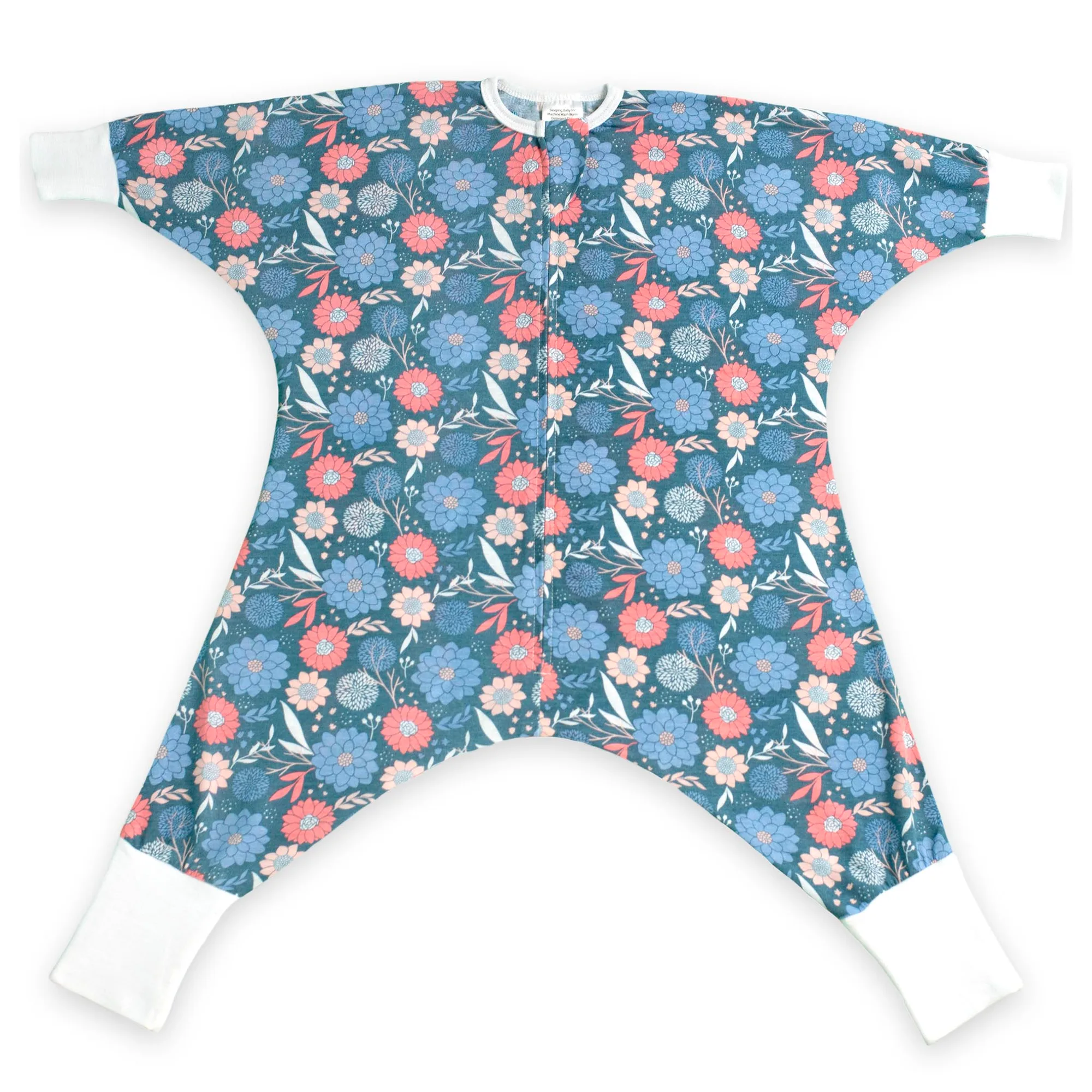
Sleeping Baby Navy Flower Flying Squirrel Pajama