Quick Answer
Your Space Alert team keeps failing because communication is unstructured, not because anyone is bad at the game. Fix it by assigning one player to call out threats by priority, forcing short confirmations instead of discussions, and reviewing the replay after each failed mission to find the exact moment coordination broke down. Do those three things and your win rate will climb within a single session.
The Real-Time Clock Is the Enemy, Not the Aliens
Space Alert gives you roughly 10 minutes of real time to plan and execute a defense, driven by a soundtrack that keeps escalating. The aliens are predictable once you know them. The clock is not. Most failed missions come down to one or two moments where the crew spent 20 seconds debating a decision that should have taken three.
This is why generic co-op board game tips rarely help here. In a turn-based co-op you can talk until everyone agrees. In Space Alert, talking is the resource you're spending, and it runs out faster than you think.
Stop Debating, Start Reporting
The single biggest shift a struggling crew can make is switching from discussion mode to reporting mode. Discussion mode sounds like: 'Should we send the red guy left or should we wait for the blue threat?' Reporting mode sounds like: 'Red threat, upper-left, I'm taking it.' One player states what they see and what they're doing. If someone has a better plan, they say so in under five seconds or they let it go.
This feels rude at first. It isn't. It's the only way to fit decisions into the time budget the soundtrack gives you.
Assign Roles Before the Music Starts
Every crew needs a caller—one person who tracks the threat board and announces what's coming, in what order, and where. The caller doesn't necessarily fight; they watch. Everyone else handles their assigned station and only speaks up when something changes.
Without a caller, three players all watch the same threat while the fourth goes unnoticed. With a caller, nobody has to hold the whole picture in their head at once.
Use Confirmations, Not Questions
Questions eat time. 'Did you get the one on the right?' invites a discussion. 'Right side handled' is a confirmation that takes one second and lets everyone move on. Train your crew to close loops with statements, not check-ins.
If you genuinely don't know whether something is handled, say 'right side unknown' and let whoever is closest claim it. Ambiguity is the failure state, not ignorance.
Review the Replay, Not the Outcome
After a failed mission, don't argue about who messed up. Walk through the timeline and find the first moment where two players were working on the same problem or where a threat went unclaimed. Fix that moment, not the ending.
Most losses trace back to a single 10-second window early in the mission. Fixing the ending doesn't help if the real mistake happened at minute two.
Diagnose Your Crew's Communication Breakdown
- Symptom: Everyone talks at once during the first two minutes: Nobody has been assigned the caller role, so all players are trying to process the same information out loud. Corrective action: pick one caller before the soundtrack starts and have them announce threats in priority order. If the noise level drops after assigning a caller, you've found the problem. If it doesn't, the issue is deeper—check whether players trust each other's calls.
- Symptom: Threats go unhandled even though someone mentioned them: Mentioning is not claiming. The crew is reporting information but not committing to action. Corrective action: require every threat call to end with a name attached—'I've got it' or 'someone take it.' If unclaimed threats persist after this change, your crew may be too large for the mission. Space Alert works best with three to four players who can hear each other clearly.
- Symptom: The crew replans the same decision three times: Players are treating this like a turn-based co-op where consensus matters. It doesn't here. Corrective action: enforce a five-second rule—state your plan, and if nobody objects immediately, execute it. If replanning continues, stop and play a different co-op game for the evening. Space Alert rewards decisive crews, and forcing it when your group isn't ready will just build resentment.
How Space Alert's Design Shapes These Fixes
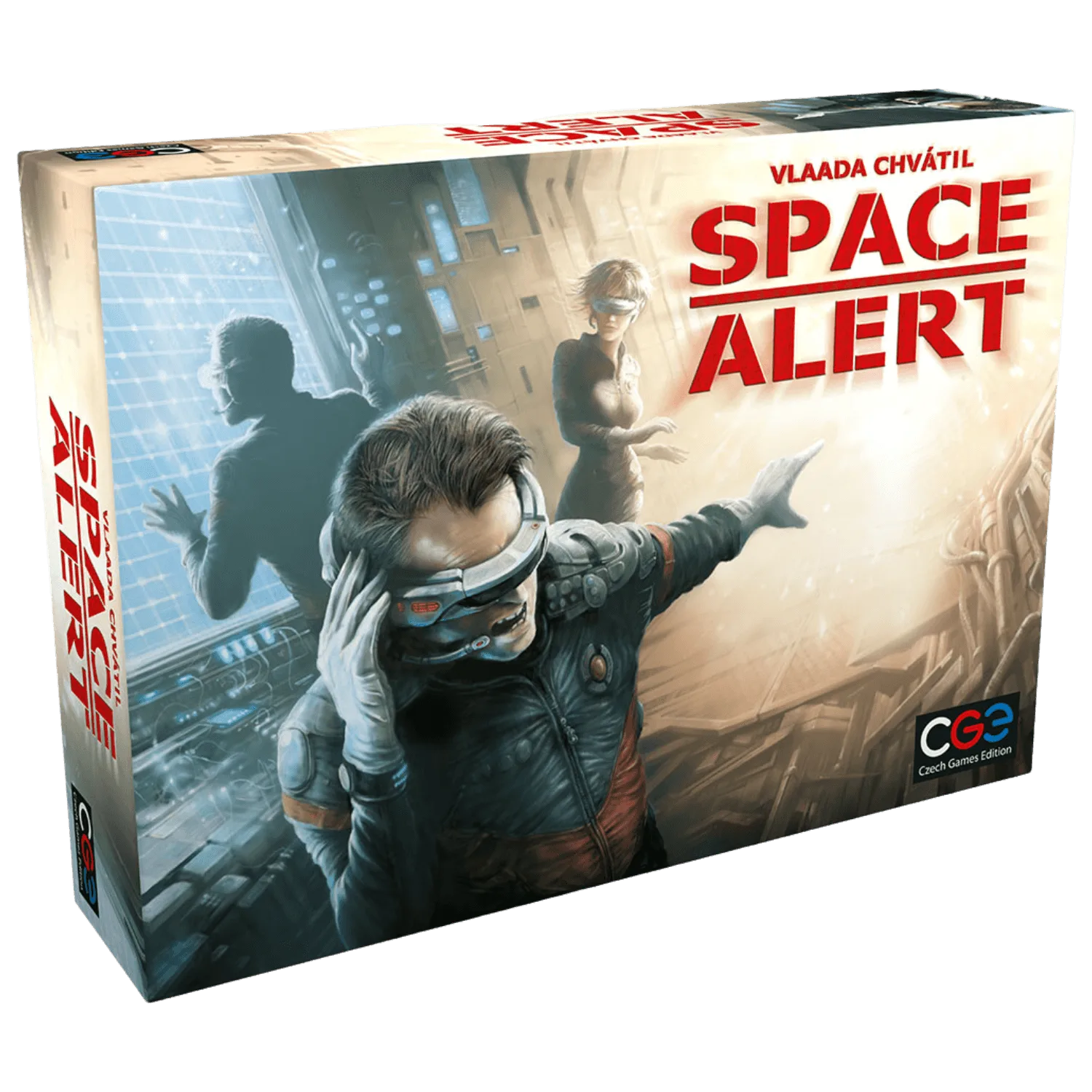
- Space Alert: The game is played alongside one of many 10-minute soundtracks, available on included CDs, downloadable mp3 files, or scenario cards. You can rehearse the same soundtrack repeatedly, which makes it a training tool rather than just a timer. Pick one track and run it three times in a row with the fixes above before moving on.