Quick answer
Choose the Spanish bull figurine if you want a bold, rare centerpiece with strong visual contrast; choose the Charolais calf if you need a young, pale farm animal that adds scale and story to a herd display. Both are Papo farm figures, but they serve different display and play roles.
Presence and rarity: the bull’s edge
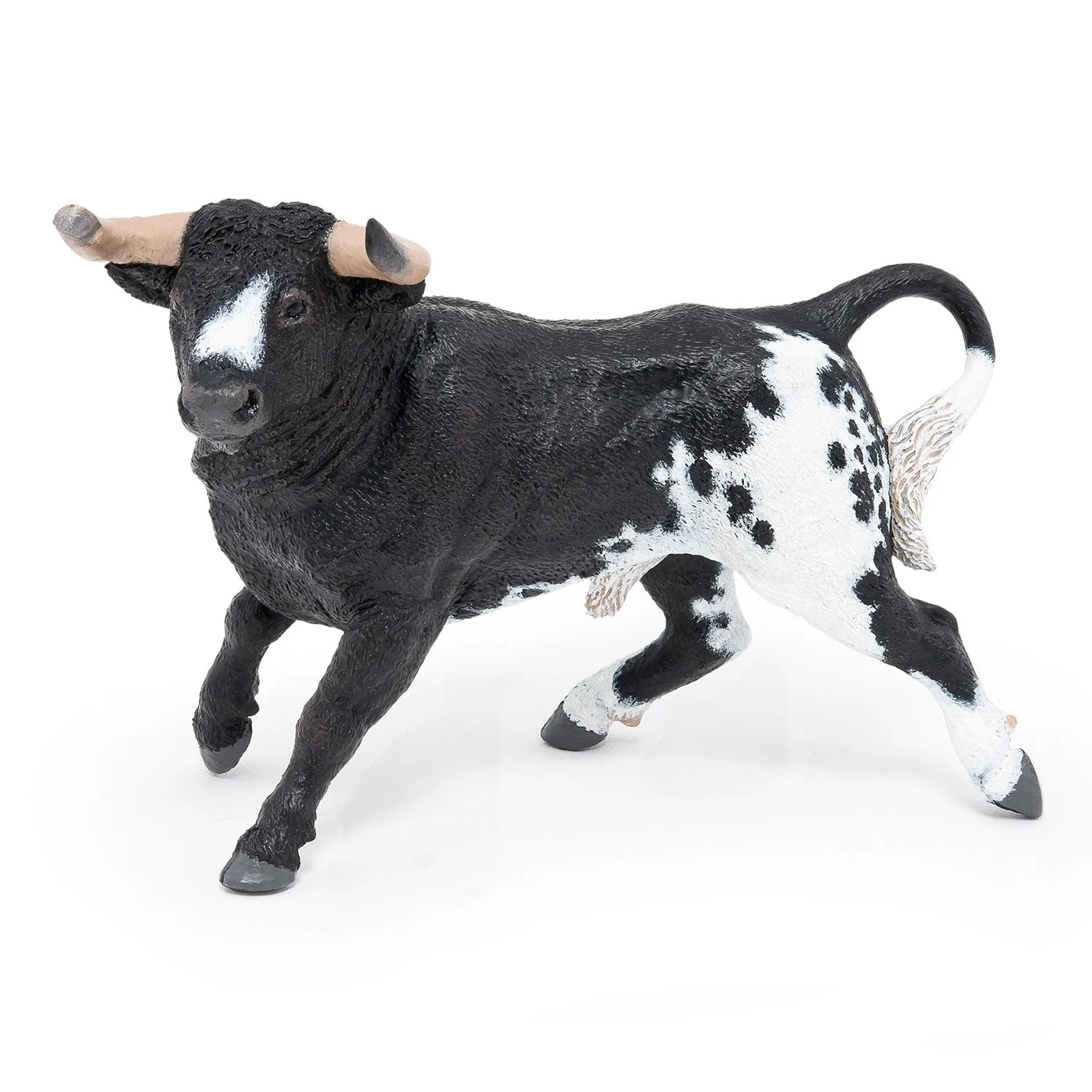
The Spanish bull stands out because its black-and-white coat is described as rare among Spanish bulls. That rarity gives it a natural focal point quality on a shelf or in a farm scene. The Charolais calf, by contrast, is a young animal with a creamy white coat—subtle, true to the breed, and better suited to blending into a herd than dominating it.
Scale and storytelling: the calf’s role
A calf figurine introduces a life-stage contrast that a single adult bull cannot. The Charolais calf’s catalog fact notes it can stand within an hour of birth, which makes it a natural pick for a farm display that shows growth and daily life. The bull, with its powerful stance, reads as a mature animal and works better as a standalone statement or the head of a group.
Play durability and handling
Both are Papo figurines in the LA VIE A LA FERME range, but the catalog does not list dimensions or weight for either. That absence matters: you cannot compare them on exact size or heft from the supplied facts. If precise scale compatibility with existing toys is critical, check the physical product listing or handle them in store before committing to a mixed herd.
Trade-offs to weigh before you choose
- Visual impact vs. herd realism: The bull’s rare panache coat delivers immediate contrast and presence, while the calf’s cream coat supports a more uniform, true-to-breed herd look. Pick the bull for a statement piece; pick the calf for a cohesive group. If your shelf already has several bold figures, the calf may balance it better.
- Adult scale vs. life-stage variety: The bull reads as a mature, powerful animal; the calf adds a young, growing stage. A farm scene with only adult cattle can feel static, while a scene with only calves lacks a focal anchor. Buying both lets you show a full herd story, but budget and space may favor one.
- Known facts vs. missing dimensions: The catalog supplies breed origin and coat details but no height or weight. That means you cannot confirm exact scale matching from the listing alone. If you need the figures to stand shoulder-to-shoulder with existing toys, verify dimensions before purchase. Treat the missing size data as a reason to check the physical product or ask the store.
Product facts at a glance
-
Figurine Veau Charolais: Charolais calf originates from Burgundy and has a light cream or white coat. Its pale color makes it a natural fit for a young-stock group or a breed-accurate Charolais herd display.
Figurine Veau Charolais
-
Figurine Taureau espangol noir et blanc: The Spanish bull’s black-and-white coat is noted as rare among Spanish bulls. That rarity gives it collector appeal and makes it a stronger standalone focal point than a common-coated figure.
Figurine Taureau espangol noir et blanc
Which figure fits your farm?
Best for
- Collectors who want a rare-coated, high-presence bull as a centerpiece
- Farm dioramas that need a mature, powerful animal to anchor a scene
Not for
- Buyers who need a young animal to show herd growth or calf-rearing play
- Anyone who requires exact scale compatibility without checking dimensions first