Quick Answer
To set up your SPARA holster, adjust the clip depth and cant angle so the grip sits flat against your body, then practice a consistent draw stroke to confirm you get a full firing grip without snagging.
Why the SPARA Works for Daily Wear
The SPARA is a low-vis outside-the-waistband (OWB) holster designed for fast access without the bulk of traditional OWB rigs. Its precision-formed 45° bends on both sides let it sit snug to your body, which improves concealment under a jacket or untucked shirt and reduces pressure points during extended wear.
Common Trade-Off: OWB vs IWB
OWB holsters generally offer a faster draw and more comfort for all-day carry, but they require a cover garment for concealment. The SPARA's low-profile design minimizes this trade-off, yet you still need to choose the right belt and clothing layers. A stiff gun belt and a slightly longer shirt or jacket are recommended.
SPARA Holster Setup Steps
- 1. Choose Your Carry Position: Decide between strong-side hip (3–4 o'clock) or appendix carry. The SPARA's low-vis OWB design works well at the hip for a natural draw and easy concealment under a cover garment. Common mistake: placing the holster too far back (behind 4 o'clock) can make the draw awkward and the grip print more visibly. Keep it directly on or just behind your hip bone.
- 2. Set the Clip Height and Cant: Loosen the mounting screws and slide the clip up or down to adjust ride height. For most body types, a mid-ride height (the gun sits level with your belt line) balances concealment and access. Adjust the cant (forward tilt) between 0° and 15° forward for a faster draw. Checkpoint: after adjusting, holster your unloaded firearm and confirm you can get a full firing grip without the holster body interfering. If your thumb or palm hits the holster, lower the ride height or reduce the cant.
- 3. Test the Draw and Re-Holster: With an unloaded gun, practice drawing from the holster at least 10 times. The SPARA's streamlined access should allow a clean, snag-free draw. Pay attention to how the holster moves against your belt—excessive shifting means the belt loops or clip need tightening. Common mistake: rushing to re-holster without looking. Always guide the gun back in slowly to avoid pinching clothing or skin between the holster and the gun.
- 4. Adjust for Concealment Under Different Clothing: If the grip prints under a light shirt, try a slightly lower ride height or add a small foam wedge to the back of the holster (near the muzzle) to tilt the grip inward. For heavier cover garments, you can raise the ride height for faster access. Checkpoint: sit, bend, and twist while wearing the holster. The SPARA's 45° bends help it stay close, but you may need to adjust the belt tension or clip position for a truly non-printing fit.
- 5. Confirm Retention and Security: The SPARA uses passive friction retention. Adjust the retention screws (if available on your model) so the gun stays in place during movement but draws smoothly with a firm pull. Test by shaking the holster upside down with an unloaded gun. Common mistake: over-tightening retention screws until the draw is difficult. You want enough friction to hold the gun during a sprint, not so much that you fight the holster on every draw.
Product Highlight
-
SPARA: The SPARA features precision-formed 45° bends on both sides for a body-hugging fit. This design reduces the holster's outward profile, making it easier to conceal under a light jacket or untucked shirt while keeping the gun accessible.
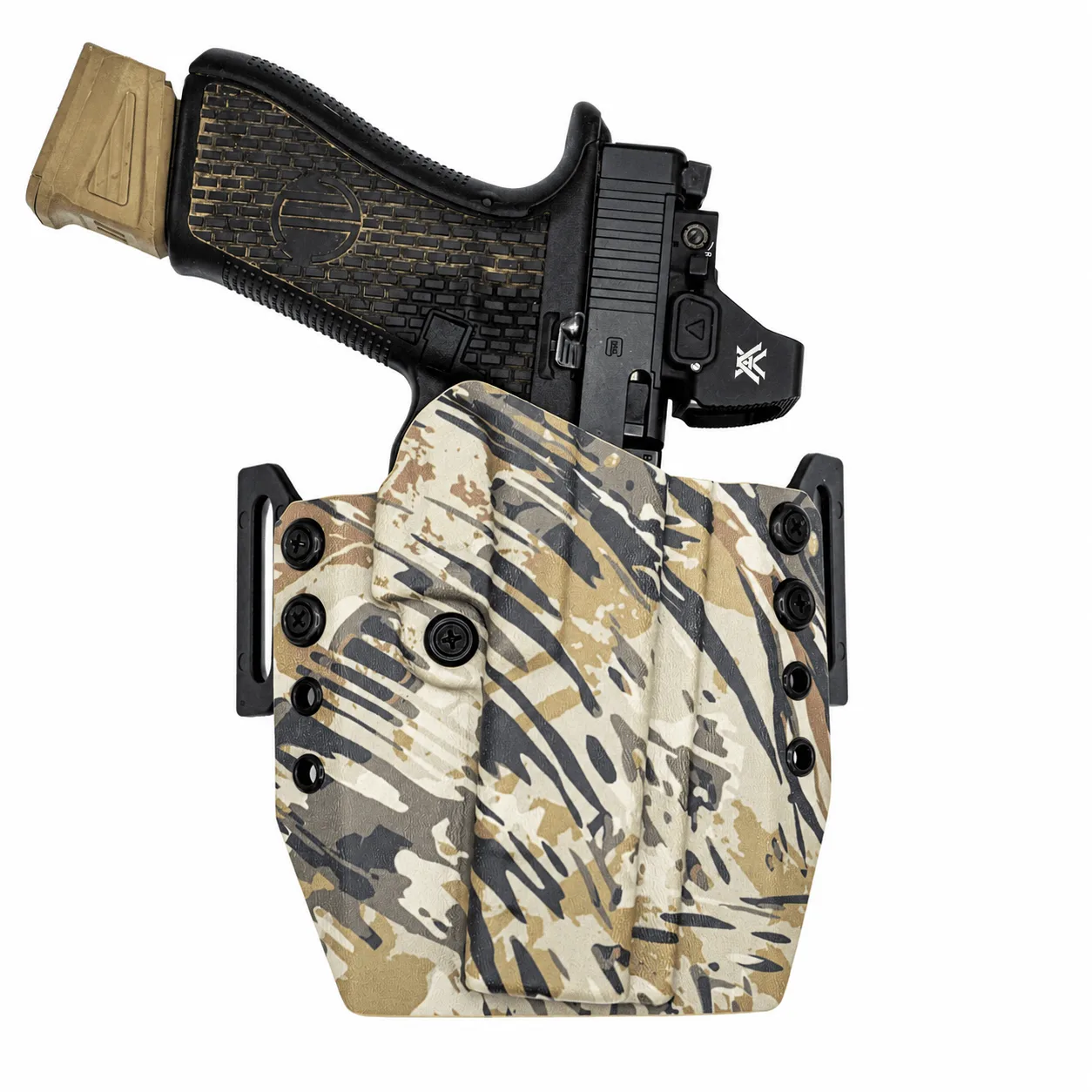
SPARA
-
SPARA: It comes with a LIFETIME WARRANTY. You can adjust the fit and carry angle without worrying about long-term durability—if the holster ever fails, it's covered.