Quick answer
For clear indoor party sound, place your speakers on tripod stands at ear height, angled slightly inward toward the middle of the room. Keep them out of corners and away from back walls, and position them in front of the microphones so the drivers point away from the mic capsules. This simple layout reduces echo and feedback while giving you the best speaker position for clear sound.
Most indoor party sound problems aren't caused by weak gear. They come from where the speakers sit, how high they are, and which way they point. A room with hard floors, large windows, and bare walls will bounce sound around no matter how powerful your system is.
This guide walks through an ordered setup you can repeat for any indoor event, from a living room karaoke night to a rented hall. Each step includes the mistake that most often ruins the result, so you can check your work as you go.
Why indoor placement matters more than volume
Indoors, sound reflects off walls, ceilings, and floors. Those reflections arrive at listeners slightly later than the direct sound, which is what creates echo and muddies vocals. Turning up the volume makes reflections stronger too, so it rarely fixes clarity.
The goal is to maximize direct sound and minimize reflected sound at the listener's position. Height, angle, and distance from walls do more for clarity than any EQ setting on a party speaker. Get those three right first, then adjust volume.
- Hard surfaces reflect more than carpets, curtains, and soft furniture.
- A speaker aimed at a bare wall sends energy straight back into the room.
- Moving a speaker one meter can change clarity more than a volume change.
Step-by-step indoor speaker placement
Work through these steps in order before the guests arrive. You can do the whole setup in about fifteen minutes with a tripod stand and a helper to listen while you adjust.
If your room has an odd shape, prioritize steps one through four. They solve the largest problems first, and the later steps are fine-tuning.
- Place speakers on the long wall facing the length of the room, not across the short width.
- Keep each speaker at least 30 cm away from any wall and well out of corners.
- Aim speakers slightly inward so their coverage crosses in front of the main listening area.
Using a tripod stand correctly
A tripod stand speaker placement lifts the drivers to ear height, which puts the direct sound where people actually listen and reduces the amount of energy hitting the floor and ceiling. For seated guests, that is roughly 1.1 to 1.2 meters. For a standing crowd, aim higher, around 1.5 meters.
Keep the stand base wide and on a flat surface, and route cables so nobody trips on them. If the stand wobbles, fix that before you raise the speaker, not after.
- Set the tripod legs as wide as the space allows for stability.
- Tilt the speaker down slightly if the stand is above the listeners' ears.
- Never stack a speaker on a chair or table as a substitute for a stand.
Reducing echo and feedback
To avoid echo at an indoor party, break up the parallel surfaces that bounce sound back and forth. Curtains, rugs, and soft furniture absorb reflections. If the room is bare, placing speakers slightly off-axis from the walls helps more than turning down the treble.
To reduce feedback speaker placement is the main tool: keep microphones behind the speakers, never in front of them. The mic should point away from the speaker drivers. If feedback still occurs, lower the mic gain before you move anything else.
- Point microphones away from speakers and keep them at least two meters back.
- Avoid standing directly in front of a speaker while holding a mic.
- Test mic levels at the volume you plan to use, not at a whisper.
Indoor speaker placement checklist
- 1. Choose the long wall: Set up along the longest wall and face the speakers down the length of the room. This spreads sound over more distance before it hits a wall. Checkpoint: if you are firing across the short width, reflections will arrive much sooner and sound muddier.
- 2. Pull speakers out of corners: Leave at least 30 cm between each speaker and the wall, and avoid corners entirely. Corners amplify bass and smear clarity. Checkpoint: if bass sounds boomy and undefined, move the speaker further from the wall before touching any EQ.
- 3. Raise speakers on tripods: Put each speaker on a tripod stand at roughly ear height for your audience: about 1.2 meters for seated guests, 1.5 meters for standing crowds. Checkpoint: if the stand wobbles, widen the legs and re-check before raising the speaker higher.
- 4. Angle inward slightly: Turn each speaker a few degrees toward the center of the listening area so coverage overlaps in front of the crowd rather than at the walls. Checkpoint: if one side sounds louder, adjust the angle before adjusting the volume.
- 5. Keep mics behind the speakers: Position microphones behind the speaker line and point them away from the drivers. This is the single most effective way to reduce feedback speaker placement issues. Checkpoint: if feedback starts, lower mic gain first, then move the mic further back.
- 6. Soften the room: Add rugs, curtains, or soft furniture to break up reflections between parallel walls. Even one large rug makes a noticeable difference. Checkpoint: clap once in the empty room. If you hear a long ring, you still have echo to manage.
- 7. Walk the room and confirm: Play a familiar vocal track and walk the space. Listen for spots where vocals disappear or bass piles up, and nudge the nearest speaker to fix them. Checkpoint: the best speaker position for clear sound is the one that sounds even in the seats your guests will actually use.
Gear that helps with indoor placement
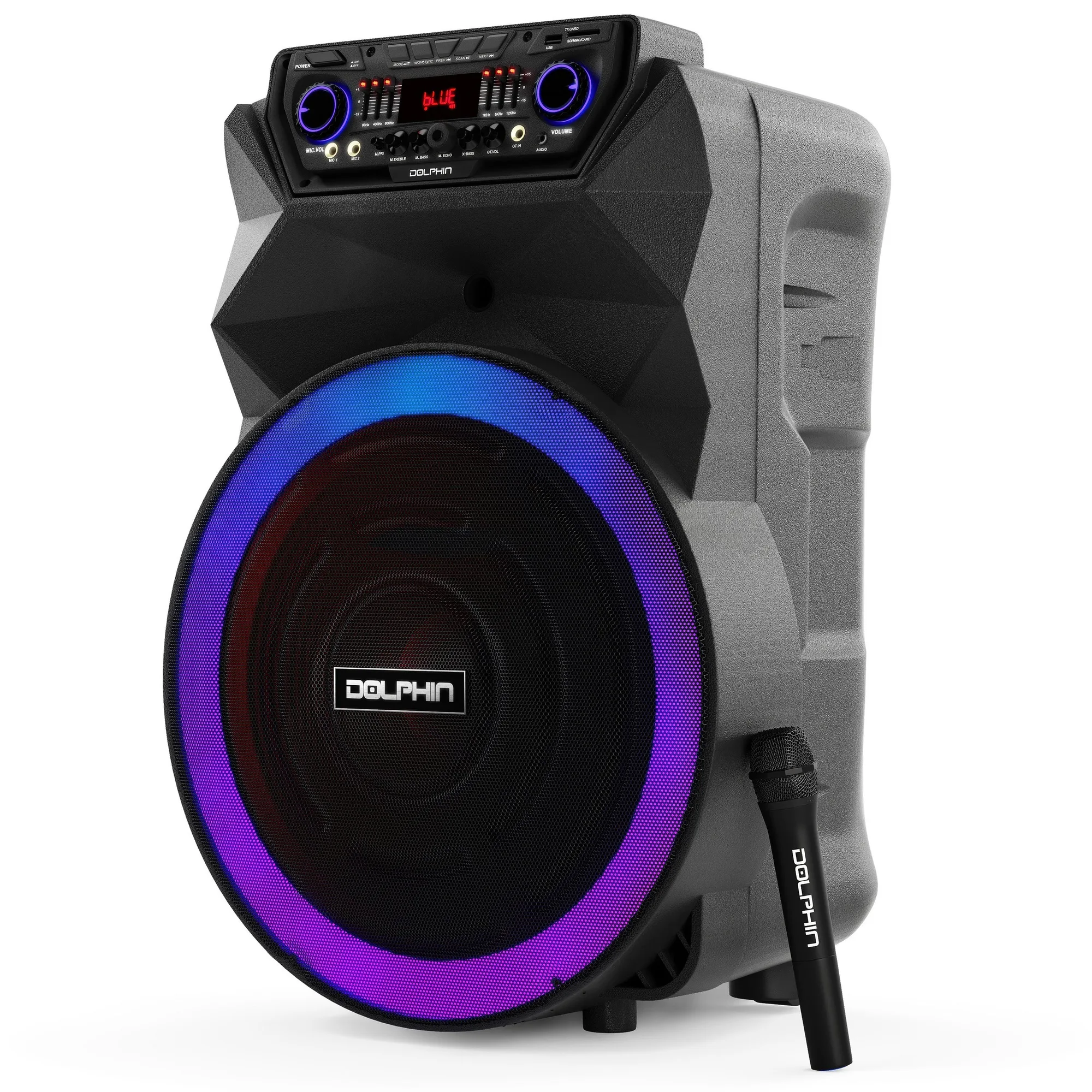
- BoxParty 18: The BoxParty 18 is a rechargeable 18-inch party speaker with sound-activated LED lights and includes a remote control and wireless microphone. The included wireless mic means you can test feedback and mic placement immediately, and the rechargeable design lets you reposition the speaker without hunting for an outlet.
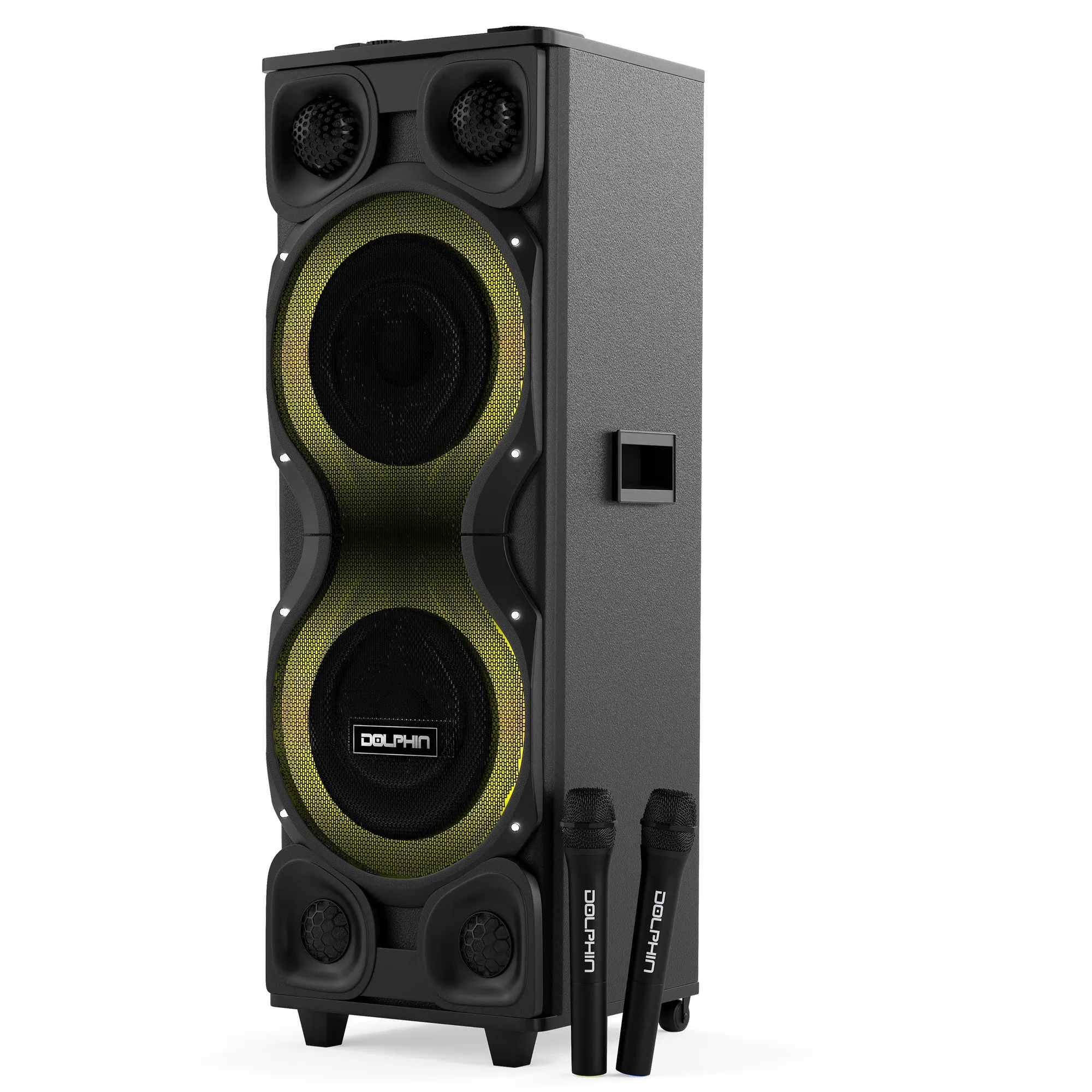
- BoxParty MDF 2250: The BoxParty MDF 2250 has dual 12-inch woofers, WaveSync technology, and comes with two UHF wireless microphones plus a built-in handle and wheels. Two wireless mics are useful for testing feedback from different positions, and the wheels make it practical to shift the speaker after you hear how the room responds.
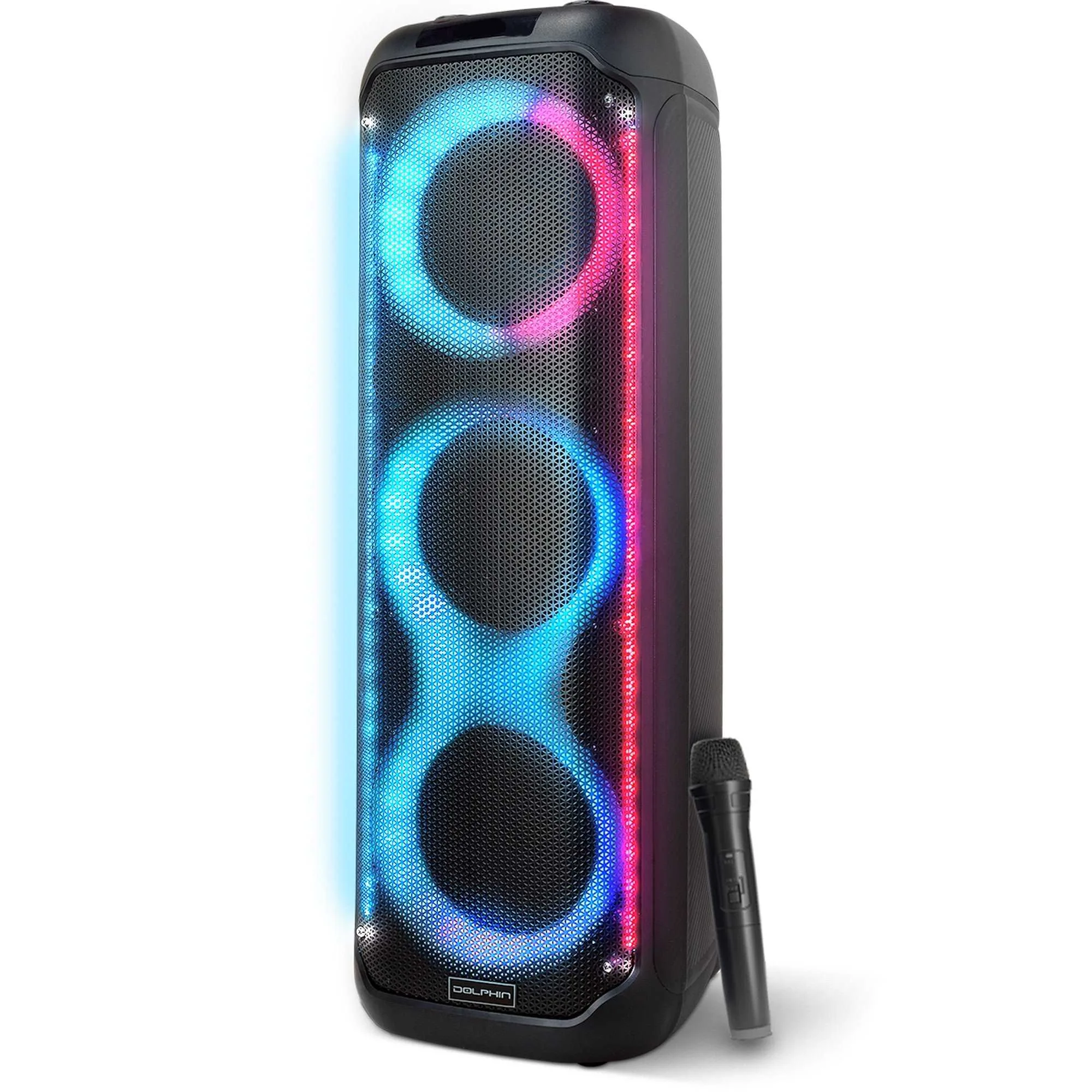
- KaraokeBox 380: The KaraokeBox 380 is a rechargeable Bluetooth tower speaker with three 8-inch woofers and built-in LED lights with multiple modes. A tower format has a smaller footprint than a large box speaker, so it fits tighter indoor corners while still giving you height for better sound dispersion.
Indoor clarity comes from height, angle, and distance from walls, not from raw power. Set your speakers on stands, keep them out of corners, aim them inward, and keep microphones behind the drivers. Do that and you will get cleaner vocals and less echo at any indoor party.