Quick answer
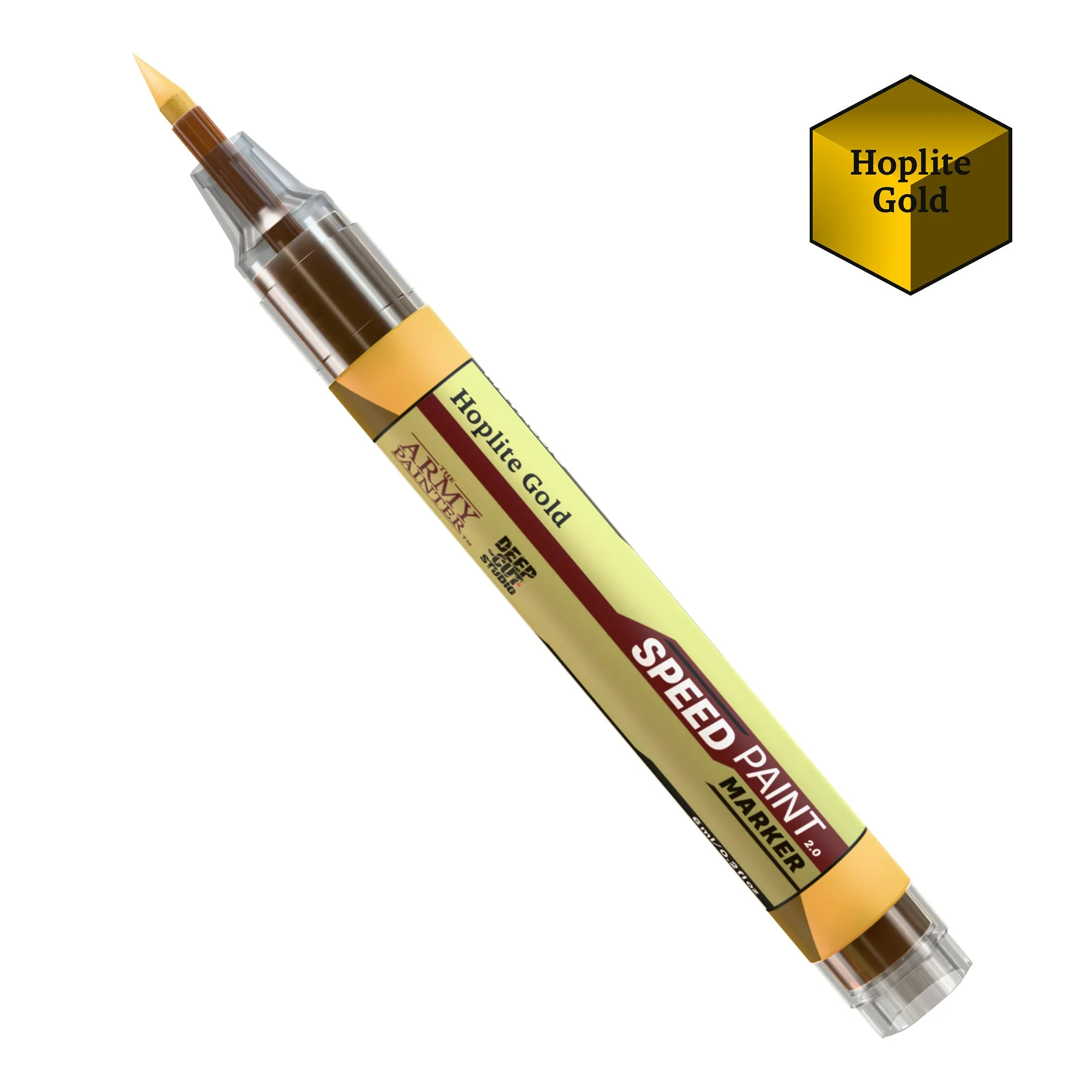
For green cloth, foliage and gems, start with Speedpaint: Shamrock Green. For leather, wood and earthy cloth, Speedpaint: Satchel Brown is the safer base. For metals and regal trim, use the Speedpaint Marker: Hoplite Gold. All three are one-coat products, so your first layer does the work; if the result looks patchy or too dark, the fix is usually less paint, not more.
Why one-coat Speedpaints behave differently from ordinary acrylics
Speedpaints are designed to flow into recesses and leave a lighter stain on raised areas, so one pass gives you both shading and a highlight effect. That is why the same bottle can look brilliant on a cloak and muddy on a flat shoulder pad, and why a second heavy coat can flatten the contrast you just created.
The practical rule is to load the brush lightly, touch it to the model, and let the paint pull itself into the recesses. If a pool forms on a flat surface, wick it away with a dry brush before it dries. Speedpaints are not a substitute for a primer: they need a primed surface, ideally a light one, to show their intended colour.
Choosing between Shamrock Green and other greens
Shamrock Green is a vivid green supplied in an 18ml spill-free dropper bottle with a mixing ball pre-loaded, so it is easy to shake and dispense without waste. It suits cloth, foliage and gems where you want a bright, saturated result rather than a muted military tone.
If you want a darker, more natural green for camouflage or orc skin, Shamrock Green is not the right starting point; it is built for vivid colour. You can still use it as a base and shade over it with a darker green, but that adds a step and reduces the one-coat advantage.
When Satchel Brown is the right brown
Satchel Brown is a dark reddish brown, which makes it a strong choice for leather straps, belts, boots, wooden hafts and earthy cloth. Its reddish cast keeps it from looking flat or grey, so it reads as worn leather rather than plain mud.
Because it is dark, it can swallow detail on small, deeply textured areas. On those spots, apply it thinly and let the recesses hold the colour. If you need a lighter brown for skin or bone, Satchel Brown will be too dark; treat it as a shading or base colour rather than a highlight.
Using the Hoplite Gold Speedpaint Marker for metals
The Speedpaint Marker in Hoplite Gold is a metallic gold in marker form, which makes it easier to control than a brush for small areas like weapon edges, armour trim, buckles and regal details. It delivers a rich metallic finish with consistent pigment flow, so you get a brilliant shine without mixing or thinning.
Metallics are less forgiving than standard Speedpaints because pigment settles quickly. Shake the marker well, test on a spare surface, and build thin layers rather than one heavy pass. If the shine looks dull, that usually means the layer is too thin or the surface underneath is too rough.
Building a small, workable palette from these three
You do not need a full rack to cover most fantasy and historical miniatures. A vivid green, a dark reddish brown and a metallic gold handle cloth, leather and metal, which are the three most common materials on a typical model. Add a light and a dark neutral later if you want to push contrast further.
Keep your first pass thin and let it dry completely before judging the colour. Speedpaints look darker while wet, so a model that seems too intense in the first minute often settles into the intended shade. If it is still too strong after drying, a thin glaze of a lighter colour will pull it back without stripping the contrast.
Speedpaint colour FAQ
Can I use Shamrock Green straight over a dark primer?
Speedpaints are designed to show their intended colour over a primed surface, and a light primer gives the most predictable result. Over a dark primer, a vivid green like Shamrock Green will read darker and less saturated, so you may need an extra thin coat or a lighter base layer. If you want the bright green shown on the bottle, prime light.
Is Satchel Brown too dark for skin?
Satchel Brown is a dark reddish brown, so it works best for leather, wood and earthy cloth. For skin, it is usually too dark as a base; use it for shading or for small leather details instead. Match the brown to the material, not to the whole model.
Do I need to thin the Hoplite Gold marker?
The marker is built for consistent pigment flow, so it does not need thinning. Shake it well before use and apply thin layers, letting each dry, because metallic pigment settles quickly and heavy passes can obscure fine detail. Thin layers, well shaken, give the best shine.
What if my one-coat result looks patchy?
Patchiness usually comes from too much paint sitting on flat areas or from a surface that is not fully primed. Wipe excess from the brush, wick away pools with a dry brush, and let the paint flow into the recesses rather than pushing it around. Less paint and more patience fixes most coverage problems.
Can I mix these Speedpaints with each other?
You can mix them on a palette to create intermediate tones, but mixing reduces the one-coat contrast effect because the blend behaves more like a standard acrylic. For predictable results, apply them separately and let each layer dry. Mix for custom colours, layer for contrast.
Product facts at a glance
- Speedpaint Marker: Hoplite Gold: Speedpaint Marker in Hoplite Gold delivers a rich metallic gold finish for weapons, armour and regal details, with brilliant shine from consistent pigment flow. Marker control suits small metal areas where a brush would be harder to keep tidy.
- Speedpaint: Shamrock Green: Speedpaint: Shamrock Green is a vivid green one-coat paint with consistent flow, perfect contrast, intense shading and highlighting, supplied in an 18ml spill-free dropper bottle with a mixing ball pre-loaded. One coat gives shading and highlight, and the dropper bottle makes dispensing and mixing predictable.
- Speedpaint: Satchel Brown: Speedpaint: Satchel Brown is a dark reddish brown one-coat paint with consistent flow, perfect contrast, intense shading and highlighting, supplied in an 18ml spill-free dropper bottle with a mixing ball pre-loaded. The reddish dark brown reads as leather and wood, making it a reliable base for straps, boots and hafts.