Quick answer
Set up a 10-minute routine three or four times a week. Start by saying a word aloud, have your child repeat it, then let them write it on a reusable spelling card and wipe it clean. Begin with simple CVC words and only move to blends and digraphs once your child can write the earlier words without prompting.
What you need before the first session
You do not need a full phonics curriculum to start. A set of wipe clean spelling cards, a dry-erase marker, and a cloth or tissue are enough. Choose cards that follow a structured path rather than a random mix of words, because children learn spelling patterns more easily when each step builds on the last.
Work at a table with good light and few distractions. Keep sessions short; ten focused minutes beats thirty tired ones. If your child is still learning letter sounds, spend the first week only saying words and pointing to letters rather than writing full words.
How to choose the right starting level
Start below what you think your child can do. If they are four or five, begin with CVC words such as cat, sun, and pig. If they are six or seven and already reading simple sentences, you can begin with word families and move into blends and digraphs sooner.
A quick check: say a word and ask your child to write just the first sound. If they hesitate, stay at the easier level for another week. If they write it easily, move to the next group of cards.
Keep the routine predictable
Children relax into practice when they know what is coming. Use the same four moves each time: say the word, stretch the sounds, write the word, then read it back. The repetition is the point, not a lack of imagination.
Resist the urge to add new card types mid-session. Finish the small stack you started, wipe the cards, and put them away. A predictable ending makes it easier to start again tomorrow.
Six steps for a 10-minute spelling session
- 1. Warm up with sounds, not letters: Say three words aloud and ask your child to repeat each one. Do not show any cards yet. This gets their ears tuned to the sounds before they see the spellings. Checkpoint: if your child cannot repeat the words clearly, pause and try again later.
- 2. Pick a small stack of cards: Choose five to eight cards from one level only. Do not mix CVC cards with blends in the same session. Mistake to avoid: pulling out the whole box. A small stack keeps the session focused.
- 3. Say, stretch, write: Say the word, stretch it slowly (c-a-t), and let your child write it on the card with a dry-erase marker. If they get stuck, stretch the sounds again rather than spelling it for them. Checkpoint: your child should write the word after hearing it, not after copying it.
- 4. Read it back and wipe: Ask your child to read the word they just wrote. Then wipe the card clean together. The wiping is part of the routine, not a chore. Mistake to avoid: skipping the read-back. Reading what they wrote connects spelling to reading.
- 5. Repeat with the next card: Work through the small stack in the same way. Keep the pace steady and stop while your child still wants one more card. Checkpoint: if accuracy drops below about half, end the session and repeat the same level next time.
- 6. End on a win: Finish with a card your child can write easily, then put everything away together. Note which words were tricky so you can revisit them next session. Next step: keep the same level for at least three sessions before moving to blends and digraphs.
Product facts
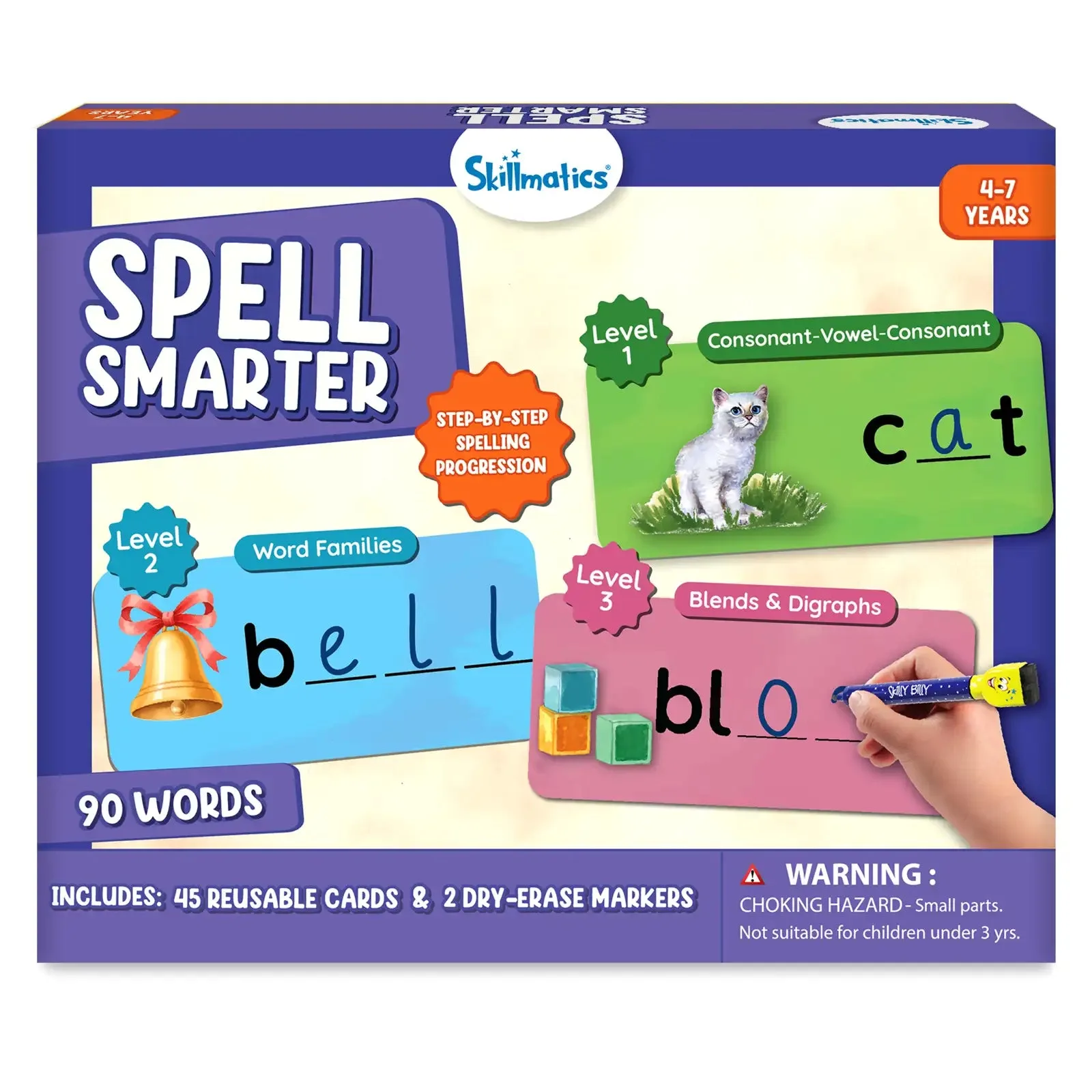
- Spell Smarter | Spelling and Phonics Write & Wipe Cards (ages 4- 7): Spell Smarter builds spelling, phonics, and early literacy through guided, progressive practice. The 45 double-sided write and wipe cards follow a structured learning path—starting with CVC words, then word families, and advancing to blends and digraphs. The built-in progression means you can start at your child's current level and move forward without guessing which words to teach next.