Quick answer
Choose a ride-on toy if you want a first wheeled toy your child can steer and grow into; choose a spring horse if you want a stationary toy that builds balance without any rolling motion. For most toddlers, a ride-on toy lasts longer because it moves through stages, while a spring horse is best as a dedicated indoor balance toy.
The core difference: motion you control vs motion you don't
A spring horse moves only when your child rocks it, so the toy stays in one place and the child learns to shift weight against a fixed spring. A ride-on toy moves across the floor, which means your child has to steer, stop, and watch for obstacles. That single difference drives almost every other trade-off, from where you can use it to how long it stays interesting.
Because a spring horse never travels, it works in a small indoor space and does not need a driveway or sidewalk. A ride-on toy opens up outdoor play but also requires a safe surface and adult supervision near stairs, slopes, and traffic.
How each type grows with your toddler
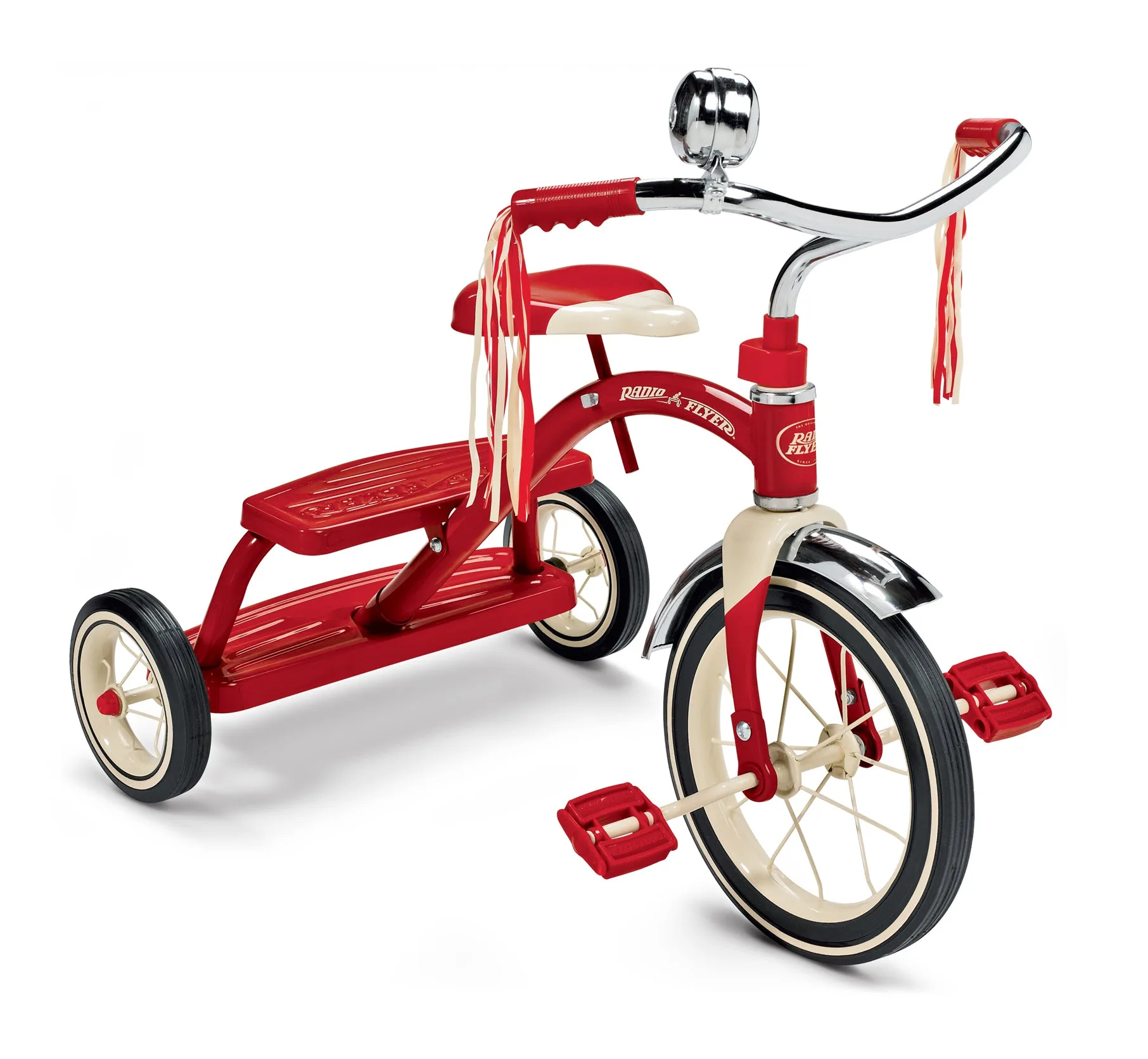
Ride-on toys often have adjustable features that extend their useful life. The Radio Flyer Classic Red Dual Deck Tricycle, for example, has an adjustable seat that grows with your child, plus a controlled turning radius that helps prevent tipping. That adjustability is why a ride-on toy can serve a toddler now and still fit a few years later.
A spring horse is usually a single-size toy: once your child outgrows the seat or loses interest in rocking, it has no next stage. If you want a purchase that changes with your child, a ride-on toy generally gives you more mileage. If you want a toy that stays put and never needs a bigger version, a spring horse is simpler.
Indoor ride-on options and travel-friendly picks
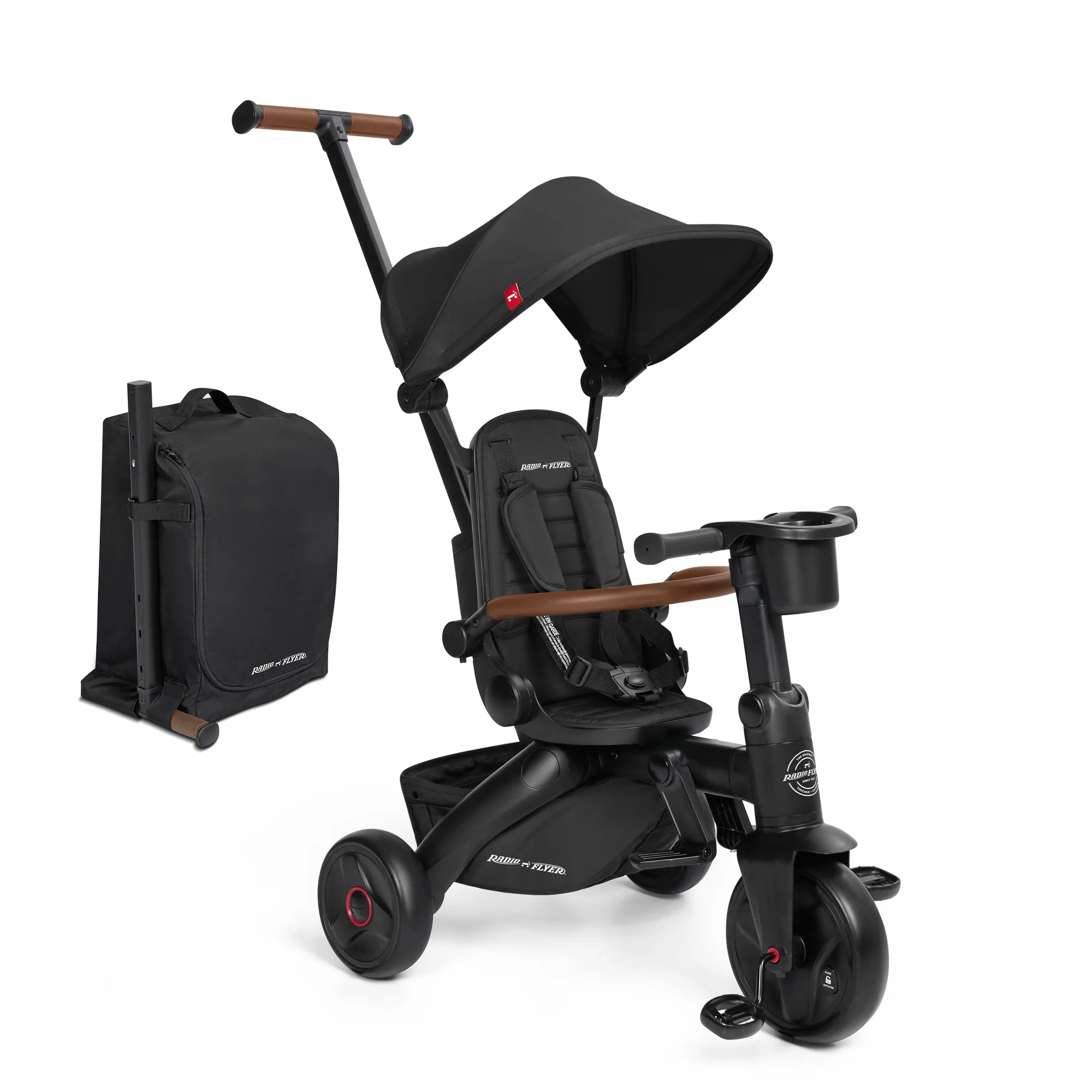
Not every ride-on toy is an outdoor-only purchase. The Radio Flyer Coast Luxe Folding Stroller Trike is designed for toddlers and young children, folds for compact storage and transport, and includes a travel backpack for carrying the trike when not in use. That folding design makes it a realistic indoor-to-outdoor option and a better fit for small homes or families who travel.
A spring horse cannot fold or travel, so if portability matters, a ride-on toy with a folding design is the more practical choice. The trade-off is that a folding ride-on still needs floor space when unfolded, while a spring horse simply occupies one fixed corner.
Safety considerations that change the decision
Spring horse safety centers on the spring mechanism and the frame: check that the spring is enclosed or covered, that the base is stable, and that your child cannot pinch fingers or tip the toy sideways. Ride-on safety centers on motion: a controlled turning radius, a low seat height, and adult supervision near stairs and slopes matter more than the toy's top speed.
The Classic Red Dual Deck Tricycle includes a controlled turning radius to prevent tipping, which is the kind of feature to look for in a first ride-on toy. A spring horse has no turning radius to manage, but it can still tip if a child rocks too hard, so a stable base and a clear area around it are essential.
A small-space compromise: a two-in-one play piece
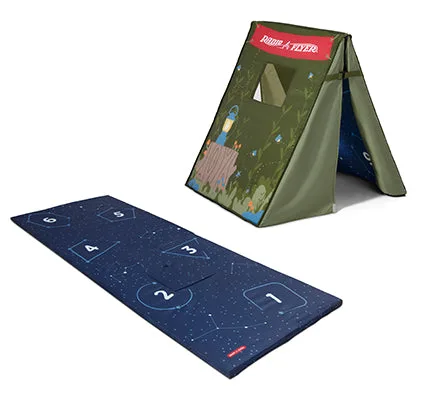
If you like the idea of a stationary indoor toy but want more play value than a single rocking motion, a convertible play piece can bridge the gap. The Tent to Tumble Play Mat switches from a cozy play tent to a tumble play mat in seconds, has a peek-a-boo window in tent mode, and includes a hopscotch game with numbers, shapes, and constellations in mat mode.
It is not a ride-on toy and not a spring horse, so it will not teach steering or rocking. But it does give toddlers a stationary, water-resistant play surface that stores flat, which can be a better fit for a small apartment than either a spring horse or a full-size ride-on.
Trade-offs at a glance
- Motion and control: A spring horse stays in place and teaches rocking balance; a ride-on toy moves and teaches steering and stopping. Pick a ride-on if you want steering practice; pick a spring horse if you want stationary balance play.
- Growth and longevity: A ride-on with an adjustable seat can fit your child for several years; a spring horse is usually a single-size toy. For the longest useful life, choose an adjustable ride-on.
- Space and portability: A spring horse needs one fixed indoor spot; a folding ride-on can be stored compactly and carried with a travel backpack. Small home or frequent travel? A folding ride-on wins on storage.
- Safety focus: Spring horse safety is about the spring mechanism and stable base; ride-on safety is about tipping control and supervision near stairs and slopes. Check the specific safety feature that matches the toy type before buying.
Product facts that matter for this choice
- Coast Luxe Folding Stroller Trike with Travel Backpack: Folding design allows for compact storage and easy transport; includes a travel backpack for carrying the trike when not in use. If you have limited storage or travel with your toddler, this ride-on can be folded and carried rather than left set up.
- Classic Red Dual Deck Tricycle: Adjustable seat grows with your child; controlled turning radius prevents tipping; steel frame, spoked wheels, and rubber tires for durability. A ride-on with an adjustable seat and tipping control can serve a toddler longer and is a safer first wheeled toy.
- Tent to Tumble Play Mat: 2-in-1 design switches from a cozy play tent to a tumble play mat in seconds; water-resistant fabric; includes numbers, shapes, and constellations for learning. A stationary, foldable play piece is a practical alternative when a spring horse or ride-on would take up too much room.
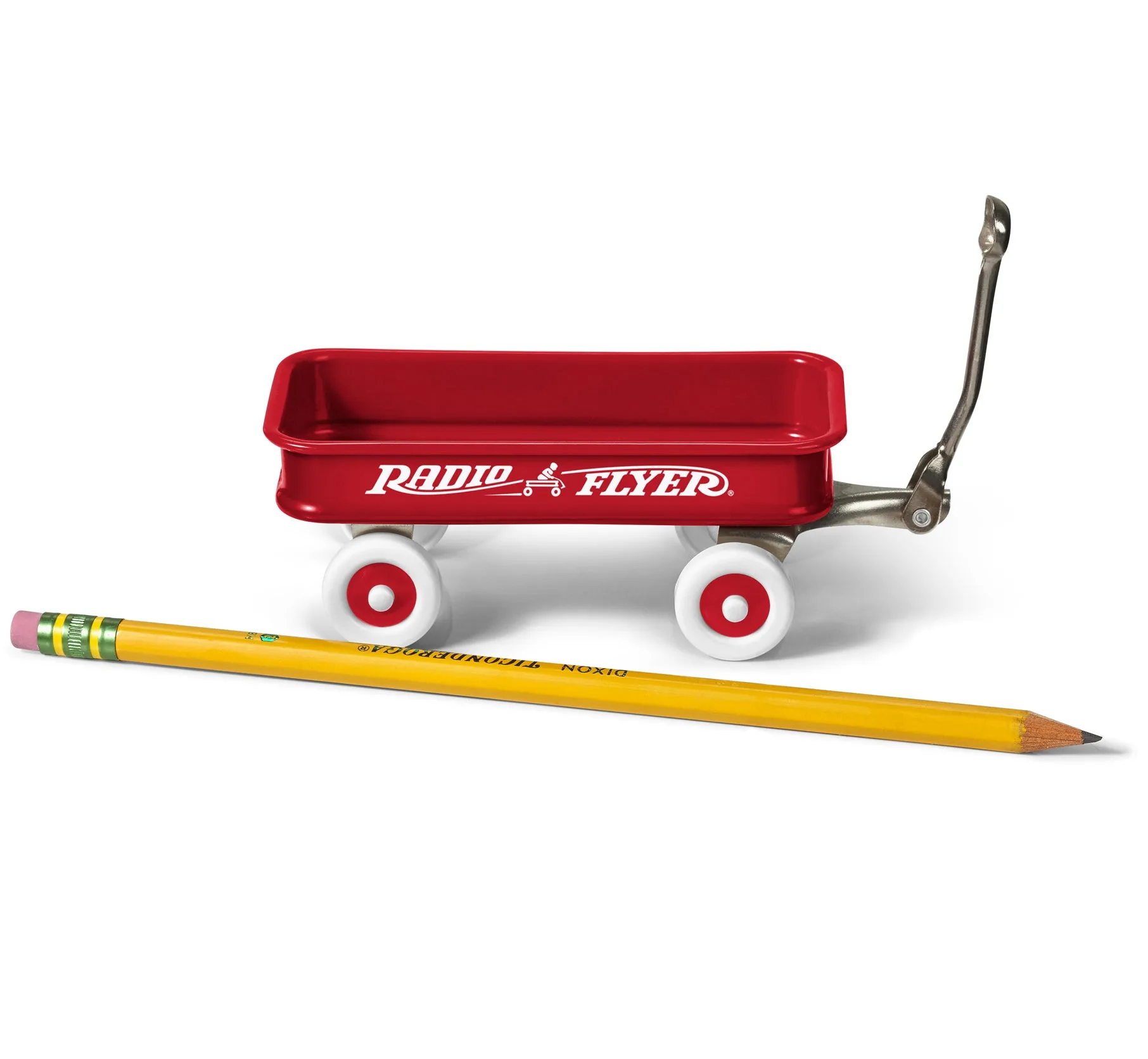
- Single Miniature Classic Wagon: A miniature version of the original wagon with a rotating handle and durable rolling wheels; sized for small items such as business cards and coins. This is a keepsake or gift item, not a ride-on, so it should not be compared as a toddler ride-on option.
Which one fits your toddler?
Best for
- Families who want a first wheeled toy with an adjustable seat that grows with the child
- Homes with a safe, flat area for supervised riding and room to store a ride-on
- Parents who want a folding ride-on for travel or compact storage
Not for
- Families with no safe riding surface or no storage space for a ride-on
- Parents who want a stationary balance toy that never moves across the floor
- Buyers looking for a keepsake or gift item rather than a toddler ride-on