Quick answer
Buy the square ruler first if you cut strips and square up blocks; add the right triangle ruler when your patterns call for half- or quarter-square triangles. The square handles secondary cutting and trimming, while the triangle is built for triangle geometry with seam allowances included.
The trade-off: trimming versus triangle cutting
The square ruler is a general-purpose trimming and secondary-cutting tool. It squares up finished blocks, cuts squares from strips, and segments strip sets. The right triangle ruler is a specialized tool for cutting half-square and quarter-square triangles, with seam allowances included in the measurements based on the finished block size.
That means the square ruler is the one you reach for on almost every project, while the triangle ruler saves time and improves accuracy on triangle-heavy patterns. Neither replaces the other entirely: the square trims, the triangle cuts.
When seam allowance markings change the decision
The right triangle ruler includes seam allowance calculations in its measurements, so the marked size corresponds to the finished quilt block. If you struggle to add seam allowances mentally or want to cut triangles directly to finished size, that feature reduces a common source of error.
The square ruler does not include seam allowance calculations in the same way; its markings support squaring up and measuring cut pieces. If your patterns already provide cut sizes with seam allowances, the square ruler is straightforward. If you prefer to work from finished sizes, the triangle ruler's markings are a practical advantage.
Handedness and marking clarity
The square ruler is marked for left- and right-handed use, which matters if you share a cutting table or switch hands. The right triangle ruler's catalog facts do not specify handedness markings, so left-handed quilters should check the ruler's markings before relying on it for angled cuts.
Both rulers are designed for use with a rotary cutter or straight-edge blade, so the choice is not about cutting method but about which geometry you need to measure and cut.
Decision rules for buying
- If you mostly cut strips and square up blocks: Choose the square ruler. It handles secondary cutting of strips, squaring up finished blocks, and trimming foundation piecing.
- If your patterns are triangle-heavy: Add the right triangle ruler. It is designed for half-square and quarter-square triangles with seam allowances included. Check whether your pattern gives finished or cut sizes before you rely on the markings.
- If you are left-handed or share tools: The square ruler is marked for left- and right-handed use. The right triangle ruler's handedness markings are not specified in the catalog facts. Verify the triangle ruler's markings if handedness matters to you.
Product facts
-
Right Triangle Ruler: Used to cut half-square and quarter-square triangles, with seam allowances included in measurements based on finished block size. You can cut triangle units directly to finished size without recalculating seam allowances.
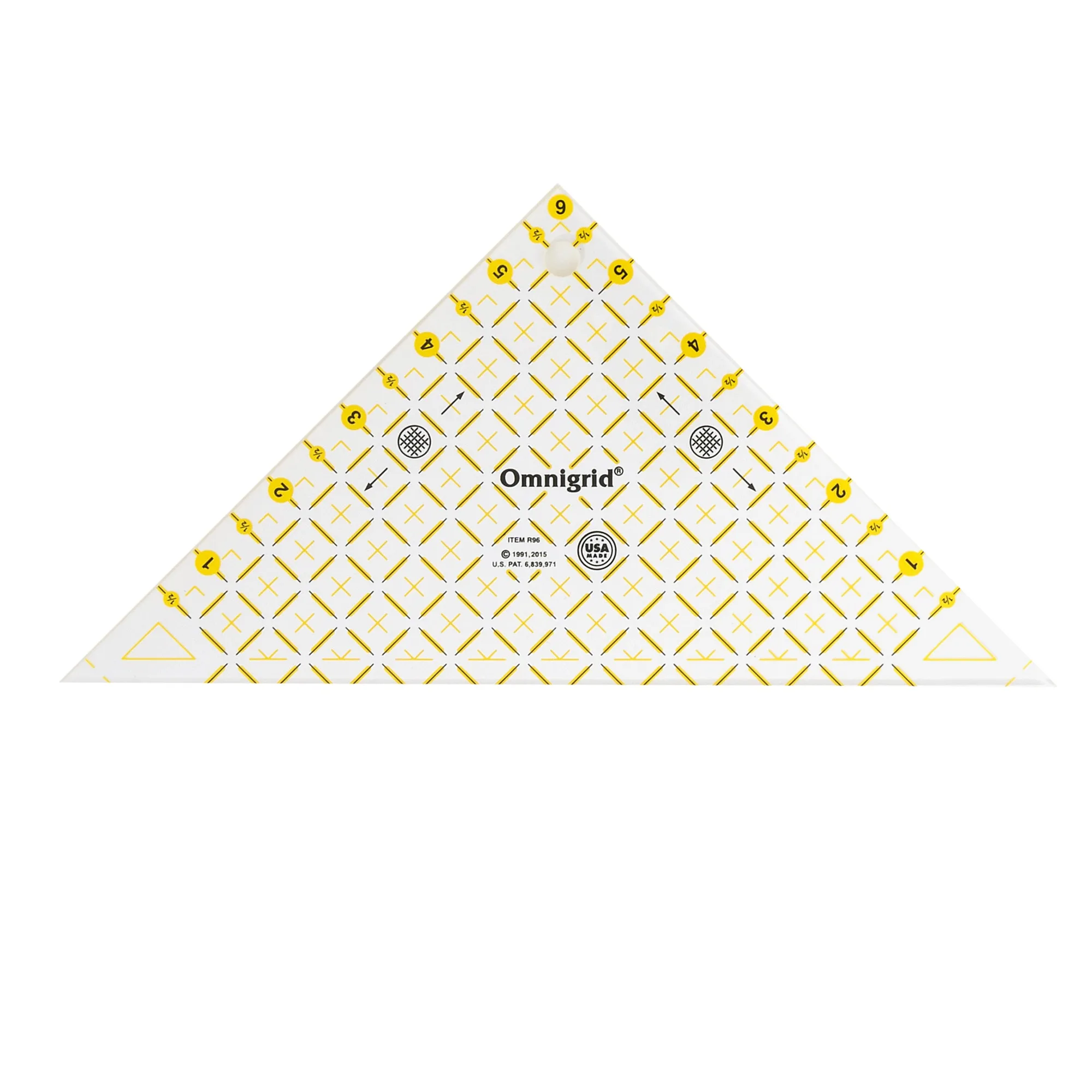
Right Triangle Ruler
-
Square Ruler: Used for secondary cutting of strips, squaring up finished quilt blocks, and cutting squares, diamonds, triangles, and hexagons; marked for left- and right-handed use. It covers everyday trimming and strip work for most projects and works for either hand.
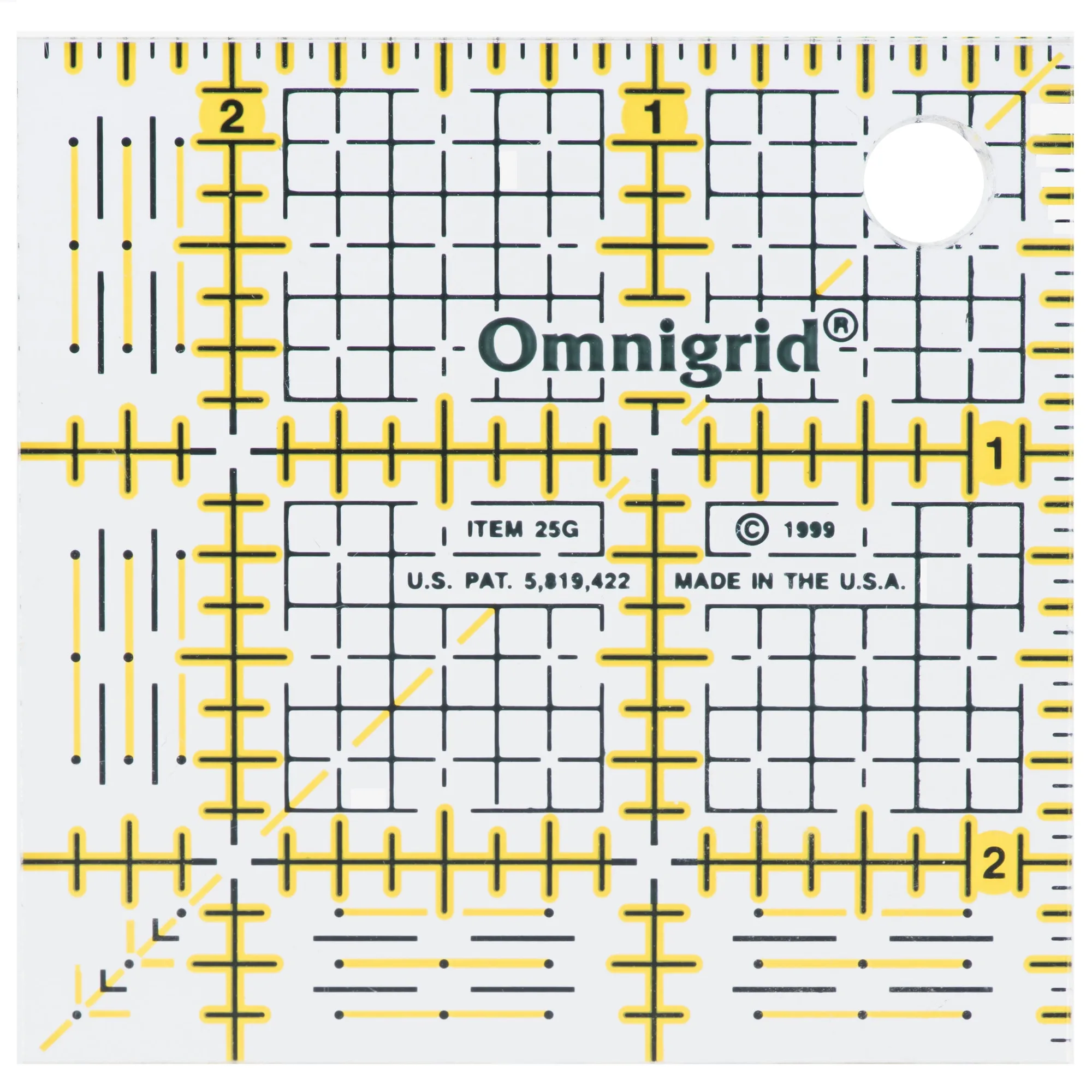
Square Ruler
Which ruler fits your table
Best for
- Quilters who need one ruler for trimming, squaring up, and strip cutting
- Beginners building a first ruler collection
- Left-handed quilters who want marked guidance
Not for
- Quilters who only cut half-square and quarter-square triangles and want finished-size markings
- Sewists who need a specialized triangle ruler for angled corners