Quick answer
For most families, the right stacking and sorting toy is the one that matches your child's current grip and problem-solving stage, not the one with the most pieces. Babies under 12 months do best with a few large, easy-to-grasp wooden rings or blocks; toddlers need chunky sorters and simple stacking sets that tolerate imperfect aim; preschoolers are ready for open-ended building sets with ramps, tunnels, and small figures. If you want one set that spans several years, choose a wooden building block set with varied shapes and a clear theme, then add a marble run or character figures as your child's play grows.
Why age matters more than piece count
A 9-month-old and a 3-year-old can both play with stacking toys, but they need different physical challenges. Babies are working on grasping, releasing, and cause-and-effect. Toddlers are refining hand-eye coordination and starting to sort by color or shape. Preschoolers use the same materials to plan, test, and tell stories. Buying for the older stage too early leads to frustration; buying for the younger stage too late leads to boredom.
The practical rule: choose toys your child can succeed with about 70% of the time and struggle with 30% of the time. If every piece fits easily, it is a comfort toy. If nothing fits without help, it is a frustration toy. The sweet spot is where they can almost do it themselves.
What to look for at each stage
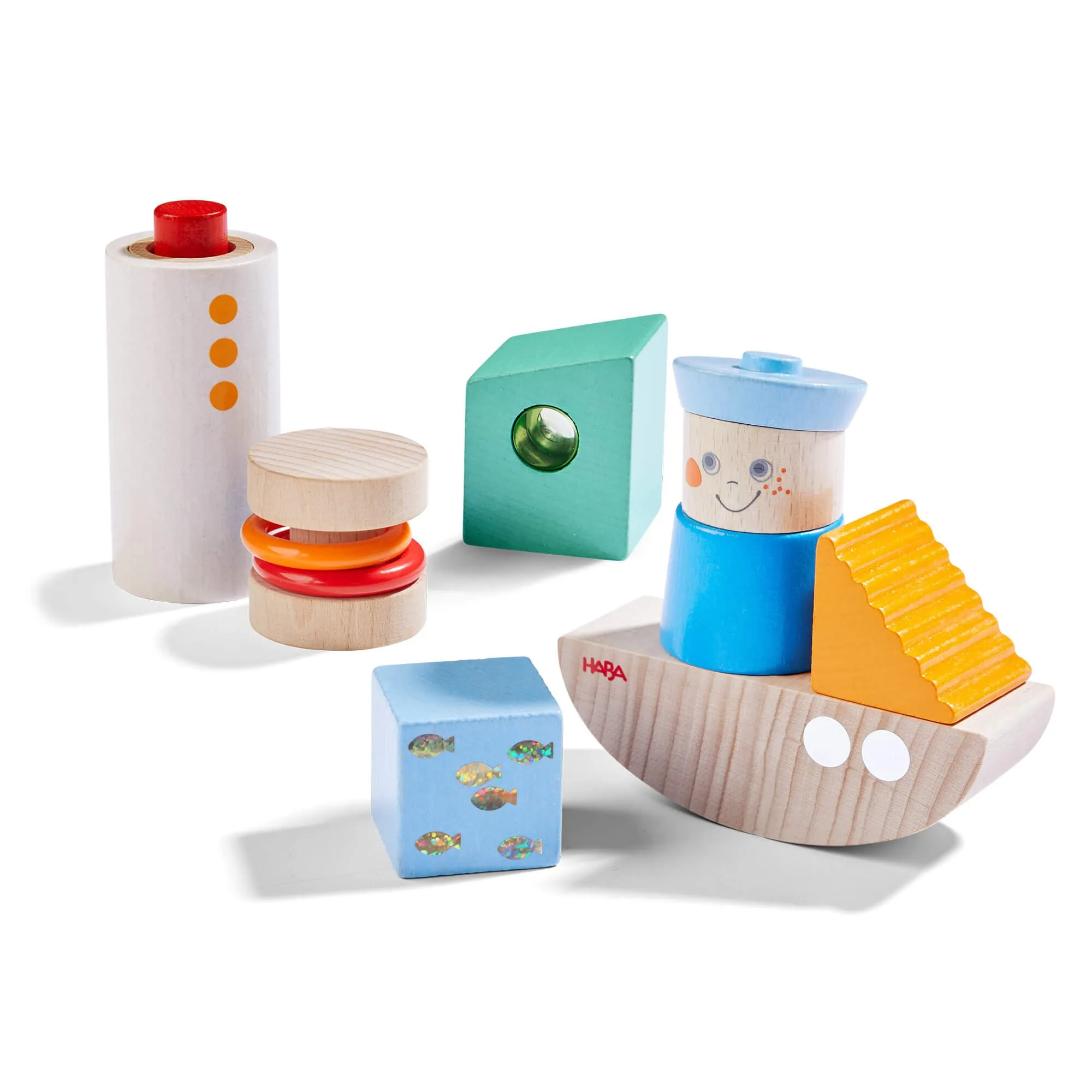
For babies 6–12 months, look for large, lightweight pieces with rounded edges and no small parts. A 7-piece wooden block set like the Discovery Boat Wooden Building Blocks Set works well because the pieces are big enough to hold but varied enough to stack. Avoid sets with pieces smaller than a ping-pong ball.
For toddlers 1–3 years, sorting becomes the main event. Choose sorters with 4–6 chunky shapes and a sturdy base. Stacking sets should have a wide center post so rings do not wobble off constantly. This is also the age where small animal figures start to matter for pretend play alongside the sorting.
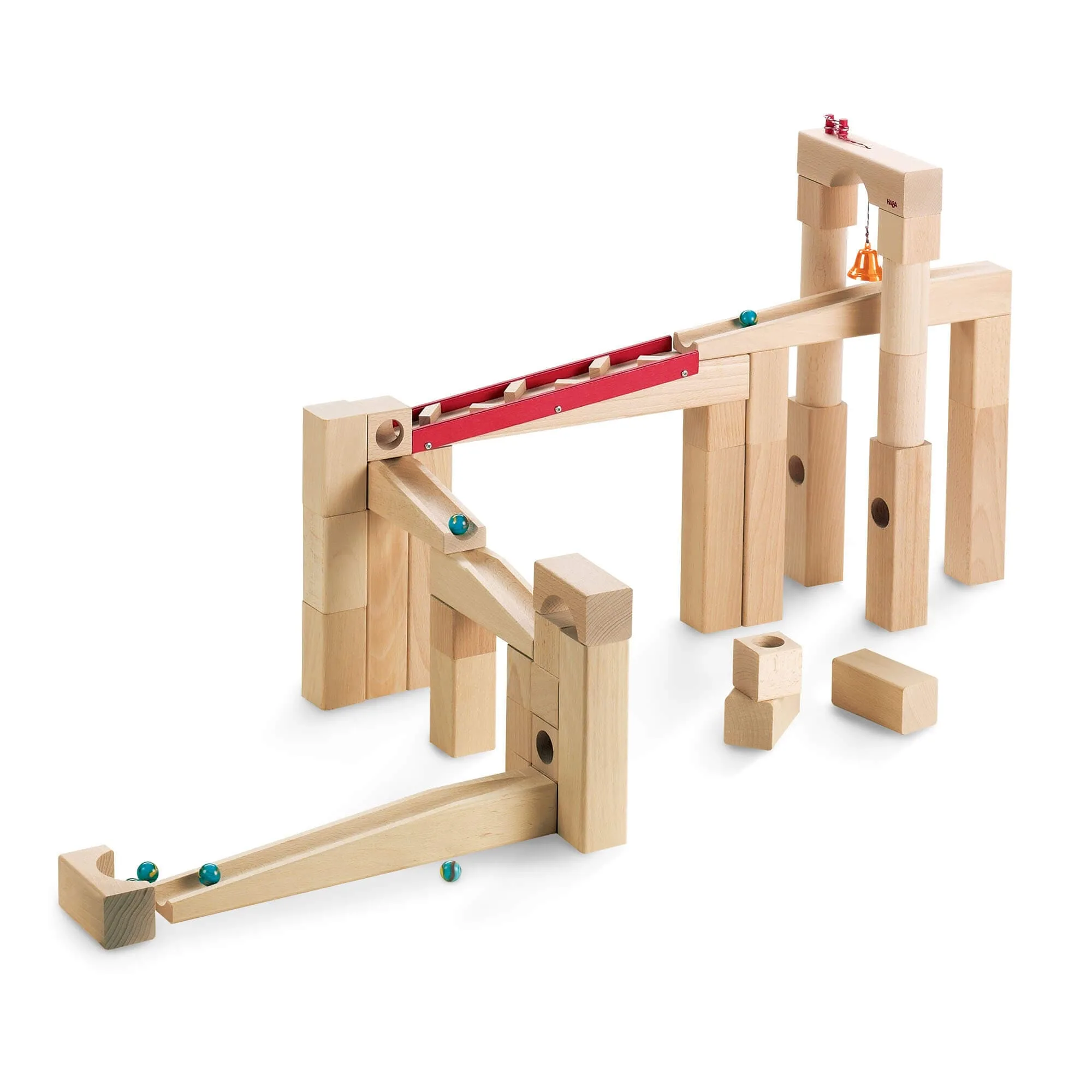
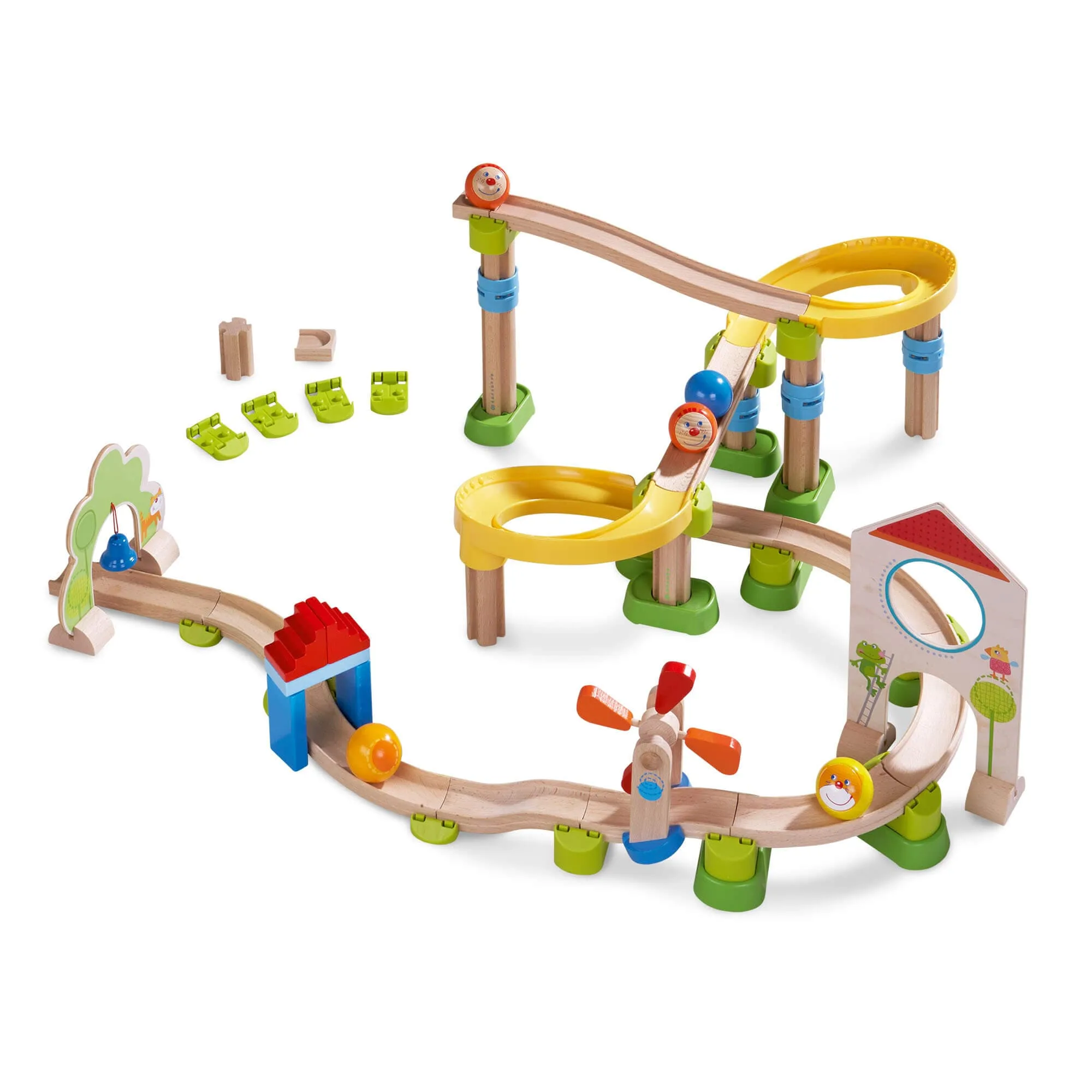
For preschoolers 3–5 years, the toy should invite building and storytelling, not just repetition. A marble run with grooved blocks, ramps, and tunnels gives them a engineering challenge with a visible reward. Character dolls and animal figures add narrative fuel to whatever they build.
Material and safety trade-offs
Wooden toys feel sturdier and hold up to years of use, but they are heavier and can hurt if thrown. Plastic toys are lighter and often cheaper, but they may not survive the same rough play. Neither is automatically better; it depends on your child's temperament and your storage space.
For teething babies, unfinished or water-based-finished wood is a common choice, but always check the manufacturer's age recommendation. For toddlers who still mouth toys, avoid anything with loose parts or peeling paint. HABA toys are made in Germany from sustainably sourced wood for the wooden sets, and the Little Friends figures are made of safe, smooth plastic designed for little hands.
How many pieces is enough?
More pieces do not equal more play. A 7-piece block set can build a boat, a tower, or a bridge. A 50-piece set can overwhelm a toddler and end up in a bin. Start with a focused set that has a clear theme or function, then expand once your child asks for more.
If you are choosing between a large marble run and a small block set, consider your storage and your child's attention span. A large set like the Marble Run Large Set offers endless layouts but needs floor space and adult help at first. A small block set is easier to tidy and works on a tabletop.
Decision rules for buying stacking and sorting toys
- If your child is under 12 months: Choose a set with 5–10 large pieces, no small parts, and a single clear action like stacking rings or placing blocks. Skip sorters with shape holes until they can sit steadily and release objects on purpose. Prioritize graspability and safety over variety.
- If your child is 1–3 years old: Look for chunky sorters with 4–6 shapes and stacking sets with a wide post. Add one or two small animal figures to bridge sorting and pretend play. Buy for success: pieces should fit with little force.
- If your child is 3–5 years old: Move to open-ended building sets with ramps, tunnels, or themed blocks. A marble run or a larger block set gives them room to plan and revise. Choose challenge and storytelling over simple repetition.
- If you are unsure between two ages: Buy the set for the younger stage and add a small figure or two for the older stage. This keeps the core toy achievable while extending play upward. One flexible set plus one character often beats one complex set.
HABA examples that fit these stages
- Discovery Boat Wooden Building Blocks Set: 7-piece wooden block set made in Germany from sustainably sourced wood, with a boat theme. A good first stacking set for babies and toddlers because the piece count is low, the shapes are varied, and the theme encourages pretend play alongside stacking.
- Marble Run Large Set: Large marble run set with grooved blocks, ramps, and tunnels for building custom layouts. Best for preschoolers who are ready for structural engineering and spatial thinking, but it requires floor space and some adult setup at first.
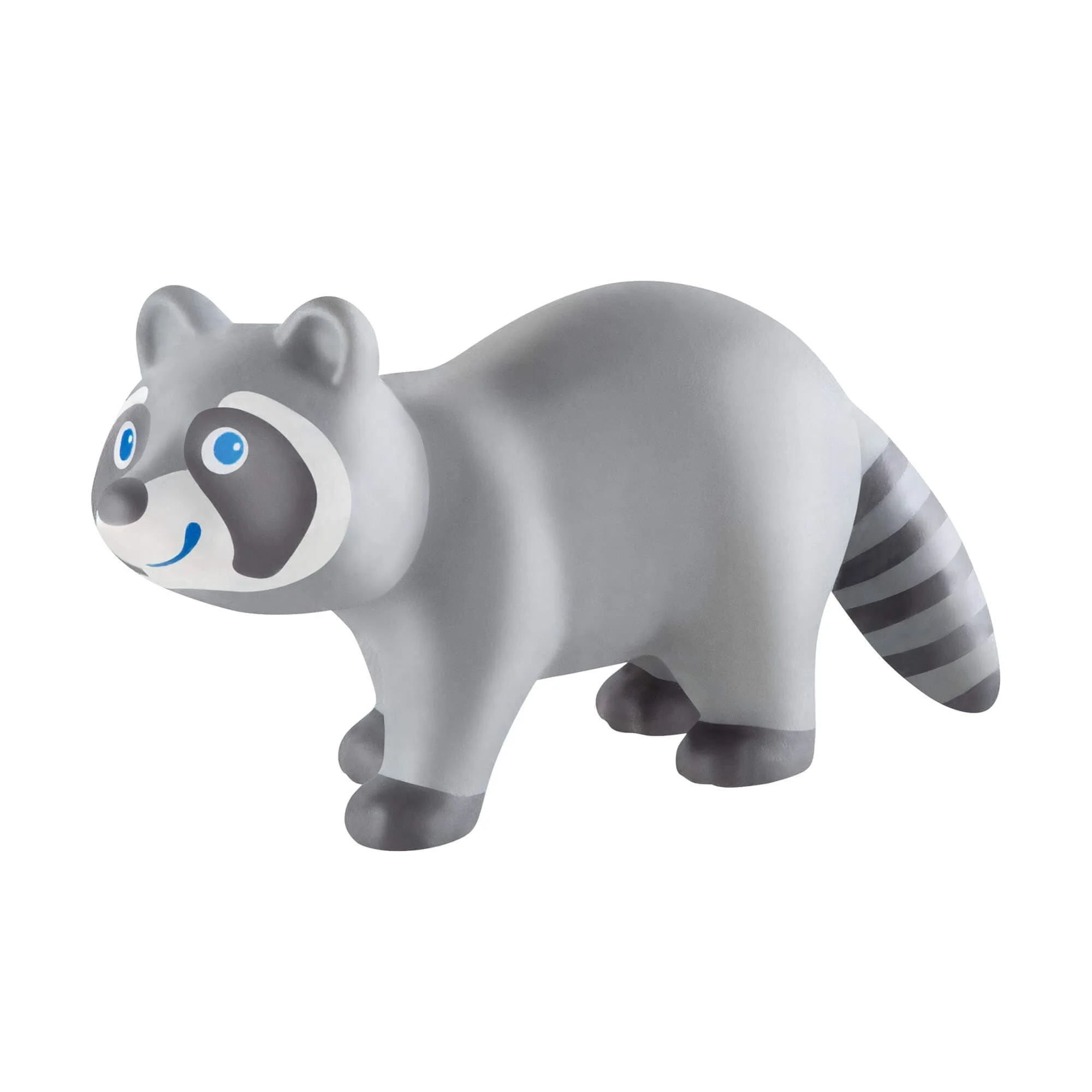
- Little Friends Raccoon: Little Friends Raccoon made of safe, smooth plastic, designed for open-ended play and storytelling. A small, affordable addition to sorting and stacking play that extends into role-playing and animal scenes for toddlers and preschoolers.
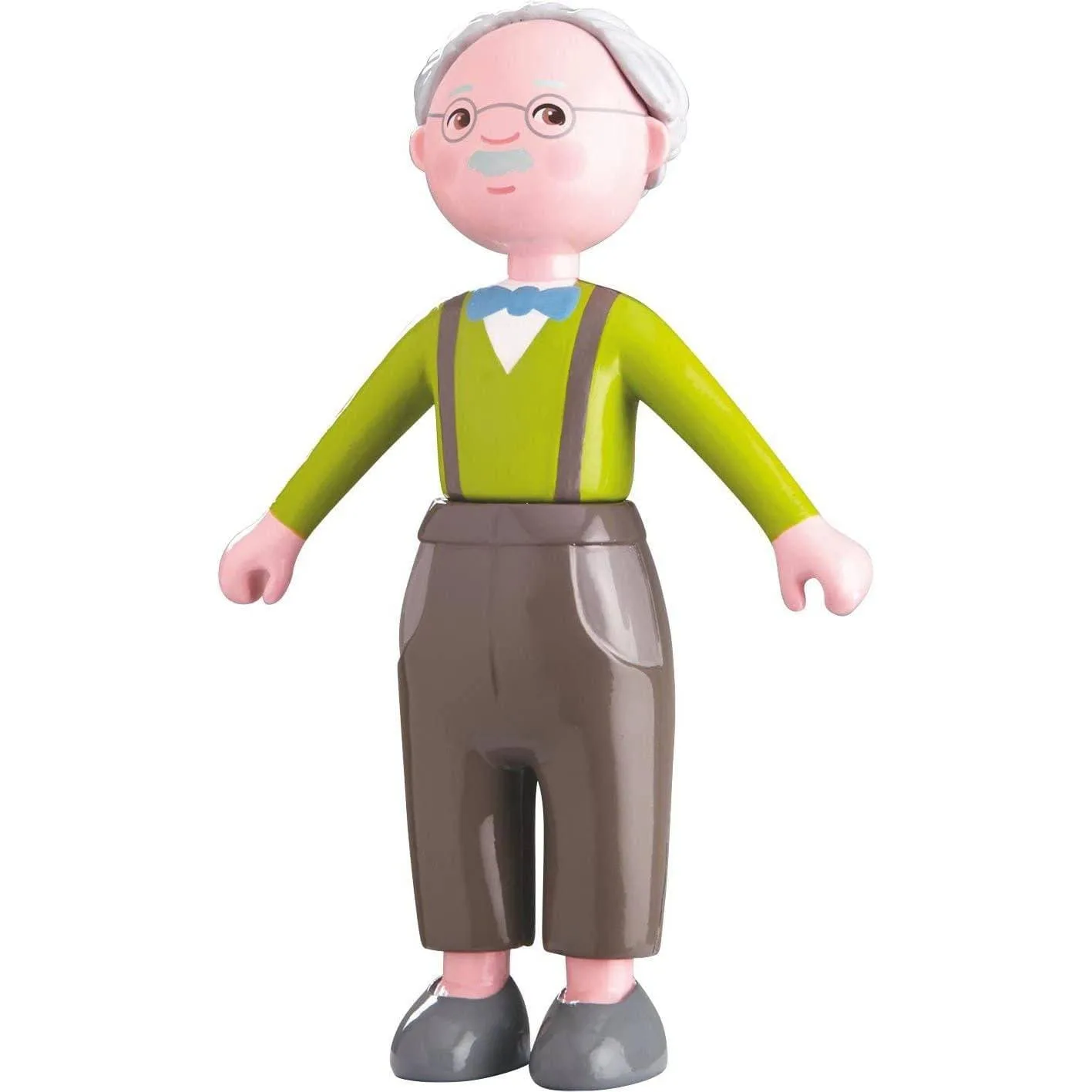
- Little Friends Grandpa Kurt Doll: 4.5-inch bendy doll with flexible soft plastic and metal wires inside, posable for storytelling. Adds a people element to block builds and animal sets, helping preschoolers turn stacking into narrative play.
Who this advice fits
Best for
- Parents buying a first stacking or sorting toy for a baby or toddler
- Gift-givers who want a toy that grows with the child for 2–3 years
- Families who prefer wooden toys with a clear developmental purpose
Not for
- Shoppers looking for electronic toys with lights and sounds
- Children over 6 who need complex building sets with hundreds of pieces
- Families with very limited storage who cannot accommodate a large marble run