Start with the pieces on the table
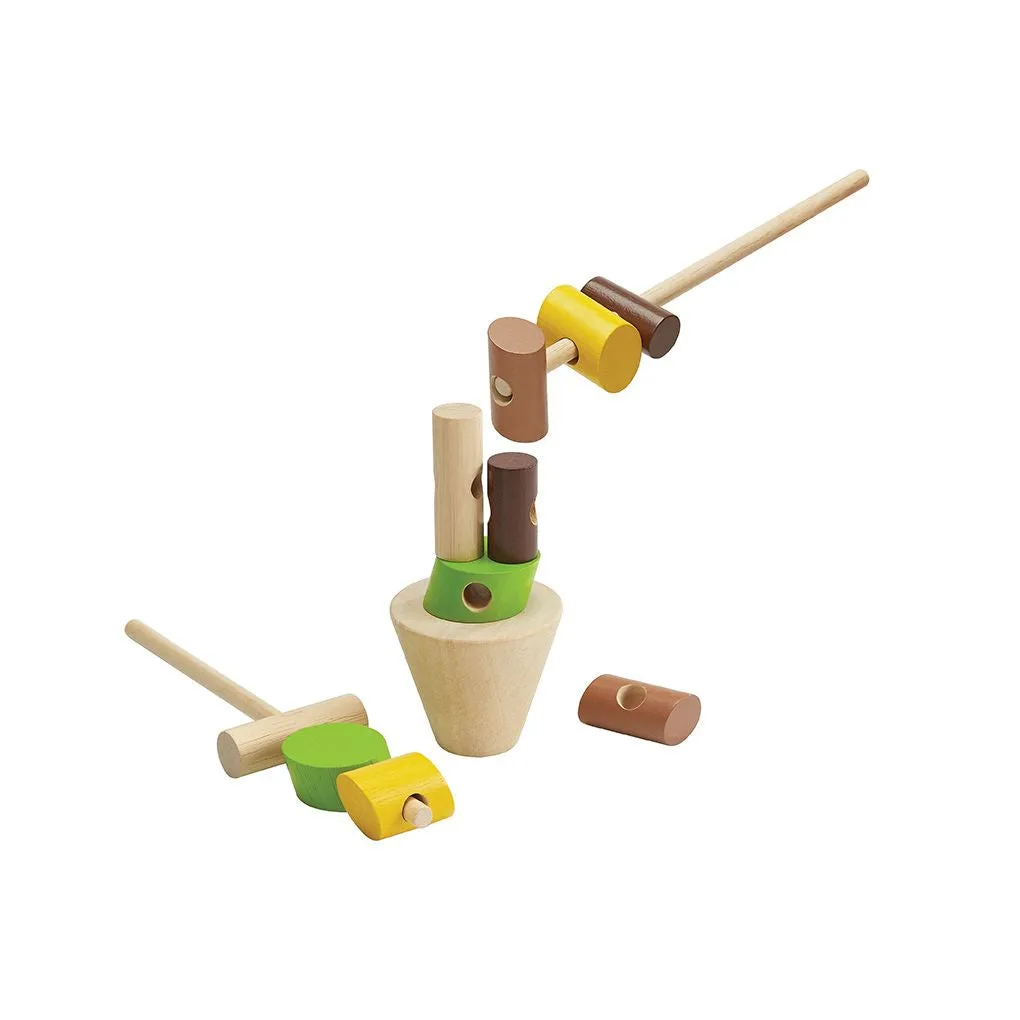
Before you introduce a game, let your child handle the parts. The Stacking Logs set includes 10 blocks in different shapes, 2 sticks, and 1 base. That small collection is enough for open-ended play, but a little structure helps you move from random stacking to purposeful balance and sorting.
The catalog describes two main ways to play: stacking a log by hand without letting it fall, and for an additional challenge, adding logs onto a stick, then holding the stick in one hand while stacking a log on the base one by one. The player who can stack a log without making it fall is the winner. The set is ideal for 1–2 players, so you can play alongside your child or let two children take turns.
A simple progression from free play to balance games
Use these steps as a loose guide. Move on when your child is comfortable, and return to earlier steps whenever they want.
- 1. Explore the shapes: Hand your child the blocks and sticks. Name the different shapes as they pick them up. This is sorting practice before any rules.
- 2. Stack by hand: Follow the catalog’s first game: use one hand to stack a log without making it fall. Start with a flat surface and a small stack.
- 3. Add the stick challenge: For an additional challenge, add the logs onto a stick, then hold the stick in one hand and stack a log on the base one by one. This asks for steadier hands and more focus.
- 4. Try a turn-taking game: The catalog says the player who can stack a log without making it fall is the winner. With 1–2 players, take turns and celebrate steady stacks rather than speed.
Sorting and stacking activities to try
These activities use the same 10 blocks, 2 sticks, and base. They are not separate purchases, just different ways to focus attention.
- Shape sort: Lay out the blocks and ask your child to group them by shape. With 10 different shapes, this is a natural sorting and stacking activity that builds vocabulary.
- Stick stack: Thread blocks onto a stick and see how many fit. This is a fine motor stacking game that also introduces counting.
- Hand stack: Stack blocks by hand without a stick. The catalog’s first game uses this method, and it is a good balance toy for toddlers who are just starting.
- Base challenge: Place the base on the table and try to stack one log on it while holding a stick in the other hand. This is the advanced version described in the catalog.
What the Stacking Logs set includes
-
Stacking Logs: 10 blocks with different shapes, 2 sticks, and 1 base. This is the full component list, so you can plan sorting and stacking games without needing extra pieces.
Stacking Logs
-
Stacking Logs: Ideal for 1–2 players. The set works for solo play or a simple turn-taking game with a sibling or adult.
-
Stacking Logs: The set helps develop fine motor skills. Stacking and sorting are the kinds of hand activities the toy is designed to support.
Materials and making
The Stacking Logs set is sustainably made in Thailand using chemical-free rubberwood, formaldehyde-free glue, organic pigments, and water-based dyes. These details come from the catalog and may matter if you are choosing a wooden stacking toy and want to know how it is produced.
The catalog does not list a specific age range for this set. Use your knowledge of your child’s abilities to decide when to introduce it, and always supervise play. The catalog also does not provide care instructions, so check the packaging or manufacturer guidance for cleaning and storage.
How to keep play going
Once your child can stack by hand, try the stick-and-base challenge from the catalog. If that feels too hard, go back to stacking on the table. The goal is steady practice, not a perfect tower. With only 10 blocks, cleanup is quick, and the set stores easily between play sessions.
For more wooden stacking toy how-to ideas, watch how your child sorts the shapes on their own. You can turn their sorting into a game by asking them to find all the blocks with curves or all the blocks with straight edges. The catalog does not describe every shape, so let your child lead the naming.