Quick answer
A stacking and nesting plush toy builds baby's motor skills through grasp-and-release actions, hand-eye coordination, and tactile exploration. Use the steps below to turn playtime into a learning moment.
Why a soft stacking toy works better than hard blocks
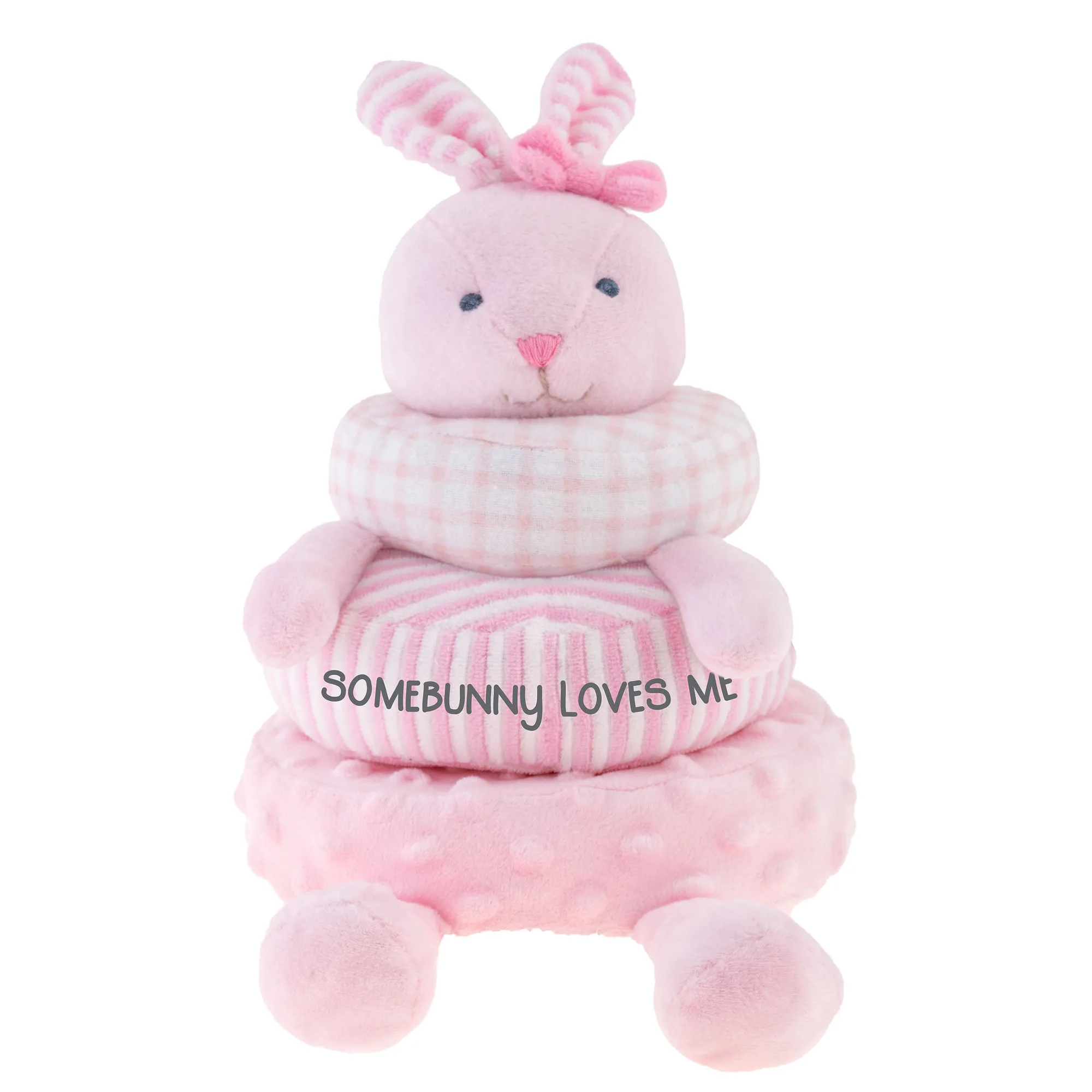
Hard plastic blocks can frustrate babies who are still learning to grip and align objects. A plush stacking toy with soft, lightweight rings is easier to hold and less likely to cause bumps or tears. The weighted base keeps the toy stable, so your baby can focus on stacking rather than chasing a rolling tower. This design encourages repeated attempts, which is essential for motor skill development.
What to watch for during play
Babies develop at different paces. Some may start by simply mouthing the rings, while others immediately try to stack. Let your child lead. If they become frustrated, simplify the activity by handing them one ring at a time. Avoid correcting their technique too early — the goal is exploration, not perfection. Always supervise play to ensure the rings are used safely.
5 steps to develop motor skills with a stacking plush toy
- Step 1: Introduce the rings one at a time: Show your baby the largest ring first. Let them touch, squeeze, and explore the texture. This builds tactile awareness and hand strength. Common mistake: offering all rings at once can overwhelm a young baby.
- Step 2: Demonstrate the stacking motion slowly: Hold the largest ring and place it on the base while your baby watches. Say 'stack' or 'up' to connect the action with a word. Then hand them the next ring and guide their hand if needed. Checkpoint: if your baby drops the ring, just pick it up and try again — dropping is part of learning release control.
- Step 3: Encourage hand-to-hand transfer: Offer a ring to your baby's right hand, then gently tap their left hand. This cross-body movement strengthens neural connections and bilateral coordination. Common mistake: always placing toys in the same hand can delay ambidexterity.
- Step 4: Practice nesting the rings inside each other: Show your baby how the smaller rings fit inside the larger ones. Nesting adds a new challenge — size comparison and spatial awareness. Let them try both stacking and nesting during the same session. Checkpoint: if your baby only wants to nest, that's fine; both actions build similar skills.
- Step 5: Celebrate every attempt, not just success: Clap and smile when your baby places a ring on the base — even if it falls off right after. Positive reinforcement encourages repetition, which is how motor skills improve. Common mistake: expecting perfect stacking every time; babies need dozens of tries to master the motion. For older babies, try stacking the rings in a different order (e.g., smallest first) to add a problem-solving element.
Product spotlight
-
Stacking and Nesting Plush Toy: The Stacking and Nesting Plush Toy features various sized, super soft rings and a weighted base for positioning. The weighted base keeps the toy steady, so your baby can practice stacking without the tower tipping over easily, building confidence and coordination.
Stacking and Nesting Plush Toy