Quick Answer
Star Flex is the better first build if your child gets frustrated when towers topple: the star-shaped pieces connect and hold, so a two-year-old can pull a structure apart and rebuild it without a flat surface or a steady hand. Classic blocks are the better buy if you want stacking practice, color naming, and quiet independent play on a table. Many families end up owning both, but if you are choosing one today, match it to your child's temperament rather than the box age range.
What Star Flex Actually Changes About Building
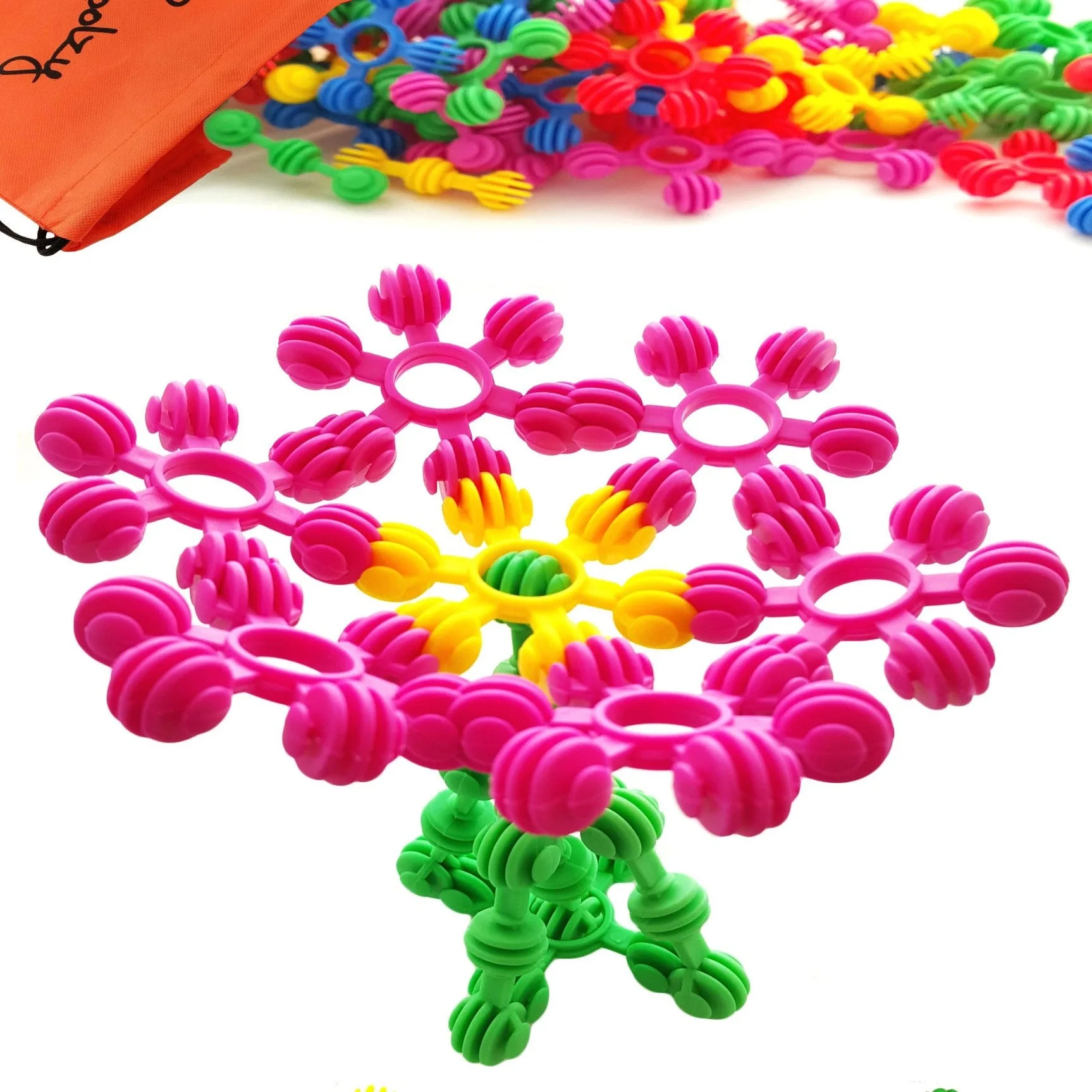
Star Flex is a connecting construction kit, not a stacking toy. The pieces are star shaped and flexible, and they join to each other, so the structure stays together while your child moves it, turns it, or carries it across the room. That single difference removes the most common reason toddlers abandon block play: the crash. A child who cannot yet place a block gently can still push two stars together and get a result that holds.
The open-ended design means there is no single correct model to copy. A three-year-old might make a flat shape; a five-year-old might build a multi-dimensional form or a pretend object. Because the pieces are flexible rather than rigid, they tolerate the bending and squeezing that happens during real toddler play. The trade-off is that Star Flex does not teach flat-surface stacking or the satisfying click of a wooden block, and it is not the right tool if your goal is a tidy row of cubes.
What Classic Blocks Still Do Better
Classic wooden or plastic blocks are stackers. Their job is balance, gravity, and patience. A child learns to place a piece, watch it wobble, and adjust. That is genuinely valuable early engineering, and it is the reason block corners still show up in preschool classrooms. Blocks also tend to be quieter, easier to tidy into a bin, and more likely to be used for pretend play like roads, walls, and towers.
The limitation is the same as the strength: gravity wins. A toddler who cannot yet control their grip will knock the tower down more often than they build it, and some children read that as failure and walk away. If your child is in that stage, a connecting toy is usually the more encouraging starting point, and you can add classic blocks once stacking feels fun instead of frustrating.
How to Choose by Age and Stage
For a two-year-old, choose the toy that survives grabbing, mouthing, and dropping. Connecting pieces with no small parts and no need for precision are the safer bet, and the Star Flex kit's flexible, star-shaped pieces fit that description. For a three- to four-year-old who already stacks a few blocks without help, classic blocks add a new challenge: height and balance.
For a four- to six-year-old, the interesting question is not which toy is better but which one matches the play they already do. A child who builds pretend houses and talks through a story will use blocks. A child who takes things apart, connects them, and asks how they fit will get more from a connecting construction kit. You do not need to replace one with the other; you need to notice which frustration your child tolerates.
Where Other Skoolzy Builders Fit In
If your child is not yet ready to build at all, the Sensory Peg Board 33 Piece Set is a useful pre-building step: the oversize pegs are easy for small fingers to grasp and stack, and the set is used in Montessori and occupational therapy settings for exactly that reason. It builds the grip and aim that block play later depends on, without the disappointment of a collapsing tower.
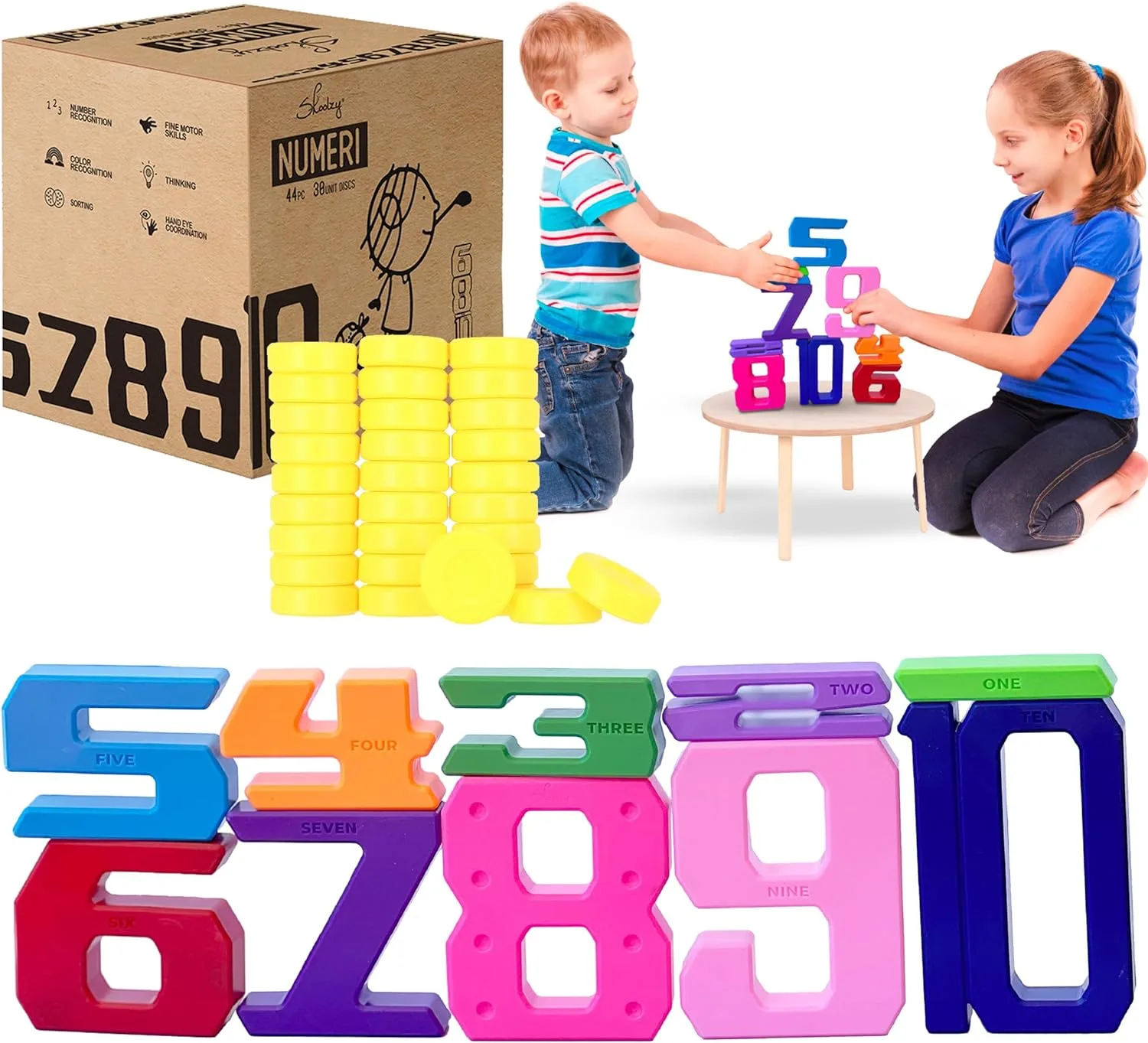
If your child is ready to build but you want the building to lead somewhere academic, the Number Blocks & Counting Coins 44 Piece Set turns stacking into number sense: children build and stack blocks from one to ten and see how numbers work through hands-on discovery. It is a different purchase from Star Flex, but it answers the same parent question: what should this toy be teaching while my child thinks they are just playing?
The Real Trade-Offs
- Structures that hold vs. structures that fall: Star Flex pieces connect, so a build survives being picked up and moved. Classic blocks rely on balance, so a bumped table ends the build. Choose connecting pieces for a child who gets upset when towers fall; choose blocks for a child who enjoys the challenge of balance. If your child has ever cried over a fallen tower, start with connecting pieces.
- Open-ended vs. goal-directed play: Star Flex has no fixed model, so your child decides what the shape becomes. Classic blocks usually imply a target: a tower, a wall, a road. Open-ended play builds creativity and persistence; goal-directed play builds patience and planning. Pick the style that matches how your child already plays, not the one that looks more educational on the box.
- Fine-motor demand: Connecting star pieces requires pushing two pieces together with some aim, while stacking oversize pegs requires only a loose grasp. If your child is still developing a pincer grip, the Sensory Peg Board is the lower-frustration entry point and Star Flex is the next step. Match the toy to the grip your child has today, not the grip you hope they will have next month.
- Storage and cleanup: Loose blocks and loose connecting pieces both end up on the floor, but connected builds can be left standing and revisited, while block towers rarely survive until tomorrow. Neither is easier to tidy; they just create different messes. Decide whether your household can tolerate a half-finished build staying out overnight.
Product Facts
- Star Flex Creative Connecting Construction Kit for Kids by Skoolzy: Star Flex is a flexible, open-ended connecting kit with star-shaped pieces that build multi-dimensional shapes and forms, and it is designed for both girls and boys. Open-ended connecting pieces let a child build simple shapes or complex structures with no single right answer, which keeps the toy useful as skills grow.
- Sensory Peg Board 33 Piece Set - Montessori Occupational Therapy Toys for Kids & Toddlers 2+: The Sensory Peg Board 33 Piece Set has oversize pegs that are easy for small and tiny fingers to grasp and stack on the peg boards to build towers. Oversize pegs reduce the grip precision a toddler needs, so this is a practical first step before a child is ready for smaller connecting pieces or classic blocks.
- Number Blocks & Counting Coins 44 Piece Set: The Number Blocks & Counting Coins 44 Piece Set lets children build and stack number blocks from one to ten and develop early math skills through hands-on discovery. If you want building time to double as number practice, this set connects stacking to counting instead of leaving math for a separate activity.
Which Should You Buy?
Best for
- Toddlers and preschoolers who get frustrated when stacked towers fall
- Children who take things apart and reconnect them rather than following a model
- Families who want one open-ended building toy that grows from simple shapes to complex structures
Not for
- Children who specifically want to practice stacking and balancing on a flat surface
- Families looking for a quiet, tidy, single-purpose block set with a clear finished result
- Children still developing a pincer grip who need oversize pegs before smaller connecting pieces