Quick answer
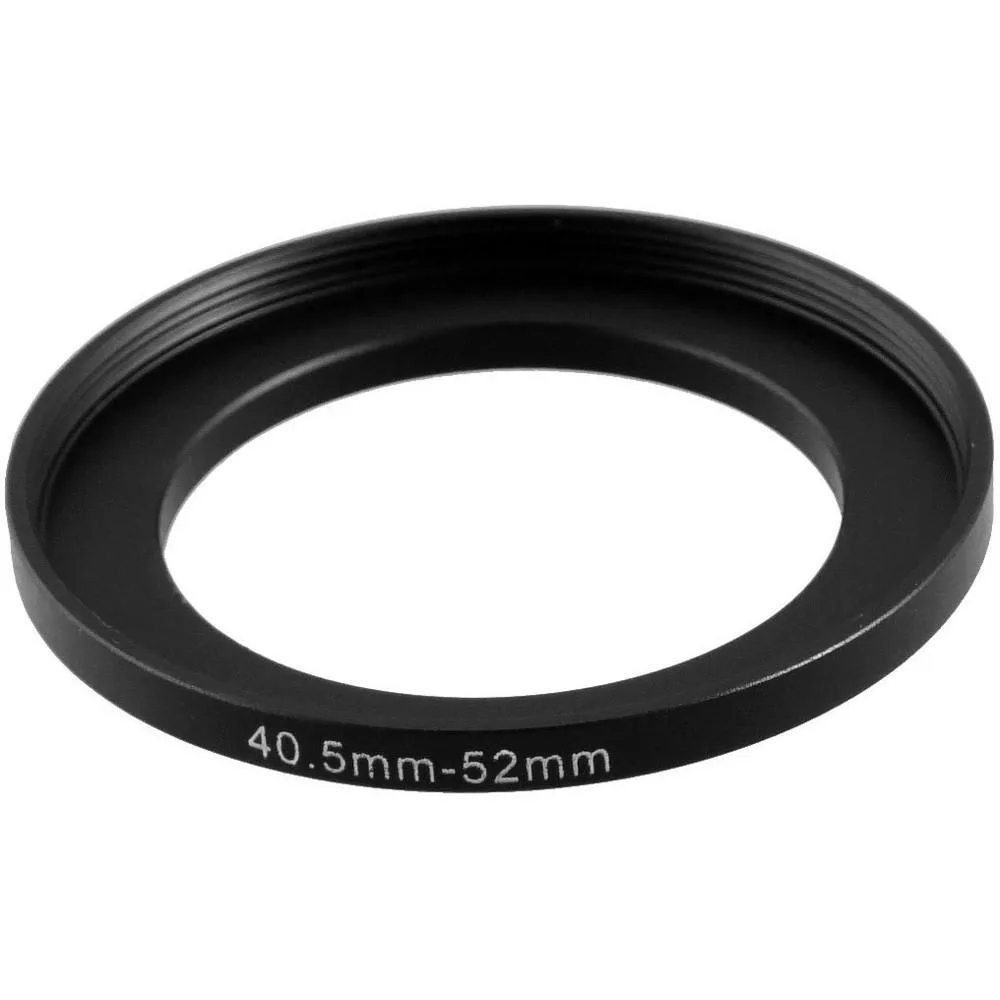
Choose a step-up ring that matches your lens thread size (smaller number) to your filter thread size (larger number). The ring lets you use larger filters on smaller lenses, saving money and expanding your filter kit.
Why use a step-up ring instead of buying new filters?
If you already own a set of 67 mm filters, you can use them on a lens with a 52 mm or 58 mm thread by adding a step-up ring. This avoids buying duplicate filters and keeps your kit lighter.
Step-up rings work with most filter types: ND, polarizer, UV, and others. The adapter adds a few millimeters of height, which may cause vignetting on ultra-wide lenses, so test before you shoot.
Material and build quality matter
Most step-up rings are made from aluminum or brass. Aluminum rings are lightweight and affordable, but brass rings resist binding and last longer. For occasional use, aluminum is fine; for daily pro work, consider brass.
The Lens-Aid rings are CNC-machined aluminum, which keeps weight low while maintaining precise threading. That precision helps avoid cross-threading and filter wobble.
Common sizes and compatibility
The most common step-up combinations are 52→55 mm, 52→67 mm, 58→67 mm, and 77→82 mm. Check your lens barrel or cap for the thread diameter (marked with a Ø symbol).
You cannot step down (use a smaller filter on a larger lens) with a step-up ring. For that, you need a step-down ring, which may cause vignetting.
Decision rules for choosing a step-up ring
- Match the thread sizes exactly: The ring's smaller diameter must equal your lens thread, and the larger diameter must equal your filter thread. Example: 52→67 mm means lens is 52 mm, filter is 67 mm.
- Consider the filter type: Step-up rings work with screw-on filters like UV, CPL, and ND. They do not work with square filter holders unless the holder itself is threaded.
- Check for vignetting on wide lenses: Adding a ring increases the distance between lens and filter. On ultra-wide or wide-angle lenses, this can cause dark corners. Test with your widest focal length before buying. If you see vignetting, use a thinner step-up ring or a dedicated filter size.
- Buy a set for future flexibility: If you own multiple lenses with different thread sizes, a set of step-up rings (e.g., 52→67, 58→67, 72→77) lets you use one filter size across all lenses.
Product facts
-
Step Up Ring 58 auf 67 mm – Filteradapter aus Aluminium: The Lens-Aid Step Up Ring 58 auf 67 mm lets you use 67 mm filters on a 58 mm lens thread. If you have a 58 mm lens and 67 mm filters, this single ring makes them compatible without buying new filters.
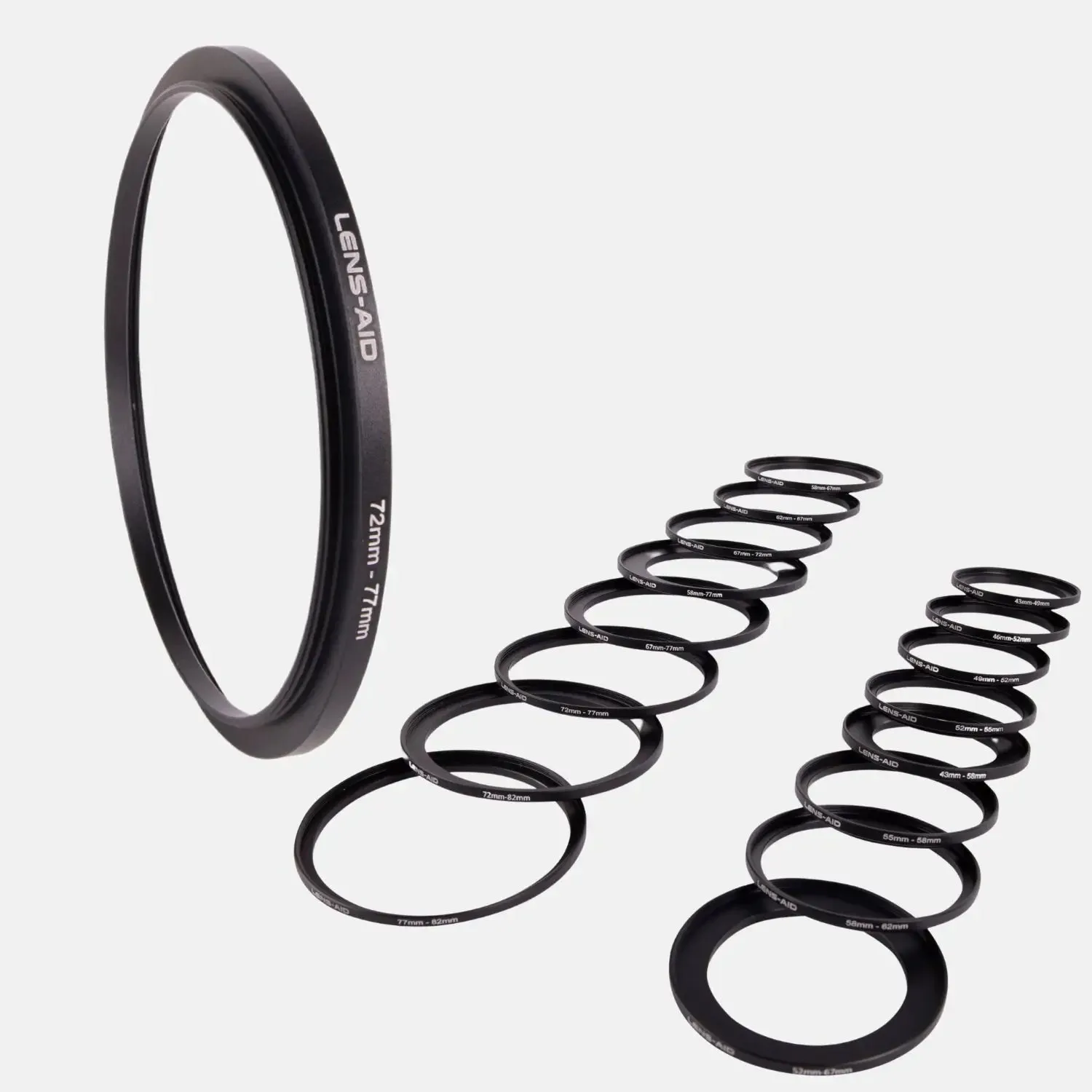
Step Up Ring 58 auf 67 mm – Filteradapter aus Aluminium
-
Step Up Ring 52 auf 67 mm – Filteradapter aus Aluminium: The Lens-Aid Step Up Ring 52 auf 67 mm adapts 67 mm filters to a 52 mm lens thread. This is a common jump for photographers who own 67 mm filters and want to use them on a smaller 52 mm lens like a standard prime.
Step Up Ring 52 auf 67 mm – Filteradapter aus Aluminium
-
Step Up Ring 52 auf 55 mm – Filteradapter aus Aluminium: The Lens-Aid Step Up Ring 52 auf 55 mm adapts 55 mm filters to a 52 mm lens thread. A smaller step-up that preserves filter size while allowing you to share filters between two close thread sizes.
-
Step Up Ring 77 auf 82 mm – Filteradapter aus Aluminium: The Lens-Aid Step Up Ring 77 auf 82 mm lets you use 82 mm filters on a 77 mm lens thread. Ideal for telephoto or standard zoom lenses that share a 77 mm thread but need larger 82 mm filters for wide-angle use.
Who should buy a step-up ring?
Best for
- Photographers with multiple lenses who want to share one filter size
- Anyone who already owns a set of larger filters and wants to use them on smaller lenses
- Budget-conscious shooters who want to avoid buying duplicate filters
Not for
- Lens owners who always shoot at the widest aperture on ultra-wide lenses (vignetting risk)
- Anyone who needs to use a smaller filter on a larger lens (requires a step-down ring, not a step-up)