Quick answer
Find the thread diameter printed on your lens front (often beside a ⌀ symbol) and the diameter printed on your filter rim. If the filter thread is larger than the lens thread, you need a step-up ring; if it is smaller, you need a step-down ring. Buy the ring that matches both numbers exactly, for example a 55mm to 52mm adapter when you want to mount a 55mm filter on a 52mm lens thread.
Read the two numbers before you buy anything
Filter and lens thread sizes are written as a diameter in millimeters, such as 52mm, 55mm, 62mm or 77mm. The lens number is the male thread on the front of the barrel; the filter number is the female thread on the back of the filter. A stepping ring simply bridges those two diameters, so you always need both numbers in hand before ordering. If you cannot find the lens size, check the front ring, the lens cap, or the original box. If the filter size is worn off, measure the inside of the filter rim across its widest point with a ruler or caliper.
Decide whether you need a step-up or a step-down ring
A step-up ring lets a larger filter fit a smaller lens thread. A step-down ring lets a smaller filter fit a larger lens thread. Step-up rings are the common choice when you want to share one expensive filter across several lenses, because a larger filter is less likely to clip the corners of the frame. Step-down rings are usually chosen for compactness or when you already own a small filter and want to use it on a bigger lens. The tradeoff is real: a step-down ring on a wide lens can introduce dark corners, especially at wide apertures.
Match the ring direction to the way you shoot
The ring's first number is the thread that screws onto the lens, and the second number is the thread that receives the filter. A 55mm to 52mm adapter, for example, mounts a 55mm filter onto a 52mm lens thread. Read the product name in that order every time, because reversing it gives you a ring that will not fit. If you plan to stack filters, such as a polarizer plus a neutral density filter, buy the ring for the largest filter you intend to use and add a second ring only if the stack still fits without vignetting.
Check for vignetting and thread depth
Thin rings and slim filters reduce the chance of dark corners on wide-angle lenses. Stacking a step-up ring with a thick filter can push the glass farther from the front element, which may show up as vignetting at the edges. Test the combination at your widest focal length and widest aperture before a paid shoot. Also check that the ring threads fully onto the lens without cross-threading; if it stops early, back it off and start again rather than forcing it.
Keep the ring on the filter, not the lens
A practical habit is to leave the stepping ring attached to the filter rather than the lens. That way the ring travels with the accessory and you are less likely to lose it or cross-thread it under pressure. Store the ring and filter together in a padded pouch, and avoid overtightening, which is the most common cause of stuck rings. If a ring does seize, use a filter wrench or a rubber band for grip rather than pliers.
Step-by-step: choose and fit your stepping ring
- Find the lens thread size: Look for a number next to the ⌀ symbol on the front ring, lens cap or box. Write it down before you shop. Checkpoint: if two lenses have different threads, note both sizes.
- Find the filter thread size: Read the number printed on the filter rim. If it is missing, measure the inside diameter of the filter's rear thread. Checkpoint: a filter marked 55mm will not screw directly onto a 52mm lens thread.
- Choose step-up or step-down: Step-up when the filter is larger than the lens; step-down when the filter is smaller than the lens. For sharing one filter across lenses, step-up is usually the safer choice. Checkpoint: step-down rings can vignette on wide lenses.
- Match the ring order to the product name: The first number is the lens-side thread and the second is the filter-side thread, so a 55mm to 52mm adapter fits a 55mm filter onto a 52mm lens. Checkpoint: reversing the order gives you a ring that will not fit.
- Test the fit before a shoot: Screw the ring on gently, then attach the filter and check the corners at your widest focal length and aperture. Checkpoint: back off and restart if the ring binds; never force it.
Product facts that matter for this choice
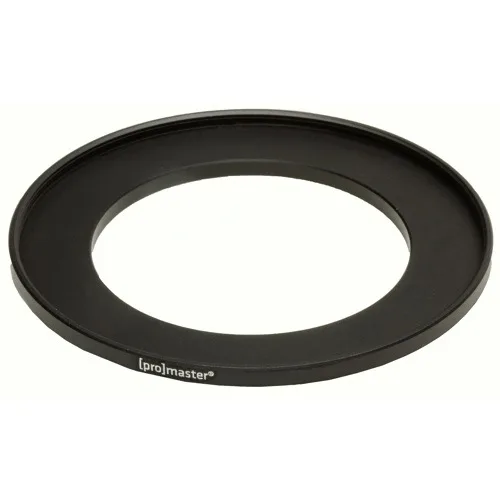
- Promaster Stepping Ring - 55mm-52mm: The Promaster Stepping Ring (55 mm → 52 mm) is a precision-machined ring that converts between these two common thread sizes and preserves alignment. It is the exact part you need when a 55mm filter must mount on a 52mm lens thread, and the machined fit reduces the risk of cross-threading.
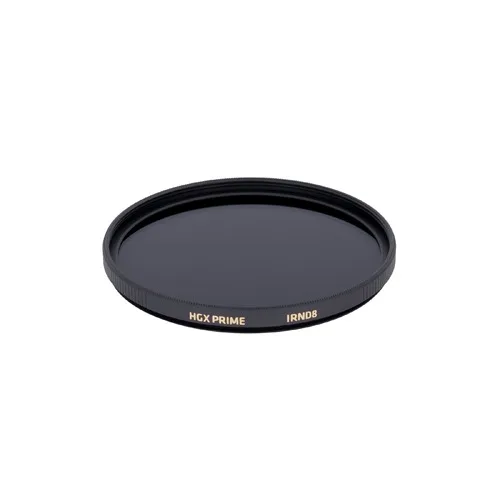
- Promaster 62mm IRND8X (.9) HGX Prime: The Promaster 62mm IRND8X (.9) HGX Prime is an individually ground, polished and coated IRND filter that repels dirt and suppresses infrared light. If your largest lens thread is 62mm, this is the filter size to build your stepping-ring kit around so one filter can serve several lenses.
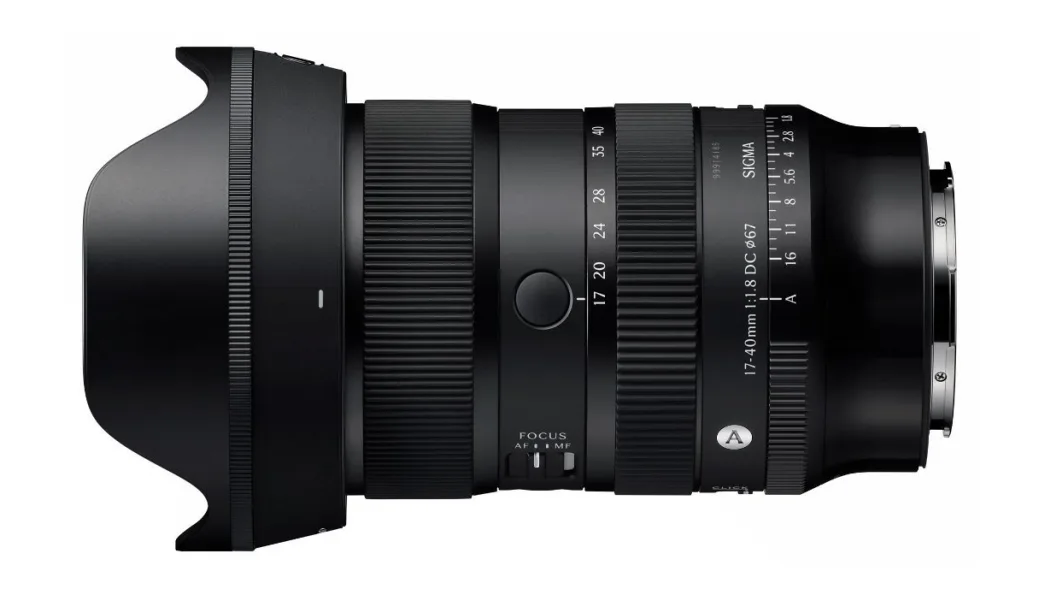
- Sigma 17-40mm F1.8 DC Art (Canon RF): The Sigma 17-40mm F1.8 DC Art (Canon RF) has a constant maximum aperture of F1.8 throughout the zoom range. A fast wide zoom is exactly the lens where a step-down ring can cause vignetting, so match the ring to the filter size rather than downsizing.