Quick Answer
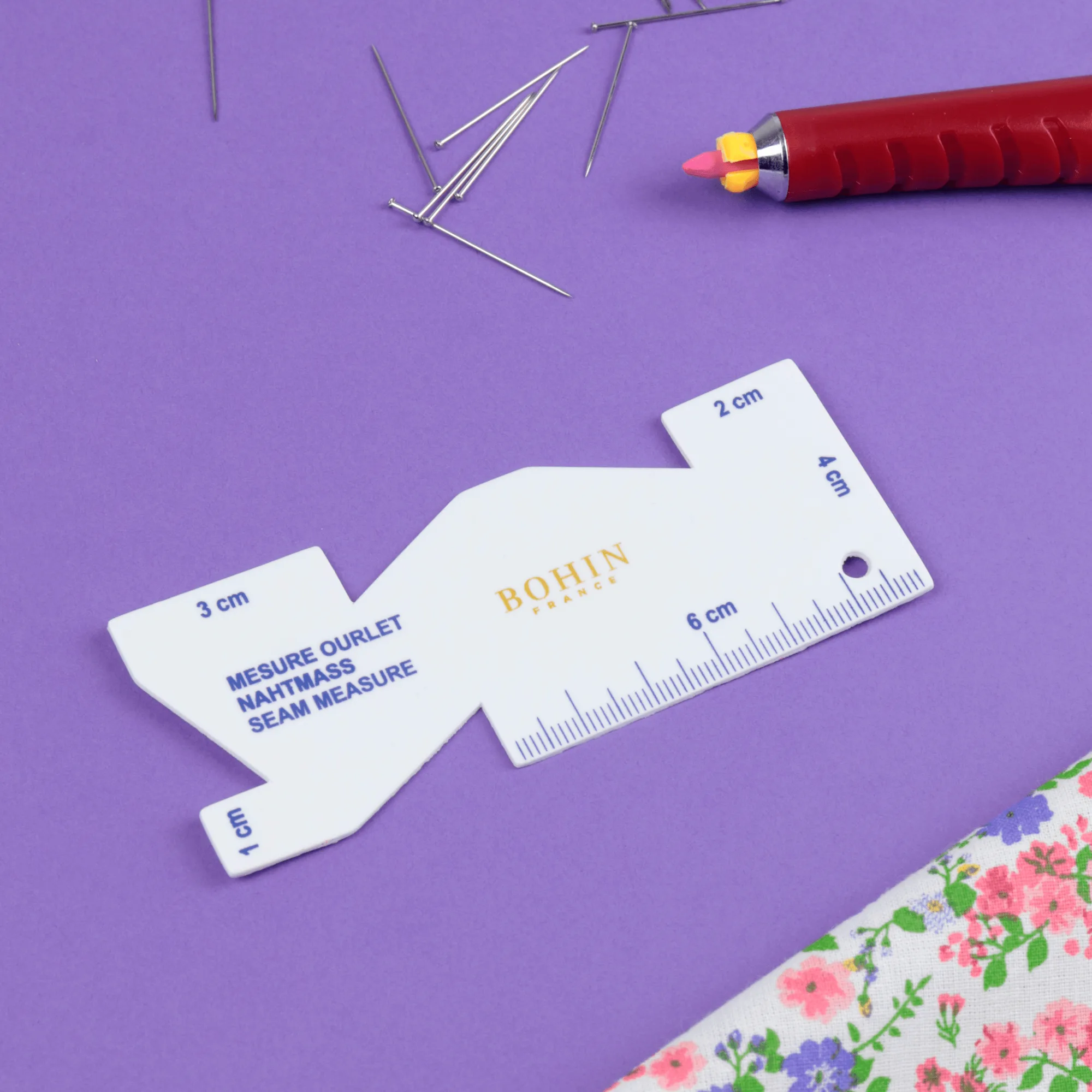
A sewing somometer (also called a seam gauge) lets you measure and mark hems, seam allowances, and assembly points quickly and accurately. Use it with a fabric marker or chalk for consistent results.
Why Use a Dedicated Seam Gauge Instead of a Ruler
A standard ruler works in a pinch, but a somometer has a sliding marker that locks at your desired measurement. This eliminates guesswork when you need to press a hem or mark multiple identical seam allowances. The compact size also makes it easy to slide along fabric edges without shifting.
How to Use a Sewing Somometer in 4 Steps
- 1. Set the Measurement: Slide the marker to the desired distance (e.g., 1 cm for necklines or armholes). Tighten the screw or lock to hold it in place. Common mistake: Forgetting to lock the marker, causing it to shift mid-measurement. Always double-check the lock.
- 2. Align the Somometer with the Fabric Edge: Place the fixed end of the somometer flush against the raw edge of your fabric. The marker will show where to fold or stitch. Checkpoint: Ensure the fabric lies flat and the somometer is parallel to the edge—angled placement leads to uneven seams.
- 3. Mark the Seam Line: Use tailor's chalk, a fabric pen, or a crease tool to mark along the marker's edge. For multiple pieces, mark all at once before moving the somometer. Common mistake: Using a marker that bleeds through the fabric. Test on a scrap first.
- 4. Press and Stitch: Fold the fabric along the marked line and press with an iron. Stitch directly on the crease or just inside it for a clean finish. Checkpoint: Double-check the seam allowance width before pressing—once creased, it's harder to adjust.
Product Facts
-
Somomètre de couture: The BOHIN somometer measures hems and seam allowances with a sliding marker for quick, precise adjustments. You can set it once and reuse the same measurement across multiple pieces, saving time and ensuring uniform results.
Somomètre de couture