Quick Answer
Stephens is a resource-management board game where you compete to rebuild Portugal's glass industry. Focus on balancing glass production with civic investments to outpace your rivals.
Understanding the Core Loop
The game is driven by the historical aftermath of the 1755 Lisbon earthquake. Each turn, you decide how to allocate your limited resources between expanding your glass furnaces, securing raw materials, and investing in civic projects that unlock long-term bonuses.
A common early mistake is overinvesting in production without securing a steady supply of sand and fuel. Without raw materials, your furnaces sit idle and you fall behind opponents who balanced their economy.
How to Play Stephens – Step by Step
- 1. Set Up the Board and Choose Your Starting Position: Place the main board showing Portugal’s regions and the supply tracks. Each player picks a starting location that offers different resource bonuses. Common mistake: choosing solely for production bonuses while ignoring proximity to trade routes. Consider both resource access and future expansion space when picking your starting region.
- 2. Understand the Turn Structure: Each round has three phases: Resource Collection (gather sand, fuel, and coins), Action Phase (build furnaces, hire workers, invest in civic projects), and Scoring (earn victory points for glass produced and civic contributions). Common mistake: spending all coins in the Action Phase without saving for emergency purchases. Always keep a small coin reserve for unexpected opportunities or setbacks.
- 3. Balance Glass Production and Civic Investment: Producing glass earns immediate points, but investing in civic projects (like roads or schools) unlocks permanent bonuses and end-game scoring multipliers. Common mistake: ignoring civic projects until the final rounds, which forfeits the multiplier bonuses. Aim for a 2:1 ratio of production to civic investment for the first two-thirds of the game.
- 4. Manage Your Resource Chains: You need sand and fuel to fire your furnaces. Upgrade your supply routes to increase efficiency. Common mistake: building a third furnace before you have reliable fuel delivery, causing it to sit unused. Only build a new furnace when you can consistently feed it every round.
- 5. Watch Opponents and Adapt: Pay attention to which resources opponents are hoarding. If someone corners the sand market, pivot to fuel-efficient furnaces or invest in trade agreements. Common mistake: sticking to your initial strategy even when the board state changes. Stay flexible; the winning strategy often involves reacting to opponents' moves.
- 6. Final Scoring and End-Game Triggers: The game ends when a player reaches a set number of victory points or when the civic project track is completed. Final scoring includes bonuses from civic investments and any remaining resources. Common mistake: forgetting to convert leftover resources into points using the end-game conversion chart. In the last two rounds, shift focus to converting resources into points rather than expanding capacity.
Game Overview
-
Stephens: After the 1755 earthquake, William Stephens expanded his glass business in Portugal by investing in the industry using his commercial skills and civic education. This historical context shapes the game's core tension: you must nurture both your business and your civic standing to win.
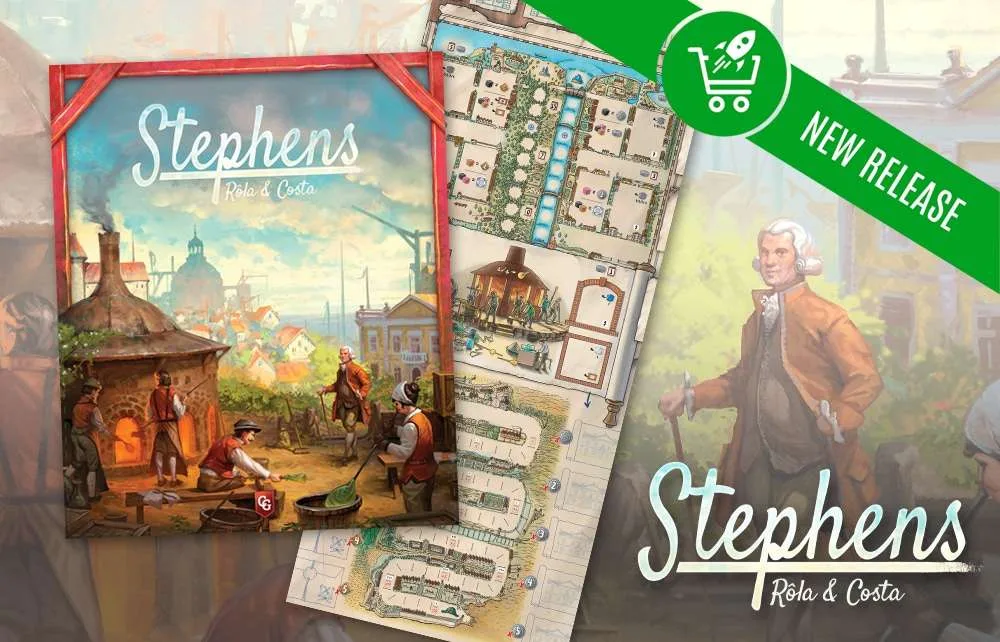
Stephens