Quick answer
Choose sterling silver if you want the darkest, most gothic look and the lowest entry price. Choose solid gold if you plan to wear the piece daily for years and want zero tarnish risk. If you love gold but not the price, gold vermeil is a compromise, but it will wear through with heavy use. For most gothic buyers, sterling silver gives the best balance of style and cost.
What actually differs between sterling silver and gold
Sterling silver is an alloy containing 92.5% silver, usually mixed with copper for strength. It tarnishes over time, turning dark grey or black, which many gothic wearers actually want. Gold, whether 9k, 14k, 18k, or 22k, does not tarnish and keeps its colour permanently. The trade-off is cost: even a thin solid gold ring often costs several times more than a comparable sterling silver one. Gold vermeil is a thick gold layer over sterling silver, so it looks like gold but will eventually wear through on high-friction areas like ring bands.
Neither metal is objectively better for gothic jewellery. The right choice depends on how you wear the piece, how much you want to spend, and whether you like the lived-in look of oxidised silver.
How to match metal to your gothic style
Sterling silver, especially when oxidised, reads as darker and more industrial. It suits skulls, bones, thorns, and textured surfaces because the blackened recesses add depth. Gold reads as warmer and more opulent. It works better for ornate settings, polished stones, and pieces you want to feel like heirlooms. If your wardrobe is mostly black, silver will blend in; gold will stand out as a deliberate contrast.
Many gothic jewellery brands, including Bloody Mary Metal, oxidise their silver as standard. That means the piece arrives already darkened, and you can choose to polish it back or let it darken further. Gold does not oxidise, so if you want that aged look you need to buy it pre-oxidised or accept a bright finish.
Durability and daily wear
Sterling silver is softer than most gold alloys, so it scratches more easily. That is rarely a problem for pendants, but rings worn every day will show wear. Gold, particularly 14k or 18k, resists scratching better and holds intricate detail longer. If you work with your hands, silver rings may need occasional polishing to remove scratches and tarnish.
Gold vermeil is the weakest option for daily wear. The gold layer is thicker than standard plating, but it still wears away over months or years depending on friction. It is best for earrings, pendants, or occasional rings, not for a ring you never take off.
Budget and long-term value
Sterling silver costs far less, so you can own several pieces or try a bolder design without a large commitment. Gold costs more upfront but holds value better and does not need replacing due to tarnish or worn plating. If you are building a collection, a common approach is to buy silver for statement pieces and save gold for one or two everyday rings.
Remember that one-of-a-kind pieces, like the Valentine’s Specimen rings below, are sold as-is in a single size. That limits your ability to resize or exchange, so check your size carefully before buying in either metal.
Decision rules for choosing your metal
- If you want the darkest gothic look: Choose oxidised sterling silver. The blackened finish suits bones, skulls, and textured designs. Gold will look brighter and less severe. Silver wins for traditional gothic aesthetics.
- If you wear the piece every day: Choose solid gold (14k or 18k) for rings. It resists scratches and tarnish. Sterling silver is fine for pendants but will need polishing if worn daily on hands. Gold costs more but needs less maintenance.
- If you want gold on a silver budget: Consider gold vermeil for earrings or pendants, not for rings you wear constantly. The gold layer will wear through with friction. Vermeil is a compromise, not a permanent solution.
- If you are buying a one-of-a-kind piece: Check the size and return policy first. Many gothic rings are sold in a single size and cannot be resized. This applies to both silver and gold. Fit matters more than metal when the piece is unique.
Real gothic pieces and what their metals tell you
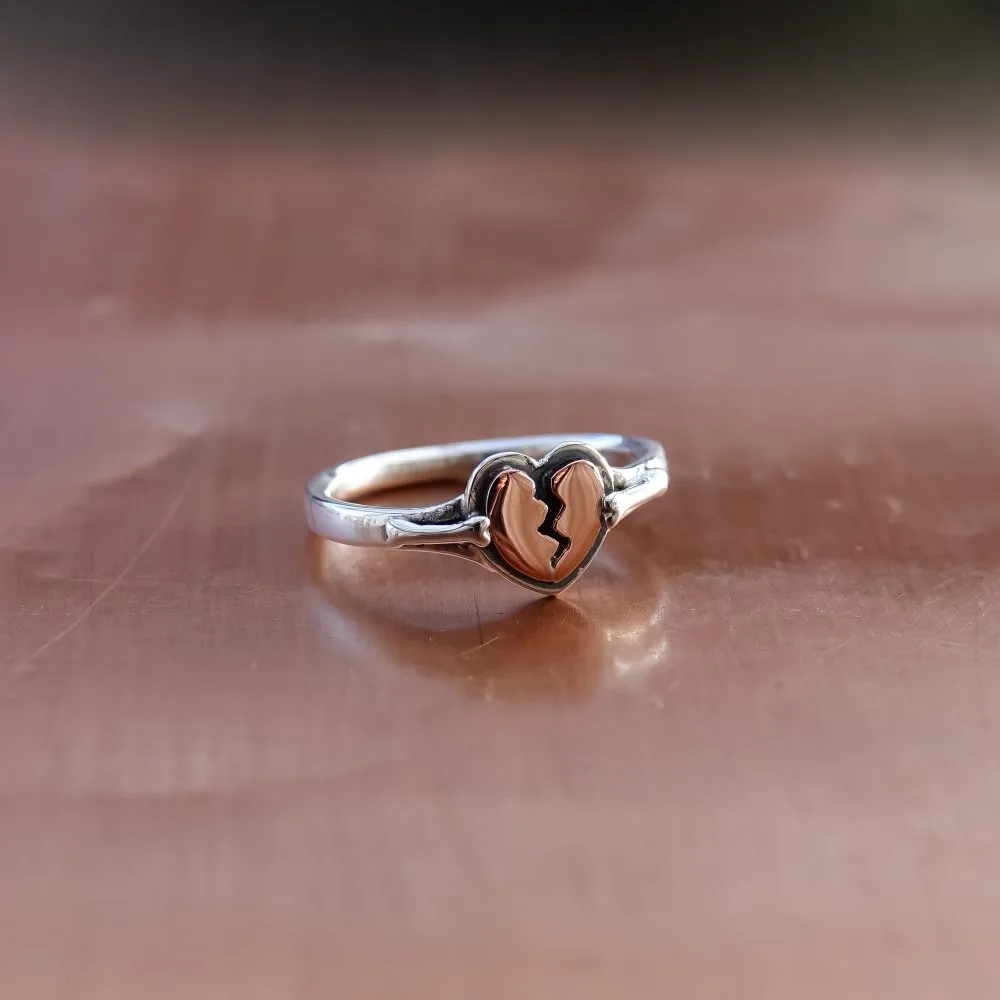
- Valentine’s – Specimen 9 – SOLD: Valentine’s – Specimen 9 is a one-of-a-kind ring with a broken copper heart pulled apart by two sterling silver bones on a D-shape band, oxidised, size R only. All copper elements are placed so they should not touch your skin. This shows how sterling silver can be combined with copper for a dark, aged look while avoiding the green-skin reaction copper can cause. It is a good example of silver’s versatility for gothic design.
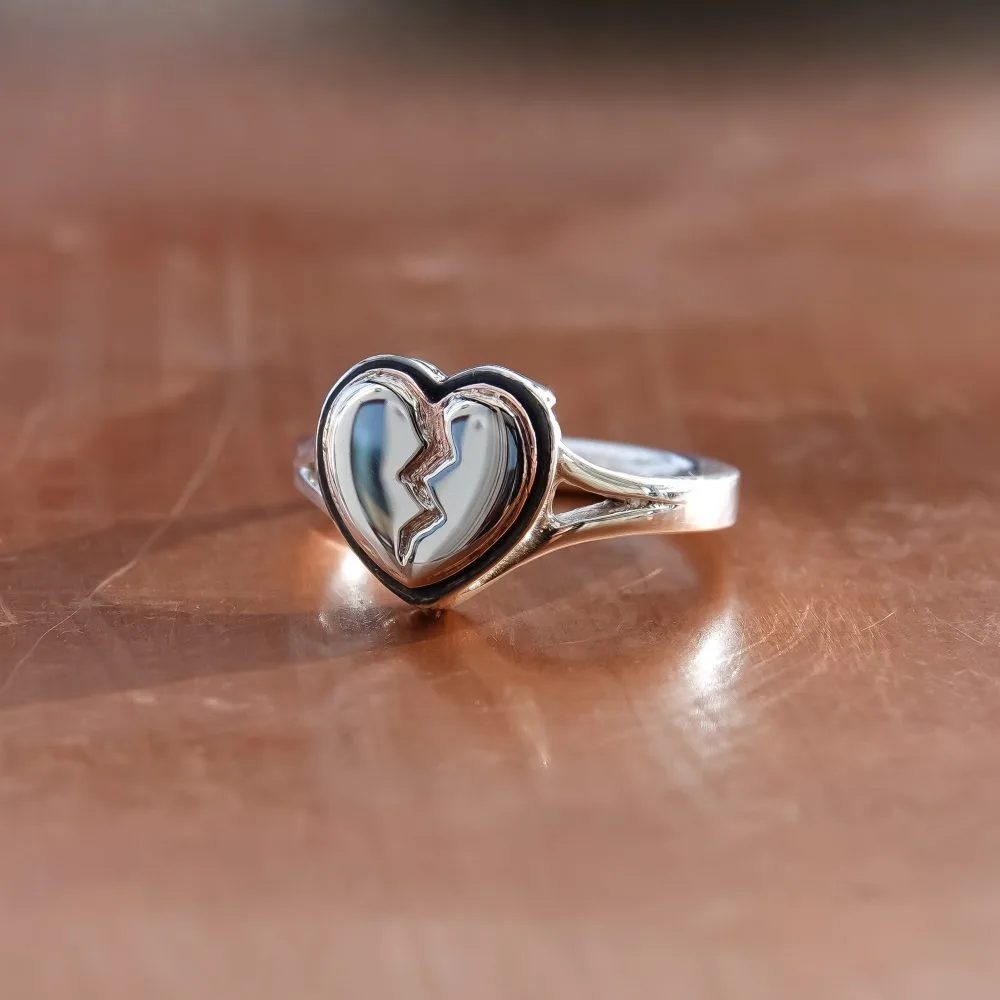
- Valentine’s – Specimen 1 – SOLD: Valentine’s – Specimen 1 is a one-of-a-kind sterling silver ring with a copper crack and hidden bone detailing on a D-shape band, oxidised, size N only. Copper is placed to avoid skin contact. Another silver-based piece where the oxidised finish and copper accent create the gothic aesthetic. It confirms that if you want this specific dark, textured look, sterling silver is the metal that delivers it.
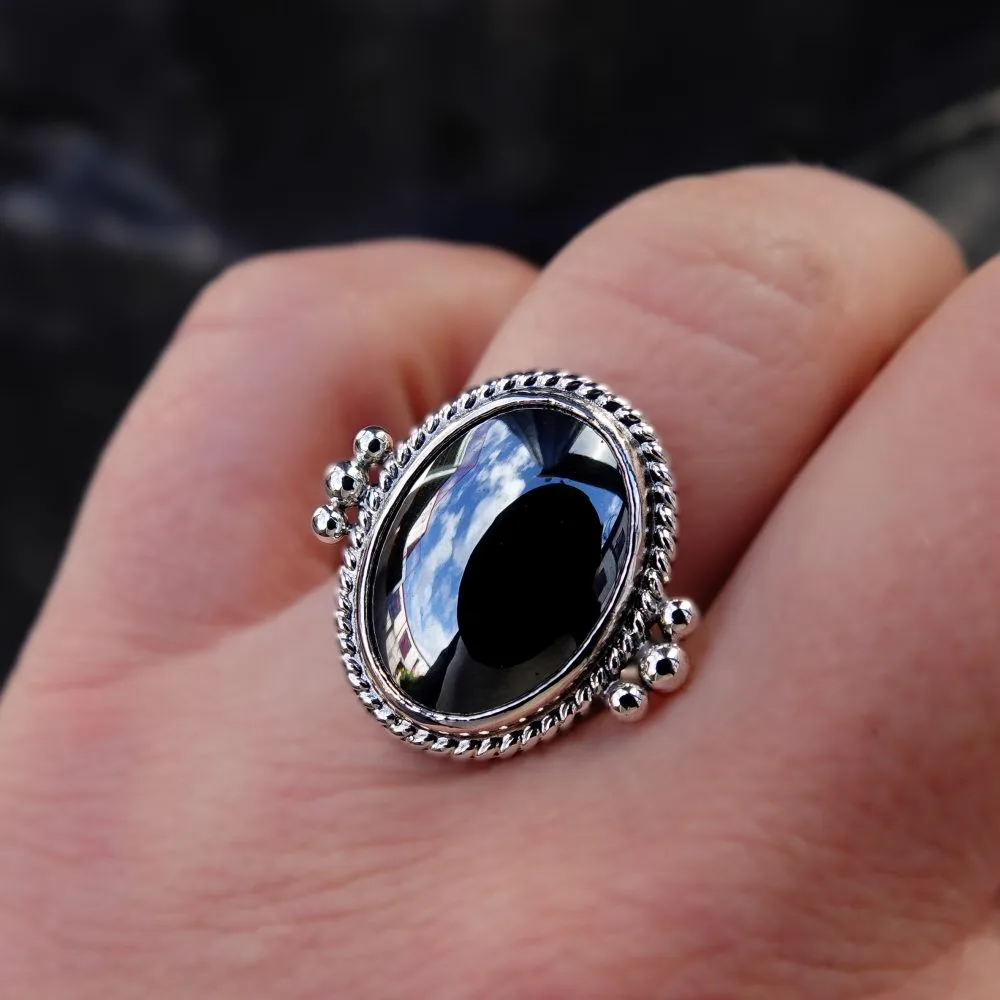
- Imperfect Hematite Maverick – SOLD: Imperfect Hematite Maverick is a sterling silver ring with an 18x13mm imperfect hematite stone. The stone has barely noticeable pinpoint imperfections. The ring photographed is the same style you will receive, but not the same stone. This illustrates that sterling silver is often used for statement stones in gothic jewellery. The note about the stone not being identical is a reminder to read listings carefully, especially for one-off or imperfect items.
Who should choose which metal
Best for
- Buyers who want an affordable, dark, oxidised look and do not mind occasional polishing
- Collectors who want multiple statement rings or pendants without a high upfront cost
- Anyone who prefers a lived-in, industrial gothic style
Not for
- Buyers who want zero maintenance and never want to polish tarnish
- People with metal sensitivities who react to copper or other alloy metals
- Those who want a bright, luxurious gold finish and are not willing to pay solid gold prices