Quick answer
For the longest hold, place stickers on clean, smooth, non-flexing surfaces: the middle band of a water bottle, the flat lid or palm rest of a laptop, and the front cover or inside back page of a journal. Avoid curved corners, textured grips, and anywhere you constantly rub or flex. Water-resistant vinyl stickers handle daily wear best, but surface prep matters more than sticker price.
You peeled the backing, pressed it down, and two weeks later the corner is curling. Sticker placement is the difference between a decal that survives a year of dish duty and one that lifts the first time you shove your bottle into a backpack. The good news: you do not need special tools or expensive stickers to get a durable hold. You need to match the sticker to the right spot and prep the surface properly.
This guide gives you concrete decision rules for water bottles, laptops, and journals, including which surfaces to avoid and how to test a spot before committing. It also covers how water-resistant and scratch-resistant stickers behave in real use, so you can place them once and stop babysitting the edges.
Water bottles: pick the middle band, not the curves
The best place for stickers on a water bottle is the straight middle band, between the shoulder taper and the base curve. Flat or gently curved sections let the adhesive contact the full sticker surface. Avoid the shoulder near the lid and the bottom radius, where the bottle curves in two directions at once. Those compound curves push the sticker edges up as the bottle flexes and gets handled.
Surface texture matters as much as shape. Powder-coated and matte bottles hold stickers well once cleaned, but glossy or slick finishes need a wipe with rubbing alcohol and a full dry before applying. Textured silicone sleeves and grip bands are sticker killers: the adhesive cannot reach the surface, so the sticker peels from the edges inward. If your bottle has a silicone boot, place stickers above it, not on it.
- Test the spot: press a sticker down for 10 seconds, then try to lift one corner. If it releases with almost no resistance, move to a smoother area.
- Hand-wash bottles with stickers. Dishwasher heat and detergent break down adhesive faster than any daily wear.
- Leave 1/4 inch of space around the sticker edge so your hand does not catch it when you unscrew the lid.
Laptops: flat lids and palm rests beat curved edges
For sticker placement on a laptop, the lid is the classic spot, but not all of it. The flat center of the lid holds best. The curved edges near the hinge and the corners flex slightly every time you open and close the laptop, which works the sticker loose over time. If you use a hard shell case, stickers on the case are easier to remove and replace, but they will not sit as flush as stickers applied directly to the laptop.
The palm rest and trackpad surround are also viable, but only if you do not rest your wrists there constantly. Oils and friction from skin will wear down a sticker faster than almost anything else. A better alternative for high-touch areas is a small sticker on the bottom corner of the lid or near the brand logo, where your hands rarely land. Avoid placing stickers over vents, screws, or rubber feet; they trap heat and make repairs harder.
- Clean the lid with a lint-free cloth and a little isopropyl alcohol, then let it dry completely before applying.
- Apply from the center outward, pressing with a credit card edge to push out air bubbles.
- If you might resell the laptop, put stickers on a removable case instead of the aluminum.
Journals: front covers and inside back pages stay put
Journal sticker ideas often focus on the front cover, and that is a solid choice if the cover is smooth and rigid. Hardcover journals with a matte or coated finish hold stickers well. Softcover journals and fabric covers are trickier: the cover flexes when you open the book, and fabric textures give adhesive very little to grab. For those, place stickers on the inside back page or the back cover, where the book flexes less and your hands do not rub as often.
If you want a sticker to survive being tossed in a bag, avoid the spine and the edges of the cover. Those areas take the most abrasion. A sticker placed in the center of the front cover, at least half an inch from any edge, will outlast one placed near the corner. For planners and notebooks you use daily, consider a water-resistant vinyl sticker rather than a paper sticker, especially if the journal lives in a bag with a water bottle.
- Smooth, rigid covers hold stickers best; textured or fabric covers need a spot inside the book.
- Keep stickers away from the spine, where opening and closing flexes the cover.
- If you decorate a journal you will carry daily, seal the sticker edges with a clear tape or a thin layer of Mod Podge for extra durability.
Sticker adhesion surfaces: what actually holds
Adhesive sticks best to clean, dry, smooth, non-porous surfaces. Glass, glazed ceramic, painted metal, hard plastic, and coated paper all qualify. Porous surfaces like raw wood, unsealed concrete, and fabric pull the adhesive in and leave less to bond with the sticker. Flexible surfaces like silicone, rubber, and soft vinyl are the hardest to stick to because they move under the sticker and break the bond.
Temperature and timing also matter. Apply stickers at room temperature, not in a cold garage or a hot car. Press firmly for 10 to 15 seconds, working from the center out. Let the sticker sit undisturbed for 24 hours before you wash, carry, or use the item. That cure time lets the adhesive flow into the surface and reach full strength. If you apply a sticker to a cold bottle straight from the fridge, condensation will form under it and the edges will lift.
- Clean with isopropyl alcohol or warm soapy water, then dry completely. Skip glass cleaner, which can leave a residue that blocks adhesion.
- Avoid applying stickers in direct sun or extreme cold; room temperature gives the best bond.
- For textured surfaces, choose a sticker with a thicker vinyl backing or add a piece of clear packing tape over the top as a mechanical shield.
Decision rules for sticker placement
- If the surface flexes or curves in two directions: Move the sticker to a flatter area or skip that spot. Compound curves and flexing surfaces are the top cause of peeling edges. Checkpoint: press the sticker down for 10 seconds, then try to lift a corner. If it lifts easily, the surface is wrong.
- If the item gets washed or rained on: Choose a water-resistant vinyl sticker and hand-wash instead of dishwashing. Water alone is fine; heat and detergent are the real threats. Checkpoint: after 24 hours of cure time, run the item under tap water. If water beads on the sticker, the seal is good.
- If you might resell or return the item: Put stickers on a removable case, a journal cover you own, or a water bottle you plan to keep. Adhesive on aluminum or painted metal can leave residue. Checkpoint: test removal on an inconspicuous spot first, or use a hair dryer on low to soften adhesive before peeling.
Stickers that match the placement rules
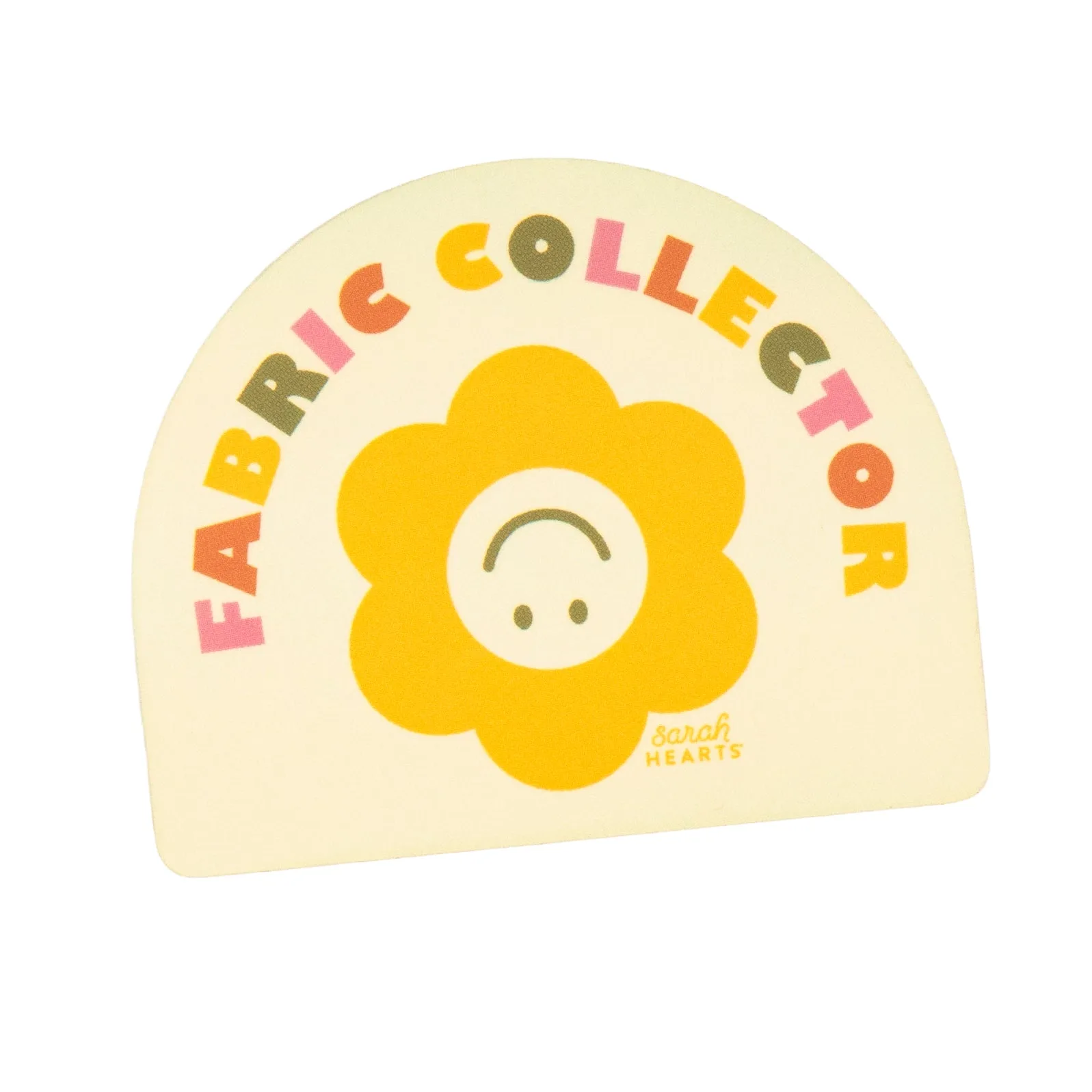
- Fabric Collector Sticker: Water-resistant and scratch-resistant sticker with an upside-down smiley and red and pink daisy design, made for hard surfaces. The water-resistant and scratch-resistant build suits water bottles and laptop lids, where spills and abrasion are common. Its design is a good fit for the flat middle band of a bottle or the center of a laptop lid.
- Grandmas Have Hot Girl Hobbies Sticker: Water-resistant and scratch-resistant vinyl sticker, 3.5 x 2.76 inches, sticks to hard, smooth surfaces like water bottles, laptops, sewing machines, cars, or suitcases. The listed size helps you plan placement on a journal cover or laptop lid without crowding the edges. Vinyl construction handles the flex and handling that cause paper stickers to peel.
Who this placement guide is for
Best for
- Anyone decorating a water bottle, laptop, journal, or similar hard-surface item who wants stickers to stay put
- Crafters and makers who want to display stickers on sewing machines, storage bins, or display stands without constant re-sticking
Not for
- People looking for stickers to apply to fabric, clothing, or other porous, flexible surfaces where standard adhesive stickers are not designed to hold
- Anyone who needs a permanent, industrial-strength bond on silicone or rubber surfaces
Place stickers where the surface is clean, smooth, and does not flex, and give the adhesive 24 hours to cure. That single habit will outperform any sticker upgrade. Match water-resistant vinyl to bottles and laptops, keep paper stickers for journal covers, and test any new spot before you commit.