Quick answer
The Stir and Serve Soup Maker is a pretend cooking set for kids who already enjoy stirring, pouring, and serving. It suits roughly ages three to six, works best alongside a play kitchen or play food collection, and rewards children who like repeatable routines. It is not a battery toy, so expect your child to supply the sound effects and the story.
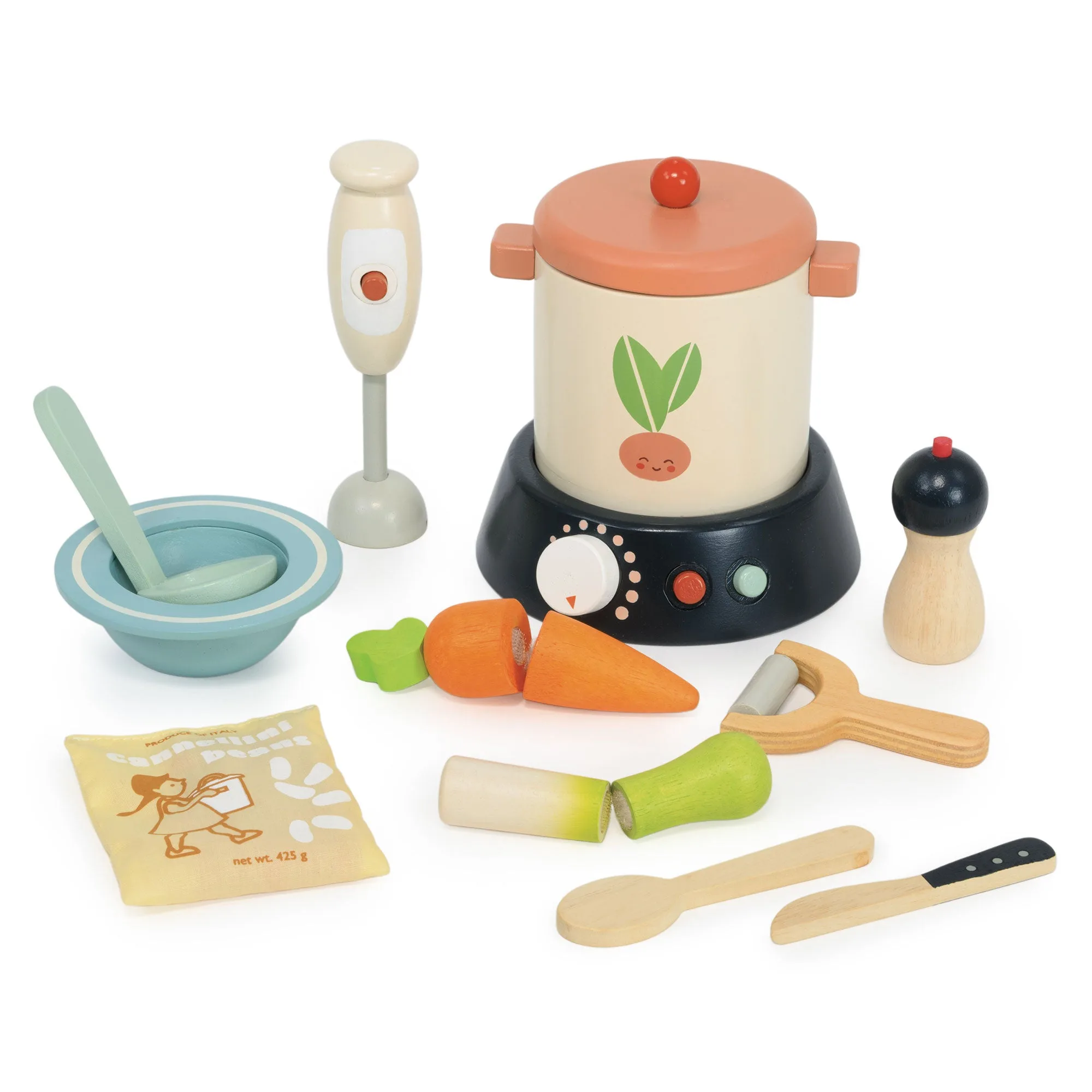
Stir and Serve Soup Maker
Most play kitchen accessories get used twice and then sit in a basket. The Stir and Serve Soup Maker tends to survive longer because the action is obvious: scoop, stir, serve, repeat. That loop is exactly what toddlers and preschoolers rehearse for months.
This FAQ answers the questions parents actually ask before adding it to a play kitchen, including what it pairs with, what it does not do, and how to tell whether your child is ready for it.
What does the Stir and Serve Soup Maker actually do?
It gives your child a single, clear job: make soup. That means scooping pieces in, stirring them around, and serving the result to whoever is sitting nearby. The value is in the repetition, not in surprises. A toy with one strong action gets picked up more often than a set with ten weak ones.
Because the play is open-ended, the same set becomes a restaurant, a doctor's waiting room snack, or a bedtime routine for a doll. If your child already narrates while they play, this fits straight in.
- Watch for the moment your child starts serving you without being asked. That is the sign the toy has landed.
What age is it right for?
The sweet spot is roughly three to six. Under three, the small parts are a choking risk and the stirring motion is still clumsy. Over six, many children want more complex rules, like a menu or a price list, and you may need to add those yourself.
If your child is closer to two, start with a chunkier pretend cooking set and revisit this one when their grip and patience have grown. There is no rush, and a toy that frustrates a two-year-old becomes a favourite at three and a half.
- Skip it if your child still mouths everything. Come back in six months.
Does it need batteries or make sounds?
No. The play is entirely manual, which is the point. Your child supplies the bubbling noises, the taste test, and the verdict. That sounds like a downside until you have lived with a noisy electronic kitchen for a month.
The tradeoff is honest: a silent toy asks more of your child. Some three-year-olds dive in immediately; others need you to sit down and model one round of soup-making first. Once they have the script, they run it alone.
- Model one full round yourself: scoop, stir, taste, serve. Then hand it over.
What does it pair well with?
It works best as one station inside a bigger pretend cooking setup rather than as the whole kitchen. A wooden play food set gives it ingredients, and a few extra play kitchen accessories keep the story going after the soup is served.
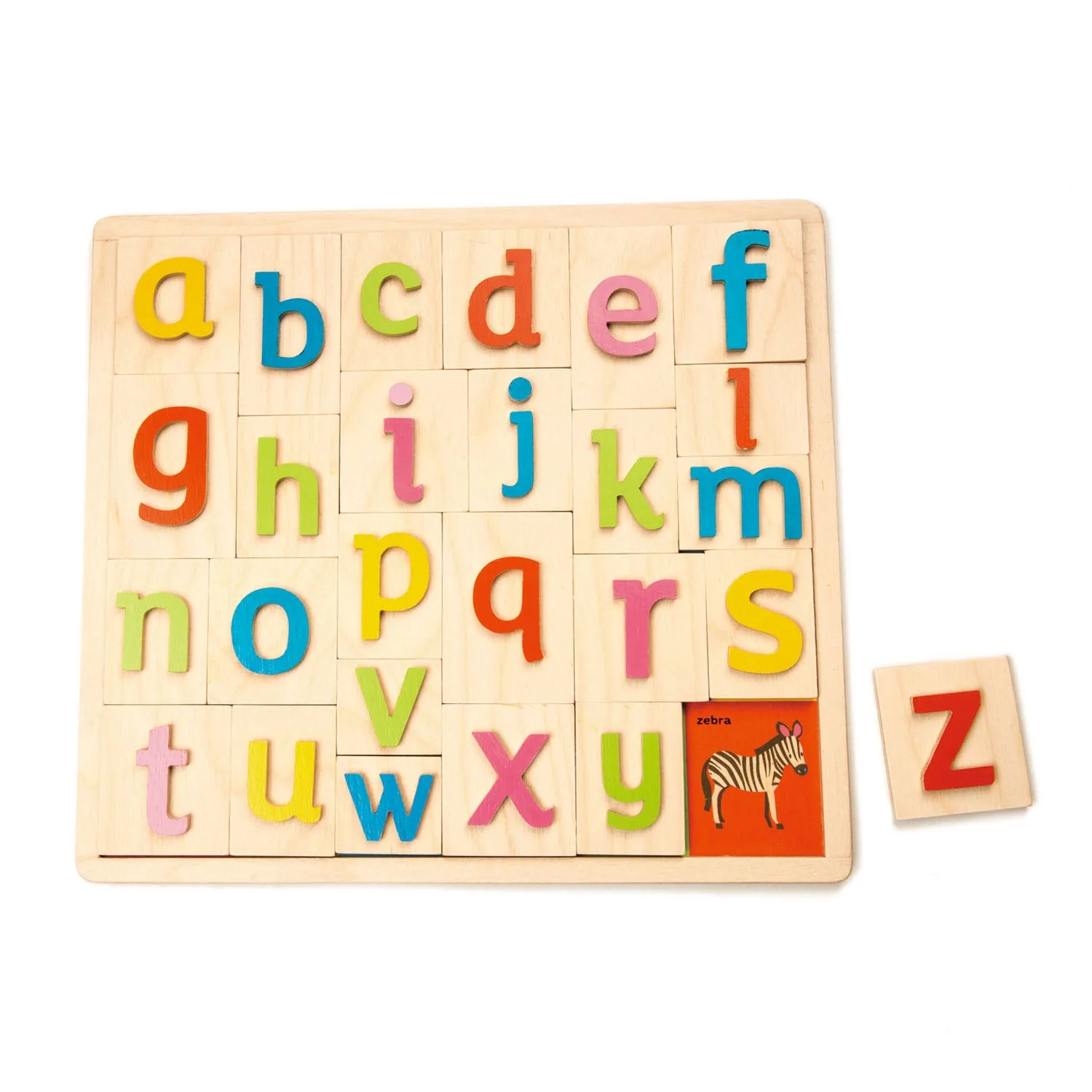
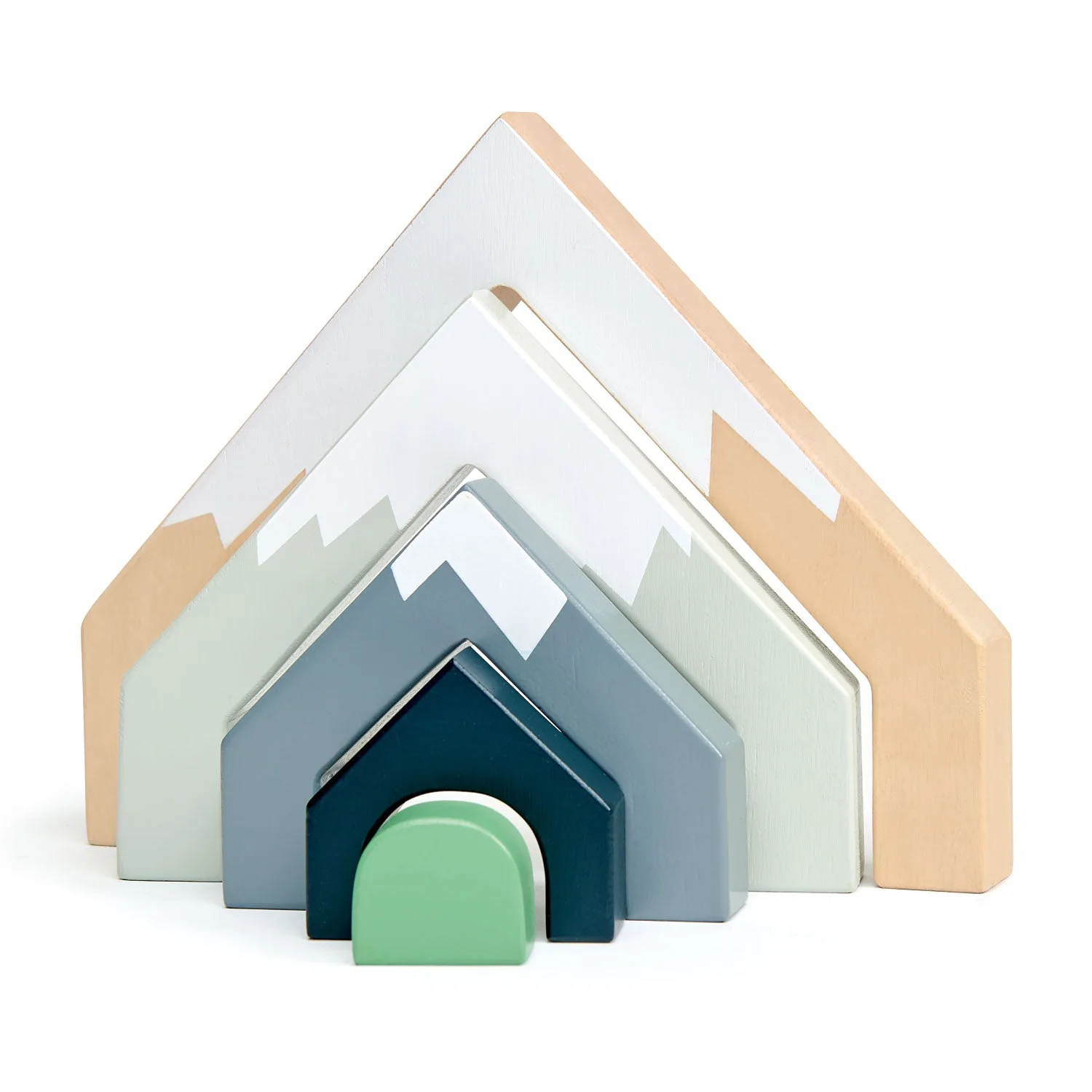
If you want a small, cheap add-on that expands the scene, the Mountain Pass Stack doubles as a tunnel or a serving prop in play and costs USD 10.50 in the catalog. For letter and word play at the table, Alphabet Pictures is a separate purchase at USD 21.00 and is a different kind of toy, so do not buy it expecting soup ingredients.
- Buy the soup maker first. Add food and accessories only once you see which part your child ignores.
How do I clean it?
Treat it like any painted wooden toy: wipe with a damp cloth and mild soap, then dry immediately. Do not soak it, and do not put it in the dishwasher. Water sitting in joints is what causes swelling and loose parts later.
After an illness in the house, a normal wipe-down is usually enough for a toy that only sees pretend food. If you want a deeper routine, our separate guide on cleaning wooden toys after illness covers the steps in order.
- Keep a dry cloth next to the play kitchen. Wiping takes ten seconds; a warped lid lasts forever.
Soup maker FAQ: quick answers
Is it a full play kitchen?
No. It is one station inside a pretend cooking setup, so it needs a surface, a few ingredients, and someone to serve. Buy it as an add-on, not as the whole kitchen.
Will a two-year-old use it?
Probably not well. The stirring motion and small pieces suit older toddlers and preschoolers more than early twos. Wait until around three unless your child already stirs and pours confidently.
Does it teach anything?
It rehearses sequencing, turn-taking, and language around food and serving. Those are real skills, but they come from repetition, not from the toy alone. Expect value over months, not on day one.
What is the honest downside?
There is no sound, no light, and no reward loop built in. A child who needs feedback from the toy will lose interest faster than one who narrates their own play. If your child already talks through play, this fits. If not, start with a noisier set.
Catalog facts worth knowing
- Mountain Pass Stack: An accessory to the Treetops Train Set or to be enjoyed as a tunnel toy, with 5 mountain shape arches illustrated to evoke the natural world. It is a flexible prop rather than a soup ingredient, so it earns its place if your child already builds tunnels and scenery during pretend play.
- Alphabet Pictures: A traditional alphabet tray with 3 dimensional letters to lift up and reveal the corresponding picture and word, with 26 pieces and colored letter shapes to match to the correct picture. This is language and matching practice, not kitchen play. Buy it for its own purpose and keep it near the play table if your child likes tabletop activities.
- Tap Tap Tool Box: A woodpecker themed tool box with two removable lid pieces that turn into screwable plates, a cloth printed bag, and a chalkboard on one end, including a hammer, pliers, screwdriver, spanner, screws, bolts, planks, nuts, and pegs. A useful comparison point: this is a set with many small pieces and a storage routine, while the soup maker is a single-action toy. Pick based on whether your child tidies up or scatters.
The Stir and Serve Soup Maker earns its place if your child already stirs, pours, and serves without prompting. If they need a toy to entertain them, spend the money elsewhere first and come back when the pretend play habit shows up.