Quick answer
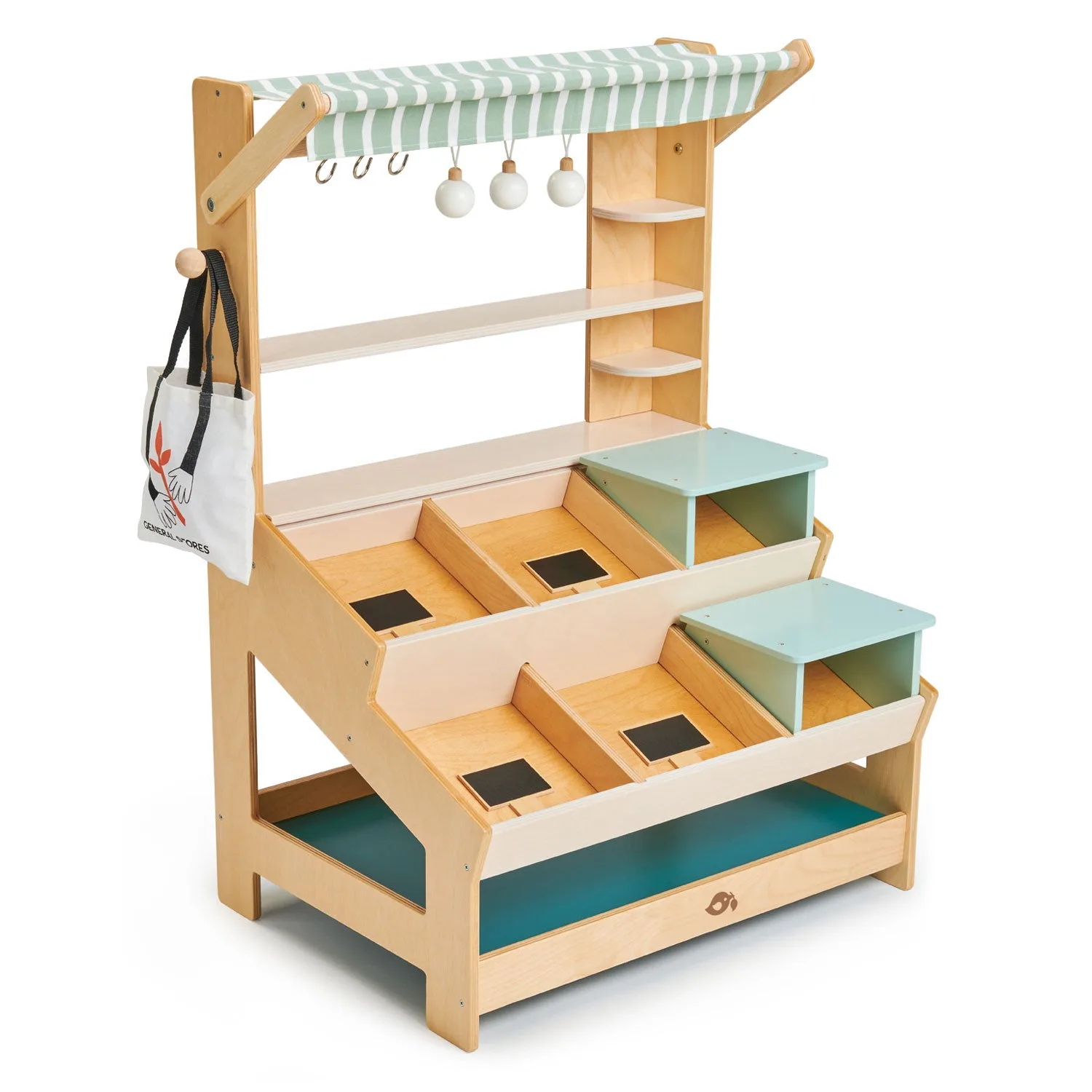
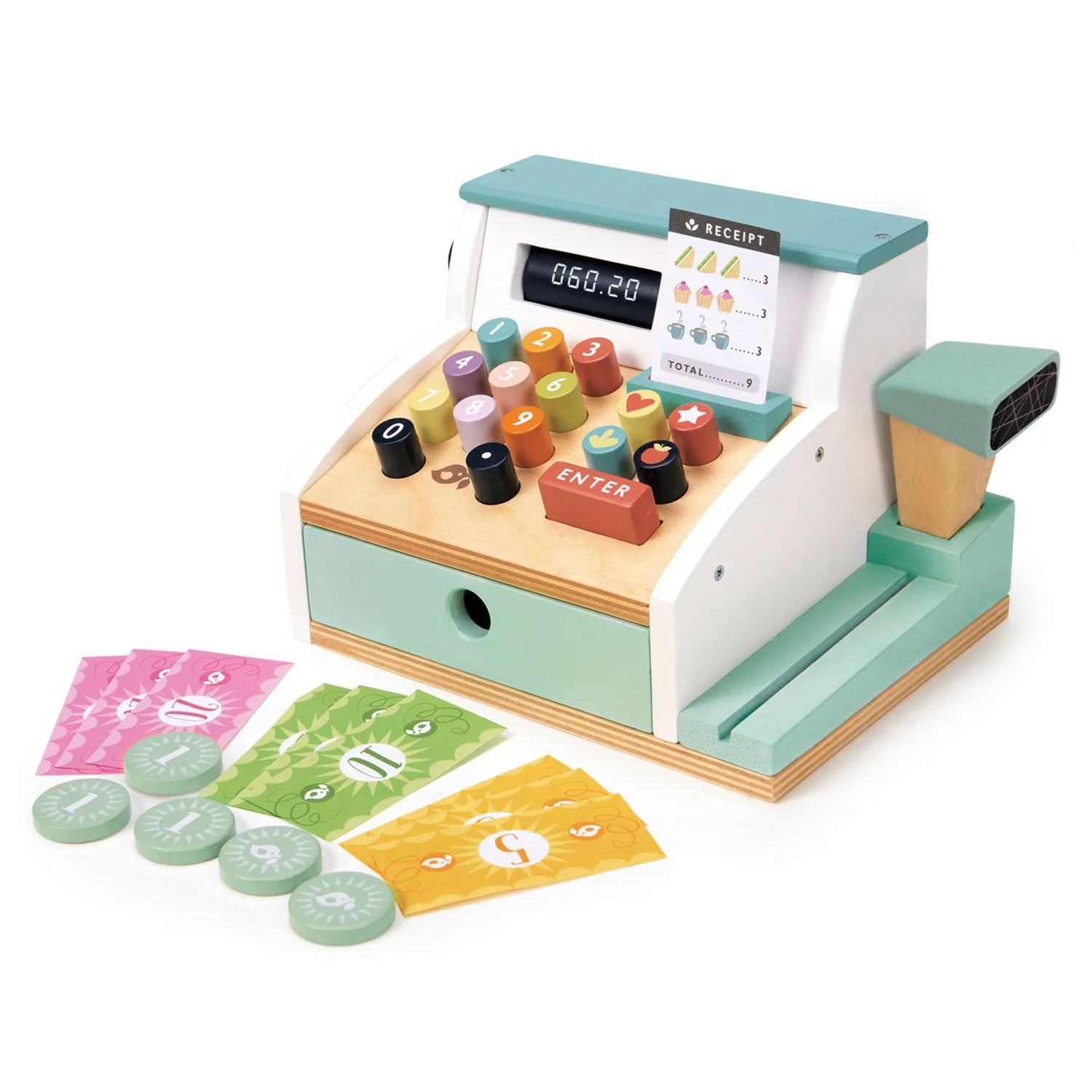
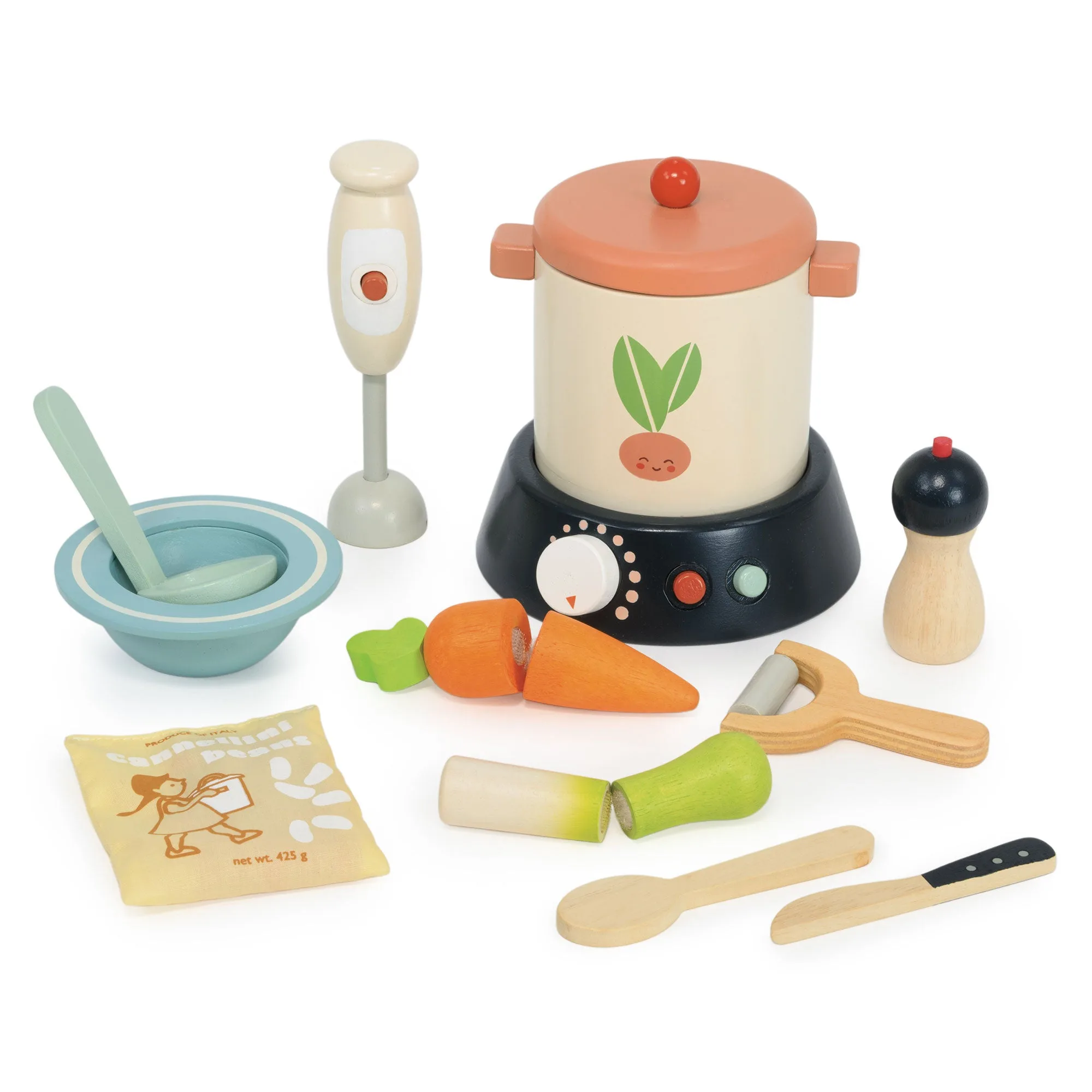
Choose the Stir and Serve Soup Maker if your child loves kitchen pretend play, sequencing steps, and serving others. Choose the https://tenderleaftoysenz.com/products/general-stores-till-e41ed162d9bdf1d99b7d91d8-1357377General Stores Till if they prefer shopkeeping, counting, and handing over change. Both are wooden role play sets from Tender Leaf Toys, but they teach different skills and take up different amounts of space.
Pretend play sets look similar on a shelf, but the play they invite can be very different. The Stir and Serve Soup Maker and the General Stores Till both fall under wooden role play, yet one centers on cooking and the other on commerce. Knowing which type of play your child gravitates toward makes the choice much easier.
This comparison uses the supplied catalog facts for each set to explain what you actually get, how much room it needs, and which skills it supports. Neither set is better in every way; the right pick depends on your child's interests and your available play space.
What each set includes and how that shapes play
The Stir and Serve Soup Maker is a wooden kitchen appliance with a stirring mechanism and play ingredients. The General Stores Till is a wooden cash register with a drawer, buttons, and pretend money. The soup maker invites cooking sequences: chopping, stirring, simmering, and serving. The till invites transactional play: pricing, scanning, counting coins, and giving change.
Because the soup maker focuses on a single activity, children often play alone or with one helper. The till naturally supports two or more players, with one acting as shopkeeper and others as customers. If you want a set that pulls siblings into the same game, the till has a slight edge. If you want deep, quiet focus, the soup maker wins.
- Soup maker: best for solo or paired kitchen play.
- Till: best for group shop games with turn-taking.
Space, storage, and setup
The Stir and Serve Soup Maker is a compact countertop-style toy. It sits on a shelf, play kitchen, or low table and does not need much floor space. The General Stores Till is similarly sized but often comes with smaller accessories like coins and notes that need a home. Both are easy to store, but the till has more loose pieces to corral.
If your play area doubles as a living space, the soup maker is simpler to tidy. The till's small parts can migrate under sofas, so a small basket or zip pouch helps. Neither set requires assembly beyond attaching a few parts, and both are wipe-clean wood.
- Measure your shelf or table before buying; both sets need a flat surface.
- Keep a small pouch for the till's coins and notes.
Skills each set builds
The soup maker builds sequencing, fine motor control, and language around food and cooking. Stirring, pouring, and serving encourage wrist rotation and hand-eye coordination. The till builds early math, money recognition, and social scripts like greeting a customer and saying thank you. Counting coins and making change is a gentle introduction to arithmetic.
Neither set is a formal teaching tool, but they practice different muscles. If your child is working on patience and following steps, the soup maker offers a natural routine. If they are ready for counting and cooperative play, the till gives more repetition.
- Soup maker: sequencing, stirring, serving.
- Till: counting, change-making, customer talk.
Which set suits which child
The Stir and Serve Soup Maker fits children who already enjoy play kitchens and want a new cooking challenge. It also suits quiet players who like to narrate their own stories. The General Stores Till fits children who like to organize, trade, and involve others. It is a strong pick for siblings close in age who can take turns being shopkeeper.
If your child is new to pretend play, either set works, but the till's clear roles may be easier for a friend to join. If your child prefers solitary focus, the soup maker is less demanding socially.
- Watch your child play for a week before deciding.
- Consider whether they prefer cooking or trading.
Trade-offs to weigh
- Solo focus vs group play: The soup maker supports deep solo or paired play; the till invites two or more children to take roles. Choose the till if sibling play matters most.
- Loose pieces vs single unit: The till typically includes coins and notes that need storage; the soup maker is mostly one unit with a few accessories. Pick the soup maker if you want minimal tidying.
- Cooking sequence vs money math: The soup maker practices following steps and serving; the till practices counting, change, and customer scripts. Match the set to the skill you want to encourage now.
Product facts at a glance
- Barbeque Play Set: A self-standing wooden barbeque toy with removable grill, 3 glowing coals, rotisserie 5-part chicken, 2 sausages and prong, wooden skewer with 5 vegetable pieces to thread on, 2 prawns, fish, lemon slice, BBQ sauce and mustard pots, tongs and pretend knife. If your child likes cooking play but wants more accessories and a standing set, this offers a wider menu than the soup maker.
- Patchwork Quilt Puzzle: 32 pieces in 4 different colors, exploring traditional patchwork quilt patterns with triangular pieces. A quieter, tabletop alternative for children who prefer pattern-making over role play.
- Stacking Cars: 7 brightly coloured wooden toy cars on their way to the scrapyard, stacked on a wheeled recovery truck to develop fine motor skills and hand-eye coordination. A good first stacking and balancing toy for toddlers not yet ready for either role play set.
Which should you choose?
Best for
- Children who already love play kitchens and want a focused cooking challenge.
- Quiet players who enjoy narrating their own stories and working alone.
Not for
- Children who prefer group games with clear roles and turn-taking.
- Families with very limited shelf space for small accessories.
Both the Stir and Serve Soup Maker and the General Stores Till are solid wooden role play sets. Pick the soup maker for cooking-focused, solo-friendly play. Pick the till for counting, cooperation, and shop games. Your child's preferred play style should decide.